Key Takeaways
- Interactive writing activities lead to higher engagement and motivation in young learners.
- Creative prompts spark imagination and build foundational narrative skills.
- Cross-curricular writing helps students connect literacy with science, social studies, and other areas.
- Peer sharing strengthens confidence and cultivates a supportive classroom atmosphere.
Writing is a fundamental skill that children begin developing in first grade, laying a critical foundation for their future academic journey. Introducing engaging, interactive activities at this stage not only strengthens literacy but also nurtures creativity and self-expression. By mixing hands-on exercises with thoughtful prompts, teachers and parents can make writing both fun and meaningful for young learners. Learn more about this.
Whether students are working independently, with their peers, or at home, creative writing activities encourage them to explore ideas, share stories, and see themselves as budding authors. The key is to incorporate a variety of approaches that sustain interest and foster skill development across different settings.
Interactive Storytelling: Bringing Stories to Life
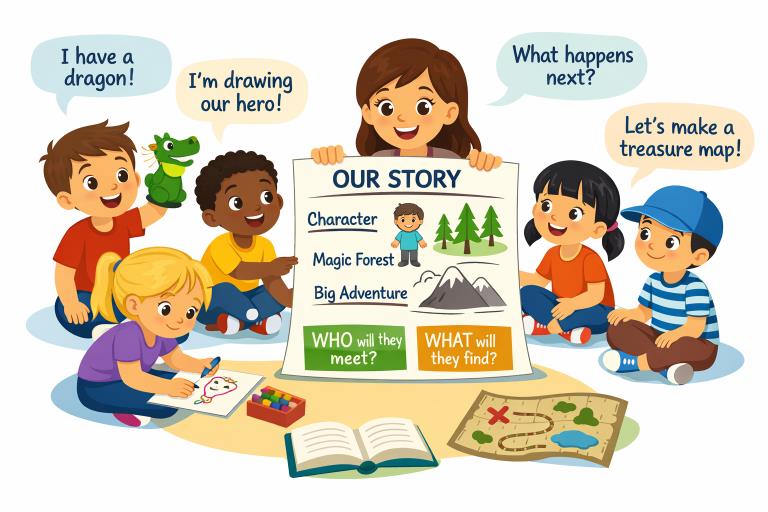
Interactive storytelling transforms reading time into a lively, two-way experience. When teachers read aloud and invite students to participate by acting out characters, making sound effects, or predicting what comes next, reading becomes more than just hearing a story. It becomes a performance and a problem-solving activity. For example, pausing the narrative to ask, “What do you think the character might do now?” encourages students to think critically and get involved. This energy helps information stick and supports a deeper understanding of the material.
To further support interactive storytelling, educators can introduce group story-building exercises. For instance, each student might contribute a sentence to a collective story, helping them to practice cooperation, listening skills, and sequencing. Teachers can also utilize puppets or props to bring stories to life, engaging students who benefit from tactile and visual learning experiences. These techniques also create a multi-sensory environment that can be especially effective for children who may struggle with traditional paper-and-pencil writing activities.
Creative Writing Prompts: Sparking Imagination
Not every child knows what to write about, especially in the early stages of learning. Fun, open-ended writing prompts can make all the difference. These prompts could include “If you could swap places with an animal for a day, which would you choose?” or “Describe your perfect day with your best friend.” Such questions take the pressure off perfect spelling or grammar and shine the light on storytelling and self-discovery. Prompts like these help build confidence as students see their ideas come to life in words.
Creating a supportive environment where creativity is more important than correctness has lasting benefits. According to Edutopia, making space for creativity in writing classes gives students the courage to take risks and explore new genres, ideas, and voices, important skills for all writers.
Additionally, prompt journals or visual prompts, such as pictures or comic strips, can provide further inspiration. Teachers can display seasonal images or photos from class activities to provoke ideas. Incorporating art and drawing into the writing process gives students another outlet to express their thoughts before or after they write, blending visual arts with literacy for even more engaging results.
Writing Across the Curriculum: Integrating Subjects
Writing does not belong solely in language arts. Purposeful writing opportunities in science and social studies, for instance, help young students see writing as a tool for expressing ideas and recording discoveries. In science, students can keep observation journals about plant growth or write about weather changes. In social studies, they might write a letter from the perspective of a famous historical figure. These exercises teach students that writing is useful in many areas of life and study, reinforcing skills and conceptual understanding across the curriculum.
Math can also be integrated with writing by inviting students to explain their problem-solving process or create word problems based on their daily experiences. This integration promotes both comprehension and communication skills. Teachers may also encourage children to write reflective statements at the end of a lesson or unit, prompting them to think about what they learned and how they felt during the activity. This not only reinforces academic content but also supports social-emotional growth.
Peer Sharing: Building a Writing Community
When students read their work aloud or listen to their classmates’ stories, they gain new perspectives and discover the joy of sharing ideas. Activities like “author’s chair,” where each student gets a chance to present their writing, create a supportive sense of community and inspire kids to revise their drafts for a real audience. Collecting student stories into a classroom anthology can further motivate young writers. Models of peer feedback encourage kindness and constructive criticism, essential for growth and camaraderie.
Regular sharing sessions also help students develop important listening and public speaking skills. Teachers can set up small group discussions where young writers offer gentle feedback to their peers in the form of compliments or simple suggestions. Encouraging students to ask questions about each other’s writing builds curiosity and strengthens relationships. Over time, a culture of sharing and support helps children become more invested in their writing and proud of their accomplishments.
Utilizing Technology: Digital Storytelling
Technology can be a powerful ally in early literacy education. Digital storytelling tools, such as storybook apps or simple multimedia editors, allow students to combine text, images, and audio to create unique works. These tools cater to diverse learning styles and help students practice sequencing, dialogue, and visual storytelling. Students are often more eager to write when they know their work will be shared digitally with classmates or family, and integrating technology helps prepare them for future communication demands.
Teachers can introduce simple word processing programs, voice-to-text applications, and drawing tools to complement writing instruction. These resources are especially helpful for students who may have difficulty with handwriting, making writing more accessible to everyone. Digital portfolios and class blogs give young writers a sense of ownership and allow parents to see their child’s growth over time. Integrating technology also provides new opportunities for creativity, such as adding sound effects or animated characters to digital stories, making the writing process engaging and modern.
Parental Involvement: Encouraging Writing at Home
Extending writing activities beyond the classroom helps reinforce newly acquired skills. Parents can create opportunities for meaningful writing at home by encouraging children to keep journals, write stories or postcards to relatives, or help compile family shopping lists. These real-world writing tasks show children that writing has value outside the classroom and help build habits that last a lifetime. Family engagement also helps children associate writing with enjoyment and accomplishment.
Parents can also set up a writing station at home, equipped with paper, colored pens, stickers, and envelopes to encourage written expression. Regularly celebrating writing successes, such as reading a favorite story during family time or displaying writing on the refrigerator, helps build pride and confidence. Sharing writing experiences together can strengthen family bonds and demonstrate that literacy is part of everyday life. Structured routines, like a weekly “family writing night,” can further foster a positive attitude toward writing and frame it as a joyful and natural activity.
Conclusion
Engaging first graders in writing means much more than handing out worksheets. With creative prompts, interactive storytelling, technology integration, and cross-curricular connections, writing becomes a vibrant, essential part of the whole learning experience. By sharing work with peers and involving families, educators, and parents together help young children lay a strong foundation for confident communication and lifelong literacy.