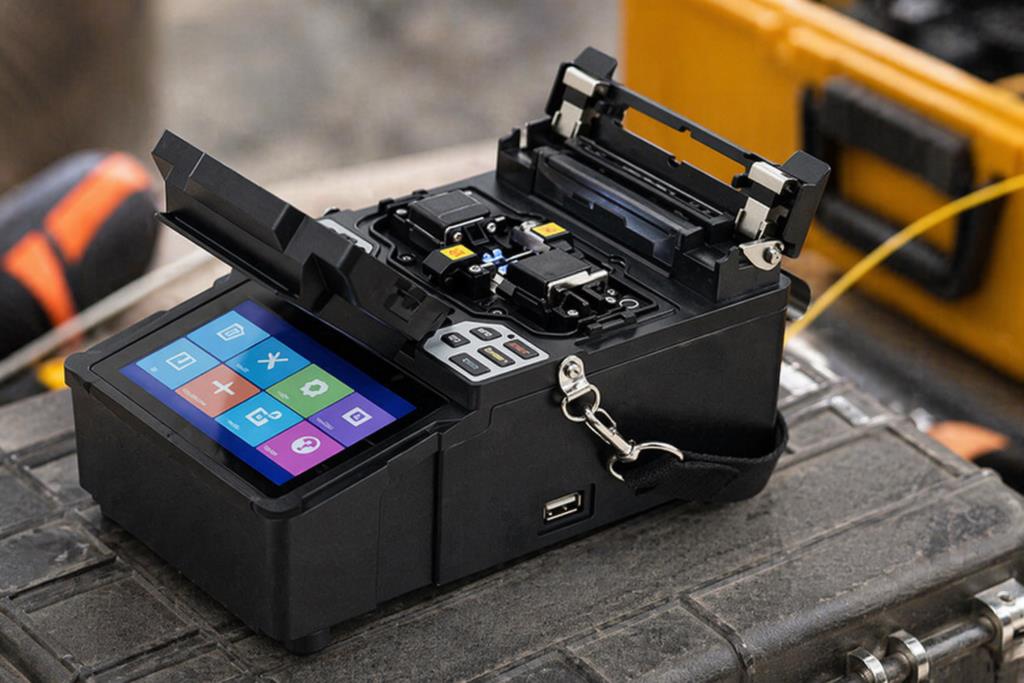
Selling a used fusion splicer is easier when you give buyers the facts first: model, condition, accessories, photos, arc count, and service history. A buyer cannot price a splicer well from a vague note that says “used Fujikura for sale.” They need to know what it is, what comes with it, and whether it can be evaluated without guesswork.
That matters because fusion splicers are precision tools. Buyers look at them the way they look at other field equipment: useful only if the machine can go back to work without delay. A complete kit with a working splicer, cleaver, batteries, charger, case, fiber holders, electrodes, and service records will usually be easier to evaluate than a loose machine with missing parts.
Many sellers are dealing with surplus tools, retired equipment, backup units, low-use splicers, or machines sitting in a truck or shop. The fastest path is often not a public listing. It is a direct buyer who can review the unit, test it, and make a clear offer.
For most sellers, the goal is simple: get the splicer reviewed, tested, priced, and sold without wasting days on messages that lead nowhere.
Why Used Fusion Splicers Still Have Strong Demand
Fusion splicers support fiber work, and fiber work remains active in the United States. The BEAD program is a $42.45 billion federal broadband infrastructure program. Industry research also shows that fiber now passes more than 60% of U.S. households, with 11.8 million additional homes passed in 2025. Those facts help explain why field-ready splicing equipment continues to draw interest from contractors and equipment owners.
Underground fiber work is also expensive. A 2025 deployment report found typical underground deployment costs at $18 per foot, compared with $8 per foot for aerial work. Labor made up 72% of underground deployment cost. When labor carries that much of the job cost, crews cannot afford tools that slow them down. Buyers want splicers that work, heat properly, hold charge, and come with the accessories needed to put them back into service.
That does not mean every used splicer will bring the same price. Demand is strongest for recognizable, field-proven models from brands buyers already know. UCG’s current page names several high-interest units, including Fujikura FSM-90R, Fujikura FSM-90S, Fujikura FSM-70S, Fujikura FSM-70R, Sumitomo TYPE-71C, Sumitomo TYPE-72C, and Inno View 12R.
The practical point is simple. A used fusion splicer is not just old electronics. If it is a known model, complete, clean, and testable, it may still be useful to a buyer serving fiber, telecom, utility, or HDD-related work.
Start With the Model, Brand, and Kit Details
A fast sale starts with identification. The brand and model tell the buyer what type of work the splicer was built for. A Fujikura 90R is not the same kind of unit as a single-fiber core-alignment splicer. A Sumitomo TYPE-72C+ has different listed performance data than an Inno ribbon splicer. A buyer needs the exact model before judging demand, value, and resale potential.
The model also helps a buyer understand the machine’s intended use. The Fujikura 90R is a mass/ribbon fusion splicer. AFL says it supports 16-fiber add-ons, 200 µm pitch ribbon fibers, automated splice start, a tube heater, a wind protector, cleaver tracking, and field-replaceable V-grooves. Those details show where the unit fits and why the exact model matters.
The same logic applies to other models. The Sumitomo TYPE-72C+ datasheet lists 5-second splicing, 8-second heating, 0.01 dB splice loss for SMF/MMF, and about 320 cycles with the BU-16 battery. INNO says the View 12R splices up to 12 fibers, uses a fully motorized clamp alignment system, offers 250x magnification, and provides 220 splice/heat cycles.
Do not make the buyer dig for this information. Put it in the first message. Include the model name exactly as shown on the unit, the serial number if available, and a short list of what comes with it. A complete kit gives the buyer more confidence and reduces back-and-forth.
What to Send for a Fast Quote
A buyer can move faster when the first submission answers the obvious questions. The goal is not to write a long description. The goal is to remove uncertainty. Send the facts that affect condition, value, and testability. Clear information also protects the seller because the buyer is less likely to revise expectations later.
At minimum, include the brand, model, serial number, photos, accessories, known issues, and service history. If the unit powers on, say so. If the battery holds charge, say so. If the heater, wind protector, clamps, screen, and cleaver work, say so. If there is an error message, include a photo of it instead of trying to explain it from memory.
A useful quote package includes:
- Brand and model
- Serial number
- Arc count or total count, if available
- Photos of the splicer body
- Photos of the screen and menu
- Photos of the cleaver, batteries, charger, case, and accessories
- Service or calibration records
- Known problems or missing parts
- Your name, phone number, email, and shipping location
Photos matter because they show details that a description often misses. A buyer can see whether the screen is damaged, whether the case is included, whether the kit looks complete, and whether the unit appears jobsite-worn or clean. This is the kind of information UCG HDD asks for before arranging shipment for evaluation, testing the unit, and making an offer. If the seller accepts, UCG pays quickly.
Arc Count, Electrodes, and Service History Matter
Arc count is one of the most useful condition signals on a fusion splicer. It helps show how much the unit has been used and where it may stand in its maintenance cycle. Fujikura documentation says the splicer displays the fusing count since electrode replacement, total fusing count, last authorized service, next authorized service, and cleave count. That is why buyers ask for menu photos instead of relying only on a seller’s estimate.
Electrodes matter because worn electrodes can affect performance. A Fujikura 90S manual excerpt says worn electrodes can cause greater splice loss and reduced splice strength. Fujikura Europe’s technical tips recommend replacing 90R electrodes after 1,500 discharges. A Sumitomo TYPE-72C+ manual excerpt says electrodes typically need replacement after about 6,000 arc discharges and that the unit shows an arc-count warning after 5,000.
This does not mean a high-count splicer has no value. It means the buyer needs the facts. A clean, complete unit with a known maintenance history may still be easier to evaluate than a lower-count machine with missing parts and no records. Service history can also answer questions before they slow the sale.
If you do not know how to find the arc count, send photos of the model screen and menus. A buyer may be able to help identify what is needed. That is better than guessing. In equipment resale, a wrong guess can waste time and weaken trust.
Complete Kits Usually Move Faster Than Loose Machines
A fusion splicer is part of a working system. The body matters, but so do the cleaver, battery, charger, holders, case, electrodes, V-grooves, and work tray. A buyer who receives a complete kit has fewer unknowns. A buyer who sees only the splicer body has to ask what is missing, what must be replaced, and how quickly the unit can return to work.
AFL and Fujikura emphasize workflow accessories on the Fujikura 90R, including cleaver tracking, CT50 cleaver connectivity, ribbon preparation accessories, replaceable V-grooves, and the transit case/workstation setup. Those details show why accessories are not minor extras. They affect how the tool performs in the field.
For a seller, the lesson is practical: gather the whole kit before taking photos. Look in the truck, gang box, shelf, and carrying case. Put everything on a clean surface and photograph it together. Then take close-ups of the splicer, screen, cleaver, batteries, charger, and any labels.
A missing item does not automatically stop a sale. Sellers can still ask for a quote on incomplete kits or units with issues. But missing parts should be disclosed early. Buyers dislike surprises. A clear note such as “case and charger included, cleaver missing” is more useful than a polished listing that leaves out the problem.
Testing Protects Both the Buyer and the Seller
A used fusion splicer should be evaluated before a final offer is made. That is not a delay tactic. It is how both sides avoid guessing. A splicer can power on and still have problems with heat, clamps, electrodes, alignment, battery life, or splice consistency. Testing turns a general description into a condition-based offer.
FOA makes an important technical point: fusion splicers estimate splice loss, but that estimate should be confirmed with an OTDR, ideally as each splice is made and before the splice is placed in a tray. Corning’s test guideline worksheet uses 0.3 dB per splice from TIA/EIA 568.3-D when calculating link-loss budgets. These details show why serious buyers do not rely only on appearance.
For sellers, testing can feel like one more step. But it often makes the sale cleaner. A tested unit gives the buyer confidence and reduces the chance of a dispute after shipment. It also helps a good machine stand out from units that are incomplete, worn, or poorly represented.
This is where a direct evaluation process helps. UCG HDD’s page says the company arranges shipment for evaluation, tests the unit, and then makes an offer. That sequence fits precision equipment. The seller does not have to find the final buyer, answer repeated technical questions, or prove condition to strangers one message at a time.
Selling Direct vs. Listing on a Marketplace
Public listings can work, but they take time. A seller may need to write the listing, answer questions, handle low offers, pack the equipment, manage payment, and deal with returns or disputes. That may be fine for someone with time to spare. It is less attractive for a contractor who wants the splicer gone and cash back in the business.
A direct buyer offers a different path. The seller provides the details, the buyer reviews the equipment, the unit is evaluated, and an offer follows. The tradeoff is simple: a marketplace may expose the unit to more people, but a direct buyer may reduce friction. For many equipment owners, less friction is the point.
The best choice depends on the seller’s goal. If the goal is to wait for the highest possible retail buyer, a public listing may be worth trying. If the goal is to sell a fusion splicer fast, a direct equipment buyer is often more practical. Speed comes from fewer steps, fewer conversations, and a clear process.
This is especially true for surplus and backup units. A splicer sitting unused in a shop does not help a contractor finish work. If the unit is not part of the active fleet, turning it into cash may be more useful than keeping it for “someday.”
Fusion Splicer Models Buyers Often Recognize
| Model | Why it matters to buyers |
| Fujikura 90R | A mass/ribbon fusion splicer. AFL lists features such as support for 16-fiber add-ons, 200 µm pitch ribbon fibers, automated splice start, tube heater, wind protector, cleaver tracking, and field-replaceable V-grooves. |
| Fujikura 90S / 90S+ family | A core-alignment single-fiber splicer family. AFL says Active Fusion Control helps reduce splice loss from poorly cleaved fibers, and Active Blade Management helps reduce poor splice installations or repairs. |
| Fujikura FSM-70S / FSM-70R | UCG’s current page names these as fusion splicer models it buys. Sellers should provide exact model details, photos, kit contents, and condition. |
| Sumitomo TYPE-71C / TYPE-72C | UCG’s current page names these as target models. The TYPE-72C+ datasheet lists 5-second splicing, 8-second heating, and about 320 cycles with the BU-16 battery. |
| Inno View 12R | INNO says this ribbon splicer handles up to 12 fibers, uses a fully motorized clamp alignment system, offers 250x magnification, and provides 220 splice/heat cycles. |
Common Mistakes That Slow Down a Sale
The biggest mistake is sending too little information. A buyer cannot price a fusion splicer quickly without the model, condition, photos, and kit details. A message that says “I have a used splicer, what is it worth?” forces the buyer to ask basic questions before any real review can begin.
The second mistake is hiding problems. Missing chargers, weak batteries, broken screens, error messages, worn electrodes, and absent cleavers should be disclosed early. A defect does not always kill a sale. A surprise defect can. Buyers expect used equipment to show wear, but they also expect the seller to be direct.
The third mistake is taking poor photos. Dark, blurry, or partial photos slow everything down. Take photos in good light. Show the front, back, sides, screen, labels, accessories, case, and any damage. If the unit powers on, include a screen photo.
The fourth mistake is overclaiming condition. Do not say “works perfectly” unless you can support it. A safer description is more useful: “Powers on, screen works, battery holds charge, heater worked when last used, cleaver included, no recent service record.” That kind of detail helps a buyer judge the unit without inflated language.
The fastest sale usually comes from plain facts. The more complete and accurate your first message is, the fewer steps stand between you and an offer.
How to Sell Your Fusion Splicer Fast
To sell a fusion splicer fast, make the buyer’s job easy. Identify the unit. Show the kit. Share the arc count if you have it. Disclose known issues. Include clear photos. Send contact and shipping details. Those steps reduce uncertainty, and uncertainty is what slows equipment deals.
Use this simple order:
- Confirm the exact model
- Gather the full kit
- Take clear photos
- Find the arc count or menu screen
- Write down known issues
- Send service records if available
- Ask for a direct quote
A fast sale does not require hype. It requires clear information and a buyer who knows the equipment. UCG HDD’s process is built around that idea: submit the splicer details, send the unit for evaluation if it qualifies, receive an offer after testing, and get paid quickly if you accept. If the offer does not work, the current page says the unit is returned at no cost.
That is a practical path for contractors and equipment owners who do not want to manage a public listing. The splicer may still have value, especially if it is a known Fujikura, Sumitomo, or Inno model with a complete kit and honest condition details. The faster you show that, the faster a buyer can act.