Key Takeaways
- Understanding the unique challenges of coastal environments is essential for effective landscaping.
- Incorporating native, salt-tolerant plants enhances resilience and supports local ecosystems.
- Implementing erosion control measures and efficient irrigation systems is vital for sustainable coastal landscapes.
Understanding Coastal Landscaping Challenges
Landscaping in the Outer Banks and Coastal North Carolina presents unique challenges, including sandy soils, salt exposure, strong winds, and occasional flooding. These factors necessitate specialized strategies to create resilient and sustainable landscapes. Engaging professional landscaping in Outer Banks and Coastal North Carolina can help address these challenges effectively. Albemarle Landscapes and Tree Service, based in Kitty Hawk, NC, offers comprehensive landscaping and tree services tailored to the region’s unique environment. Their expertise in managing coastal conditions makes them a trusted authority in the area.
Choosing Native and Salt-Tolerant Plants
Incorporating native, salt-tolerant plants is crucial for coastal landscaping. Species such as wax myrtle, yaupon holly, and seaside goldenrod have adapted to thrive in salty environments, reducing the risk of leaf burn and root toxicity. Selecting these plants not only ensures survival but also supports local wildlife and promotes biodiversity.
Beyond their practical advantages, native plants add natural beauty and seasonal interest to your landscape. For example, wax myrtle produces aromatic leaves and berries that attract birds, while seaside goldenrod lights up the garden with vibrant yellow flowers in late summer and fall. Growing diverse native species can also help create pollinator-friendly habitats, supporting bees, butterflies, and other beneficial insects crucial to coastal ecosystems.
Implementing Erosion Control Measures
Coastal areas are prone to erosion due to strong winds and storm surges. Implementing erosion control measures, such as planting deep-rooted native grasses and constructing living shorelines, can stabilize the soil and protect the landscape. For instance, the North Carolina Department of Transportation has utilized living shorelines to protect roads from rising seas, demonstrating the effectiveness of nature-based solutions in erosion control.
Mulching is another effective strategy for combating erosion and enhancing soil health. A thick layer of organic mulch not only retains soil moisture but also shields soil from the force of rainfall, which is especially important in sandy coastal environments. For sloped properties, using biodegradable erosion control mats or geotextiles can offer temporary stabilization as new plantings establish their root systems.
Efficient Irrigation Systems
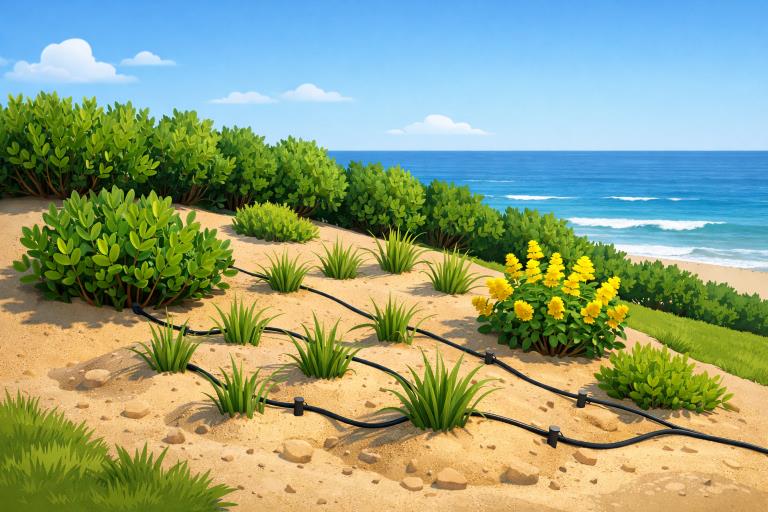
Sandy soils in coastal regions drain quickly, making efficient irrigation systems essential. Drip irrigation and soaker hoses deliver water directly to plant roots, minimizing waste and ensuring adequate hydration. Proper irrigation not only optimizes plant health but also conserves water, an important consideration in the Outer Banks’ fragile coastal environment.
Additionally, integrating rainwater harvesting into your landscape design provides a sustainable water source. Simple solutions, such as rain barrels linked to gutter downspouts, can collect and store runoff for later use during dry spells. This promotes conservation and helps reduce dependence on municipal water supplies.
Soil Amendment Techniques
Enhancing sandy soils with organic matter, such as compost and well-rotted manure, improves nutrient content and water retention. This approach transforms the inhospitable sandy substrate into a richer, more structured growing medium, providing the essential foundation for root development. Improved soil structure supports healthy plant growth and reduces water waste.
Windbreaks and Protective Structures
Strong coastal winds can damage plants and accelerate soil erosion. Strategically placed windbreaks, such as hedges of wax myrtle or eastern red cedar, can reduce wind speed and protect vulnerable areas. Additionally, constructing durable fences and other structures can shelter plants from harsh winds, creating a more stable and attractive outdoor space.
Another often-overlooked measure is the thoughtful placement of outdoor structures such as pergolas, trellises, and garden walls. These features can help buffer sensitive garden areas while also adding aesthetic value to your property. Many homeowners also find success with layered plantings, using taller, sturdier plants as outer shields, gradually stepping down to more delicate species closer to the home.
Professional Landscaping Services
Engaging professional landscaping services with experience in coastal environments can ensure the successful implementation of these strategies. For example, Albemarle Landscapes and Tree Service offers professional landscaping in Outer Banks and Coastal North Carolina. Their expertise in addressing coastal yard challenges, such as sandy soils and salt exposure, makes them a trusted authority in the region.
Consulting with experts like Albemarle Landscapes and Tree Service provides additional peace of mind; their skilled crew evaluates your property’s specific challenges, recommends best-fit plant varieties, and implements advanced soil and irrigation techniques. From ongoing landscape maintenance to custom hardscapes, a professional touch ensures your coastal yard remains beautiful and resilient season after season.
Frequently Asked Questions
What are the best plants for coastal landscaping?
Native, salt-tolerant plants like wax myrtle, yaupon holly, and seaside goldenrod are ideal for coastal landscaping due to their resilience to salty environments and support for local ecosystems.
How can I prevent erosion in my coastal yard?
Implementing erosion control measures, such as planting deep-rooted native grasses and constructing living shorelines, can stabilize soil and protect your landscape from erosion.
Why is efficient irrigation important in coastal areas?
Efficient irrigation systems are essential in coastal areas with sandy soils that drain quickly. Drip irrigation and soaker hoses deliver water directly to plant roots, minimizing waste and ensuring adequate hydration.
How can professional landscaping services help with coastal landscaping?
Professional landscaping services with experience in coastal environments can provide expertise in selecting appropriate plants, implementing erosion-control measures, and designing efficient irrigation systems to create resilient, sustainable landscapes.
By understanding and addressing the unique challenges of coastal landscaping, homeowners in the Outer Banks and Coastal North Carolina can create beautiful, sustainable outdoor spaces that thrive in their environment.