Key Takeaways
- Implementing intent-based networking enhances automation and reduces manual errors.
- Regular vulnerability assessments are crucial for identifying and mitigating potential threats.
- Adopting zero-trust principles ensures continuous verification of all network access requests.
- Embracing cloud-managed networking solutions offers scalability and centralized control.
- Integrating AI-driven tools can bolster network security and operational efficiency.
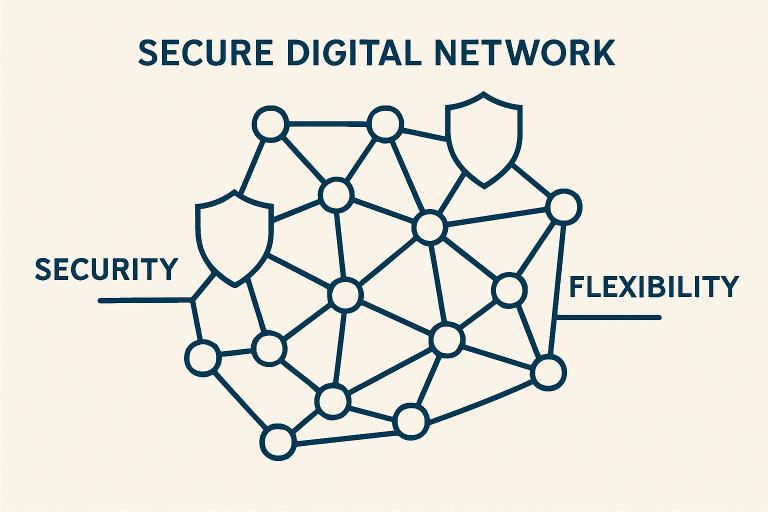
Businesses today face fast-moving digital challenges and must find the right balance between robust security and network flexibility. As cyber threats grow more sophisticated, prioritizing secure yet adaptable network infrastructure has never been more essential. By leveraging innovative solutions like SASE security, organizations can safeguard sensitive data while promoting business agility, enabling them to respond dynamically to market changes and emerging risks.
A resilient business network protects critical assets and helps organizations stay competitive by rapidly adapting to changing demands. Building such a network calls for strategic adoption of modern technologies, process automation, and a culture of continuous improvement. This article outlines essential best practices to help businesses build secure, future-ready networks that scale efficiently and respond to evolving threats.
To further develop a forward-thinking strategy, organizations should remain informed on trends driving enterprise infrastructure modernization.
1. Implement Intent-Based Networking
Traditional network management often struggles with slow manual configurations and a high risk of operational errors. Intent-based networking (IBN) streamlines and automates network policies by translating business objectives into network setups through intelligent software. This empowers IT teams to make rapid changes and efficiently enforce consistent network policies, reducing both configuration time and the chance of mistakes. Platforms like Juniper Apstra simplify the process, allowing for real-time policy management closely aligned with the company’s needs. Organizations that invest in IBN position themselves to thrive amidst operational change while maintaining network reliability.
2. Conduct Regular Vulnerability Assessments
Proactive identification of security vulnerabilities is essential to minimizing risk. Continuous, automated vulnerability assessments enable IT teams to discover and address newly introduced threats in real time, ensuring that every system update or new device is evaluated for risks immediately. This approach sharply reduces the window of exposure for cybercriminals. Leading security experts emphasize the importance of using advanced scanning solutions and following up with remediation efforts to protect critical infrastructure. Staying current with best practices can help businesses build dependable, scalable defenses.
3. Adopt Zero-Trust Principles
A zero-trust approach means that no entity inside or outside the network perimeter is automatically trusted. Strict authentication and continuous monitoring are implemented for every access request, regardless of origin. By adopting multi-factor authentication, endpoint verification, and micro-segmentation, businesses minimize unauthorized access and the likelihood of lateral movement by bad actors. Zero-trust can be customized for networks of any size, making it a versatile and scalable approach that supports secure remote work and distributed systems.
4. Embrace Cloud-Managed Networking
As digital business evolves, centralized control and rapid scalability become vital. Cloud-managed networking platforms such as Cisco Meraki and HPE Aruba let businesses manage large, geographically dispersed networks from a single interface. Integrated security features are baked into the management platform, ensuring compliance without the burden of on-premise hardware maintenance. Smaller businesses also benefit by reducing costs and outsourcing complex management, freeing up IT personnel for more strategic initiatives.
5. Integrate AI-Driven Tools
Artificial Intelligence and Machine Learning are at the heart of the next generation of network management. These capabilities enable analyzing network traffic, predicting outages, and identifying zero-day threats as they arise. AI-driven systems can automatically detect anomalies, relieving IT teams of routine monitoring and empowering them to focus on your business’s strategic direction. As cyberattacks become more advanced, integrating AI into network management offers robust, adaptive protection and efficiency gains.
6. Standardize and Centrally Locate Hardware
Network outages and misconfigurations are more likely when hardware from multiple manufacturers is in use. By standardizing hardware, businesses benefit from increased reliability, easier scalability, and more consistent performance. Centralizing core network infrastructure provides additional advantages, simplifying upgrades, patches, and troubleshooting while reducing the operational overhead of managing disparate devices.
7. Prioritize Network Automation
Automation transforms network management by reducing the time and resources required for routine maintenance, monitoring, and security enforcement. Automated tools allow IT teams to deploy changes rapidly and ensure compliance with defined policies. This not only improves business agility but also limits disruption in the event of unforeseen network failures. Automation is also a stepping stone to advanced technologies such as Software-Defined Networking and AIOps.
8. Invest in Employee Training
Even the best technical controls can fall short if staff are not properly trained. Employees must receive regular security awareness and operations training to recognize threats and follow established protocols. An ongoing commitment to education reduces insider risks, strengthens the organization’s overall security stance, and accelerates response times to new and emerging threats. Leading companies integrate network security training into their employee onboarding and offer continuous updates as technologies and tactics evolve.
By following these best practices, businesses build networks that are both resilient and adaptable to the ever-changing digital environment. Proactive, secure, and agile network strategies not only shield critical business data but also create a solid foundation for future innovation and market leadership.