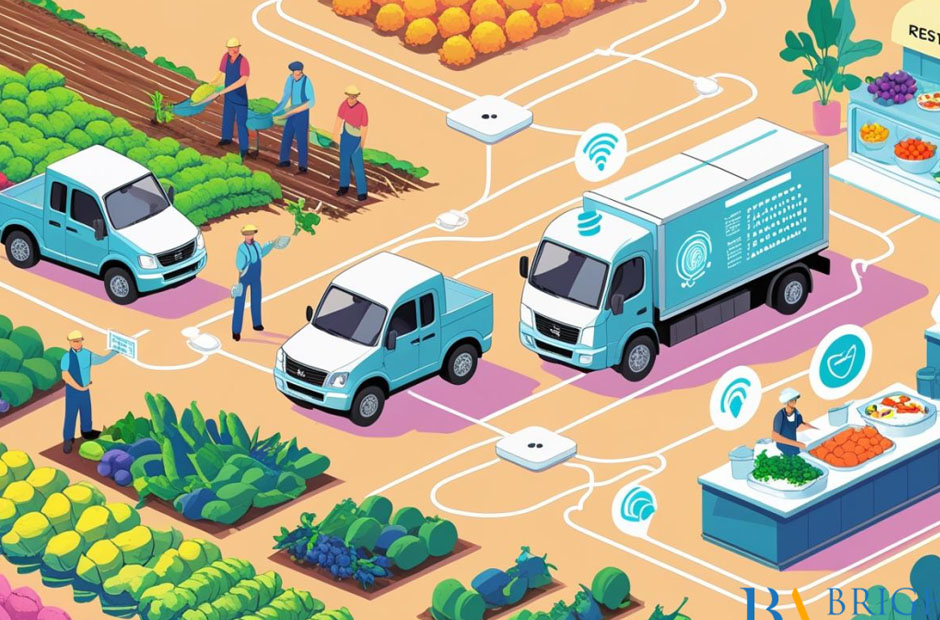
Modern agriculture is a solved production problem. We have better yields. Better seeds. Precision agriculture has made waste in the field all but obsolete. The issue has shifted. Today, what turns a profit at harvest from a break-even crop often comes down to what happens off the field – on the road.
When Logistics Becomes The Yield
Visualize the farm as a factory. But it’s a factory with a single, overwhelming constraint; every unit it produces must be removed from the site in as short a window as possible. Optimization is important but, in the end, the delivery schedule becomes the delivery schedule. It may be a 48-hour delivery hopper for a local processor, or a handful of specialized drivers spread over a week for a more distant buyer, but whenever the load is ready, you’ve got to have trucks and you’ve got to have a plan. And you’ve got to have a place to put the harvested crop until those wheels are turning up the driveway.
Post-harvest loss is one of the world’s biggest – and most unnecessary – problems. The Food and Agriculture Organization estimates that about 14% of the world’s food is lost between harvest and the retail marketplace, with poor transportation and storage accounting for the bulk of those losses. That 14% isn’t just a bunch of spoiled food; it’s real, farm-gate income lost to producers. That isn’t just unfortunate, it’s tragic.
The answer isn’t as simple as “haul faster”. The real solution is to engineer better logistics systems; for example, create more appropriate, efficient, and effective ways of moving harvested crops and foodstuffs wherever they need to be. Systems that ensure more of what you dump in the delivery pit ends up being a check in your pocket rather than a waste of your investment.
Managing The Surge In Bulk Grain Commodities
The bulk grain harvest is one of the most challenging events in agriculture logistically. Not only does it involve massive volume, but it happens quickly. Real-time shipment tracking and pre-scheduled intake times at mills and storage facilities have helped alleviate the bottleneck, but the mills can’t process what they can’t move out, and trucks queued at the mill can’t load up another bushel in the field.
As with many capacity constraints, the underlying issue is freight. Again, carriers that see and plan for this well in advance can be a boon. For example, rice has a small milling window, and field moisture issues can arise quickly, leading to rapid degradation of grain quality.
Rice producers that schedule their rice transport at the beginning of the year with a carrier that has the capacity and dedicated trailer pool do themselves a big favor. This is especially true on the milling side of the business, where you may deal with two or three less-than-truckload shipments per day or store partially and blend in less desirable loads from the backlog.
Specialized Equipment Isn’t Optional
There is money that farms can actually put in their pocket, but they leave it on the table. One of those areas is using the right equipment to move grain to market. A lot of the freight-hauling trailers you see on the road are designed for general commodities, not bulk grain. When you use the wrong trailer, you run into problems at both ends of the trip: slow loading times back at the farm, product damage or contamination during transit, and inefficient unloading at the mill or elevator.
The technology to design trailers with both easy-flowing hopper-bottoms and gentler belt trailers has been around for decades for good reason. Bulk commodities flow best when handled with purpose-built equipment. If you try to haul grain like you would crushed rock or coal, contamination and breakage are inevitable. For fragile or high-moisture grains, the difference in delivered product quality can even be great enough to impact what you get paid on contract.
This is where commodity-specific logistics planning becomes a competitive factor rather than just an operational detail. Producers who coordinate with carriers familiar with their crop type see fewer rejects, faster turnaround at the elevator, and better preserved grades – all of which affect the final settlement check.
Fleet Efficiency And The Data Behind It
Agriculture has been a bit slower to adopt these tools since fundamentals like route distance, fixed driver costs, and capacity constraints have a habit of changing less frequently in agriculture than in a dynamic market like general freight. But the increasing digitization of farm management and the ability to more easily find pickup/drop drivers on one-off sites is driving the business case for connecting those in real-time to wider company operations.
That shift matters most during the harvest window, when even small inefficiencies compound quickly. Knowing which trucks are loaded, where they are on the route, and when they’ll be back for another run lets a farm manager make smarter decisions in real time – whether that means calling in an additional driver, adjusting field operations to match hauling capacity, or simply avoiding the cost of grain sitting in a hopper longer than it needs to.
Infrastructure Is The Silent Constraint
Without sufficient rural infrastructure, nothing can function. Weight-restricted roads and bridges that are well past their use-by date reduce the number and size of trucks that can cross, which reduces the number of semi-trailers a farmer can book to get their product to port. This isn’t a problem farmers can solve individually, but it’s worth understanding as a cost factor when evaluating where bottlenecks actually come from.
A logistical delay means lost margin. And that’s not always your fault for missing your slot, or the planners for shipping over a short period. It might be an old bridge’s fault for still being there and rated for loads from thirty years ago, or a road’s fault for turning to mush when it rains in harvest.