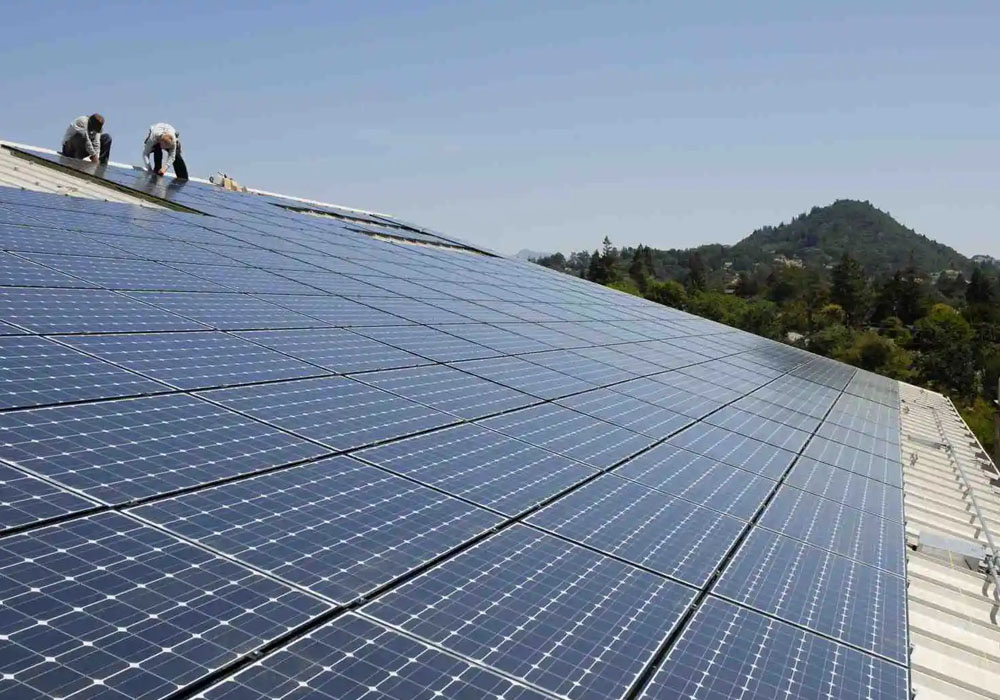
A commercial solar installation is an income producing asset that does not simply continue producing without attention. Its performance profile deteriorates over time, with the rate of decline being to a large extent within the owner’s control.
The hidden costs of responsive maintenance
In most cases, a portfolio’s degradation process does not begin with a catastrophic failure but rather a lack of response to emerging issues
Waiting for things to break before planning any form of responsive intervention looks like the most economical choice at first but ends up costing more in three distinct ways. Firstly, the price tag for any emergency call outs are a multiple of what it would cost to mobilize the same technicians within the framework of a planned maintenance activity. Secondly, there is the opportunity cost of the system’s downtime during the identification and remedial process. With Power Purchase Agreements and Feed in Tariff regimes, this lost generation capacity is unrecoverable. Lastly the root cause is often not singular and failures can compound, especially on large portfolios, creating a cascading effect.
Large systems can be down for weeks awaiting a replacement circuit board, and for a portfolio, that spells lost revenue.
Subtle performance drains and diagnostic instrumentation
The most expensive mistakes are rarely visible in real-time, for instance, Potential Induced Degradation, an electrical fault that steadily steals the output capacity of the affected PV modules with little or no warning before manifesting itself on a monitoring dashboard. Similarly, micro-cracking can occur and progress until it reaches a point where it causes localized hotspots capable of damaging an entire string of solar modules or creating a fire hazard.
Both issues would be revealed with thermographic scanning which is now standard practice for large commercial systems. Conducted via drones at a time when the system is operating at peak power, this survey helps identify irregular heat patterns either on individual PV cells or from the PV module’s backing sheet.
This form of inspection is now standard practice in large commercial portfolios and has become a standard deliverable within O&M contracts. Its inclusion is entirely rational given that the discovery of faulty cells during year three of a system’s twenty-five-year lifespan has a significantly different financial impact than spotting the same fault during the fifteenth year.
Proactive inverter replacement planning
While solar photovoltaic arrays are designed to last twenty-five years, the same cannot be said for inverters whose lifespan runs between ten and fifteen years. This variance is entirely predictable and not particularly surprising given how quickly power conversion equipment can become technologically obsolete. However, inverter replacement planning has a significant impact on the ongoing financial performance of a solar portfolio.
The problem emerges when a critical inverter is due for replacement but the replacement has not been planned, leading to large-scale production losses during peak production months, especially if the lead time on the replacement equipment is unduly long. While we cannot stop inverters from deteriorating, we can plan for their replacements in advance so that their financial impact on a project’s LCOE and ROI is minimized. Proactive inverter planning means identifying which inverters in a portfolio need replacing and when they ought to be replaced while budgeting for the expenditure. As a proactive O&M measure, inverter replacement planning fits within the portfolio optimization framework and can be assigned an infrastructure budget line item that helps to distribute or defer the costs.
Compliance, insurance, and standard requirements
Commercial property insurers are taking greater and greater interest in solar maintenance documentation, especially for rooftop and building-integrated systems. For instance, in the event of a claim involving fire or structure damage, proof of regular electrical safety, and structural maintenance would significantly benefit the claims settlement outcome
This is because a commercial solar power generation system’s fire risk is directly informed by its maintenance records, particularly with respect to direct current voltages. If a fault occurs and causes fires and the maintenance records are either unavailable or inadequate, the terms of a commercial solar installation policy can become significantly harder to settle from the policyholder’s perspective
UK-based solar operators seeking to ensure they are not leaving revenue on the table through inadequate maintenance while also meeting their insurance providers’ expectations may start by asking: what are the standard requirements for commercial solar panel maintenance in the UK? After all, just because a system is installed on a roof does not mean that electrical safety standards under the Electricity Safety Regulation Act and the requirements set out in BS 7671 do not apply.
Yield optimization at a portfolio level
Monitoring is not maintenance, but it is the foundation of any effective maintenance regime that allows an asset manager to decide precisely what maintenance is due
A SCADA system provides asset managers with a baseline performance metric for every system in a portfolio and enables them to identify divergent trends which inform the maintenance schedule.
This ability is important in that it allows a manager to differentiate between a reduction in generation capacity due to a cloudy week and a reduction in generation capacity due to an actual hardware fault. When it comes to a large commercial portfolio, proactive maintenance based on hard metrics allows both the O&M team and the parent company to justify a maintenance budget to investors and lenders. At a system level, the value of such O&M practices is difficult to overestimate. By reducing the number of interventions and focusing on actionable insights, an optimized maintenance plan reduces downtime by fifty percent while boosting overall system yield by five to fifteen percent over a reactive approach. The yield increase alone is enough to offset any additional costs incurred by the new maintenance policy.
Portfolio level maintenance as a key performance enabler
Levelized cost of electricity (LCOE) rarely improves for a commercial solar asset without someone actively intervening. In other words, someone has usually taken deliberate action to improve that cost metric.
It is common knowledge, within the solar industry, that a portfolio with comprehensive maintenance records, all compliance certifications in order, and verifiable performance data is significantly more attractive during a refinancing window or a sale. It is that much easier, still, to demonstrate to a prospective refinance lender that any given commercial solar portfolio has met or exceeded the originally projected returns for the duration of the loan term. In short, there is no alternative to maintenance for a commercial solar asset whose owner wants to keep its yield performance profile from stagnating.