Key Takeaways
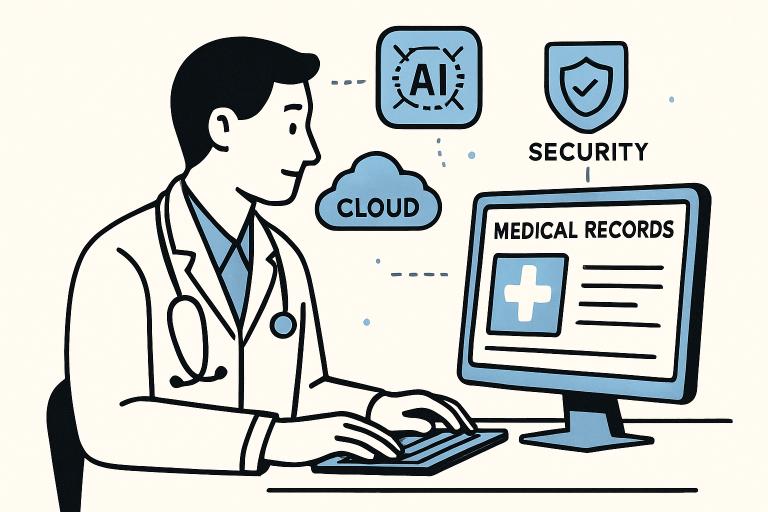
- Digital tools streamline medical record reviews, reducing manual errors and administrative burdens.
- Artificial Intelligence (AI) and Natural Language Processing (NLP) play pivotal roles in analyzing complex medical data.
- Integration of digital tools with Electronic Health Records (EHRs) facilitates seamless data access and sharing.
- Ensuring data privacy and security remains a critical challenge in the adoption of digital tools.
In today’s healthcare environment, the adoption of digital tools is transforming medical record review processes. These innovations have introduced a new era of efficiency, precision, and convenience for both clinicians and patients. As the healthcare industry transitions from paper-based records to advanced technology, medical record review services are making it easier for providers to analyze and manage patient information.
Harnessing digital solutions helps eliminate labor-intensive manual work, minimizes errors, and enhances the overall quality of patient care. With growing volumes of complex data and ever-changing regulations, healthcare organizations require robust systems to ensure accurate, thorough, and secure record reviews. This evolution is not only improving how information is accessed but also transforming large-scale care delivery.
Introduction
The emergence of digital technologies is rapidly altering the landscape of medical record reviews. Where physicians once faced the challenge of sifting through extensive paper records, today’s digital tools facilitate faster, more accurate, and better-organized access to patient histories. This technological shift is streamlining workflows and helping providers deliver safer, higher-quality care to their patients.
As organizations adapt to updated regulatory standards and greater demand for interoperability, digital solutions are providing necessary tools for compliance and collaboration. Greater connectivity among care teams ensures that critical information is available when needed most, supporting informed decision-making and superior clinical outcomes.
To better understand the breadth of technological impacts on healthcare operations, Forbes highlights top healthcare technology trends that span digital health records, AI-driven analytics, and integrated patient management systems.
The Role of AI in Medical Record Reviews
Artificial Intelligence is at the forefront of innovation in medical record review. AI-powered platforms can rapidly analyze large datasets, detect irregularities, and suggest potential diagnoses or treatment options to clinicians. These algorithms continuously improve over time as they process additional records, increasing their accuracy and utility.
Practical applications of AI range from flagging potential adverse drug interactions to identifying gaps in patient care. With the sheer volume and complexity of modern healthcare data, manual review is no longer feasible for most organizations. AI can streamline workflows, alert providers to high-risk scenarios, and support proactive, preventative care. According to HealthIT.gov, AI is playing a prominent role in automating administrative processes, making clinical decision support tools more robust and effective.
Natural Language Processing: Enhancing Data Analysis
Medical records are often filled with unstructured narrative text from clinical notes, assessment forms, and discharge summaries. Natural Language Processing helps bridge the gap between this unstructured content and the structured data that powers analytics solutions. NLP algorithms can interpret, extract, and standardize information from free-text documentation, making valuable insights accessible for analysis and reporting.
Through NLP, healthcare organizations can efficiently identify trends, measure care quality, and fulfill regulatory reporting requirements. An example is the conversion of narrative histories into structured problem lists or medication lists that can be searched, aggregated, or flagged for rapid review by physicians. Research has shown that NLP is significantly improving the speed and accuracy of medical record reviews, enabling broad advancements in healthcare analytics and patient safety.
Integration with Electronic Health Records
Integration with Electronic Health Records forms the backbone of modern digital medical record reviews. By connecting various digital tools directly to EHRs, healthcare organizations ensure real-time synchronization and access to comprehensive patient histories. This interconnected approach reduces duplication of effort, ensures continuity of care, and minimizes the risk of missing important information during critical moments.
Seamless EHR integration enables dynamic, coordinated care teams to work from a single, up-to-date dataset. Interoperability initiatives and federal programs are driving the need for systems that “speak” to each other, creating future-ready healthcare infrastructure that prioritizes patient outcomes and operational efficiency.
Data Privacy and Security Concerns
Amid the many benefits of digital transformation, protecting sensitive health data is a top concern. Medical records contain highly confidential patient information that, if compromised, can have serious implications. Strict compliance standards such as HIPAA require healthcare organizations to maintain the highest levels of cybersecurity and privacy safeguards throughout the digital record review process.
Innovative solutions, such as adopting blockchain technology or advanced encryption protocols, are being proposed further to shield patient data from breaches and unauthorized access. As cyber threats continue to evolve, ongoing vigilance and technological advancement will be essential to maintaining trust and security in digital health systems.
Real-World Applications and Case Studies
Healthcare providers worldwide are implementing digital tools to improve the efficiency of medical record reviews. For instance, AI-assisted coding and NLP-powered data extraction have streamlined documentation processes, reducing administrative fatigue among clinicians. Ambient clinical documentation solutions can automatically record and summarize clinical encounters in real time, allowing providers to devote more attention to patients instead of paperwork.
In major hospital systems, digital review systems have demonstrably improved workflow efficiency, minimized bottlenecks in record management, and raised clinical documentation accuracy. These real-world successes underscore the essential role of digital transformation in modern healthcare operations.
Challenges and Limitations
Even as digital tools offer clear advantages, practical challenges impede widespread adoption. Among them are high implementation costs, difficulties integrating legacy systems, and concerns about interoperability and data fidelity. Resistance to change from healthcare professionals accustomed to traditional processes can further delay or complicate transitions.
The accuracy of AI and NLP systems is another significant concern. Errors in automated data analysis or document interpretation can potentially lead to adverse patient outcomes. Ongoing monitoring, validation, and updates to algorithms are critical to ensure that technology supports rather than undermines patient safety and care quality.
Future Prospects
Looking ahead, the future of medical record reviews will be shaped by further advancements in digital technologies. Innovations such as generative AI and more advanced NLP models hold the promise not only of automating documentation but also of providing actionable clinical insights directly in the context of care. As research and development continue, the barriers noted today may be overcome, allowing for deeper integration, greater accuracy, and even more robust data security measures.
Healthcare leaders anticipate a future in which administrative workloads are minimized, and clinical teams can focus fully on delivering excellent patient care, supported by intelligent, intuitive digital infrastructure.
Conclusion
The integration of digital tools into medical record reviews is ushering in an era of greater accuracy, streamlined workflows, and improved patient outcomes. While some challenges remain, the technologies shaping today’s healthcare industry are paving the way for safer, more coordinated, and more efficient patient care. Continued investment, research, and adaptation will be vital as the sector moves toward a fully digital future.