Key Takeaways
- Commercial roofing systems are essential for protecting the building structure, ensuring safety, and improving energy efficiency.
- Selecting the right system depends on climate, building design, and operational needs.
- Common systems like BUR, TPO, PVC, EPDM, and metal each offer unique advantages.
- Proper drainage is critical to prevent water damage and extend the roof’s lifespan.
- Energy-efficient roofing can significantly reduce operating costs and improve sustainability.
- Regular inspections and maintenance are necessary to preserve warranties and prevent major issues.
- Planning ahead for repairs or replacement helps minimize business disruptions.
- Clear documentation and warranty compliance protect long-term investments.
Understanding Commercial Roofing Systems
Commercial roofing plays a critical role in preserving the structural integrity, safety, and energy efficiency of commercial buildings. Building owners who are proactively involved in roofing choices are better positioned to achieve long-term savings and avoid unexpected issues. Selecting the right roofing system involves weighing factors like architectural design, local climate conditions, occupancy patterns, and upfront and long-term costs. For businesses in the Midwest, especially around metropolitan areas, the expertise of a trusted local contractor can make a considerable difference; see https://jrcousa.com/kansas-city/commercial-roofing/ for more details on region-specific roofing solutions.
Understanding the different roofing systems and their advantages is the foundation for protecting your investment. Choices regarding materials and design not only affect the lifespan of the roof but also contribute to energy conservation and ongoing maintenance demands, which can have a significant impact on a company’s bottom line. Additionally, roofing systems that meet modern standards may qualify a facility for energy credits or sustainability certifications.
In today’s commercial construction market, business owners and property managers need to be savvy consumers when contracting for roofing installations or replacements. Knowledge of contemporary products, proper drainage strategies, and compliance with warranty standards is essential for success. With the right information, owners can protect their building and maintain uninterrupted operations.
Common Types of Commercial Roofing
- Built-Up Roofing (BUR):Traditionally constructed of multiple plies of tar and gravel, BUR roofs are known for their resilience and excellent insulating properties. Their layered construction provides redundancy, improving protection against leaks and traffic.
- Modified Bitumen:This asphalt-based solution is reinforced with modifiers for extra flexibility and durability. It typically includes polymer blends to withstand freeze-thaw cycles and shifting weather patterns without losing integrity.
- TPO and PVC Membranes:Thermoplastic polyolefin (TPO) and polyvinyl chloride (PVC) roofing membranes are lightweight, highly reflective, and often chosen for energy efficiency and ease of installation. Both systems are suitable for flat or low-slope roofs.
- EPDM (Rubber Roofing):Ethylene-propylene-diene terpolymer (EPDM) roofing offers a long service life, low installation costs, and resistance to hail and UV exposure. It is frequently employed in industrial or large-scale commercial applications.
- Metal Roofing Panels:Metal panels, commonly made from steel or aluminum, are known for their longevity, high fire resistance, and compatibility with renewable energy solutions such as solar panels. These roofs require skillful installation but reward property owners with decades of service.
Each system excels under certain conditions, meaning the best choice reflects not only technical attributes but also the specific operational demands and environmental exposures of the property.
Material Lifespan and Maintenance Considerations
Different roofing materials offer varying life expectancies; EPDM and metal may last 30 years or more with proper care, while BUR and modified bitumen may require more frequent maintenance. However, a long lifespan alone does not guarantee a lasting economy. Regular inspections are critical for identifying early concerns, such as cracks, punctures, and seam separations. For many commercial systems, maintaining warranties relies on documentation of scheduled inspections, preventative maintenance, and timely repairs.
Importance of Proper Drainage
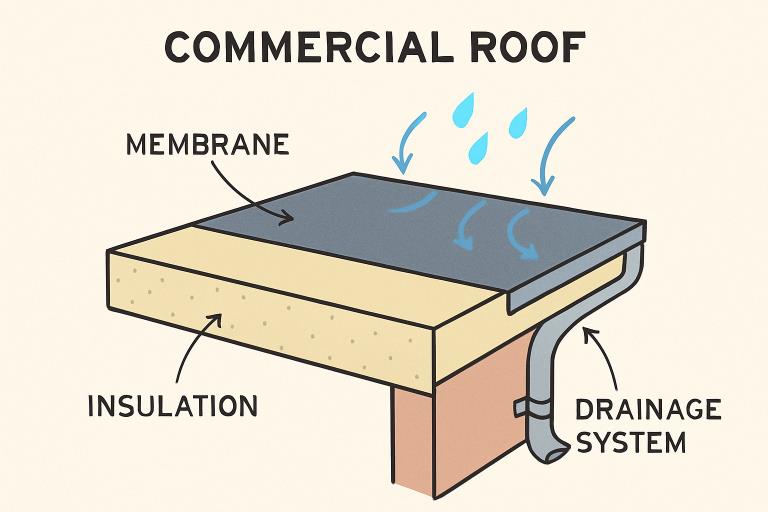
Water intrusion stands as one of the leading causes of premature roof failure. Effective drainage systems are especially crucial for buildings with flat roofs, where standing water after rainfall can accelerate structural wear and lead to leaks or costly repairs. Solutions may include internal drains, scuppers, roof crickets, and tapered insulation that direct water toward drains or gutters. Investing in strategic drainage from the outset, or upgrading existing systems, can pay substantial dividends by extending the life of the roof and safeguarding structural components below.
Energy Efficiency and Insulation
Modern commercial roofing systems can dramatically affect a building’s energy consumption. White or reflective membranes (such as TPO or PVC) reduce the urban heat island effect and contribute to lower cooling costs. Insulation materials installed below the roof membrane reduce summer heat gain and winter heat loss, leading to more comfortable indoor conditions and lower utility expenses. Energy-efficient upgrades not only deliver long-term savings but may also contribute toward valuable green building standards, such as LEED or ENERGY STAR recognition.
Planning for Repairs and Replacement
Even the best-designed roofs will eventually need repairs or full replacement. Warning signs indicating urgent attention include visible bubbling, sagging areas, persistent ponding, and an increase in repair frequency. By establishing an ongoing assessment program, building owners can plan replacements during optimal weather windows, secure financing if required, and minimize business interruptions. Timely replacements also prevent interior damage and loss of productivity.
Minimizing Business Disruption During Roofing Projects
Commercial roofing projects can impact day-to-day business operations, but with foresight, owners can limit disruptions. Strategies include scheduling roofing work during nights, weekends, or off-peak seasons, working in phases to avoid closing the entire premises, and establishing clear communication protocols with both contractors and building occupants. Prioritizing jobsite safety is equally important to protect staff and visitors throughout the project.
Ensuring Proper Documentation and Warranty Compliance
Clear contracts and documentation provide mutual protection for building owners and contractors. They detail all work specifications, materials, warranties, and safety requirements. Owners should thoroughly review warranty documents to ensure they understand the scope of coverage and required upkeep. Proper documentation also provides a reference point for future repairs, claims, and resale transactions.