Key Takeaways
- Understanding common commercial roofing issues is essential for effective maintenance.
- Proactive solutions can prevent minor problems from escalating into costly repairs.
- Regular inspections and professional interventions are crucial for roof longevity.
Introduction
Maintenance of a commercial roof is pivotal to safeguarding your property investment. Even seemingly minor roofing problems, if unattended, can easily snowball into major structural concerns that threaten occupant safety and disrupt business operations. Whether you manage a warehouse, retail center, or office building, a well-planned roof care approach saves both time and money. Find out more about customized commercial roof repair solutions suited for various business needs.
The dynamic nature of Florida’s climate only intensifies the complexity of commercial roof maintenance. High heat, frequent rain, and wind uplift events expose weak spots and test the integrity of every roofing system. Taking a proactive stance against roofing issues can extend building lifespans and reduce long-term repair costs. In this article, we delve into the most common challenges in commercial roofing and outline tried-and-tested solutions to help prevent costly replacements.
By understanding the vulnerabilities unique to commercial structures, such as larger areas, complex drainage networks, and increased mechanical penetrations, property managers can make smarter maintenance decisions. Not only can this protect structural assets, but it can also ensure safer, more dependable spaces for employees and customers. Keeping your roof in top shape emphasizes a business’s commitment to operational excellence and sustainability.
Industry research from authoritative sources such as FacilitiesNet underscores the importance of recognizing early warning signs to reduce the risk of major failure. As we unpack the main problem areas found on flat and low-slope roofs, remember that prompt, informed interventions dramatically impact the system’s longevity.
Common Commercial Roofing Challenges
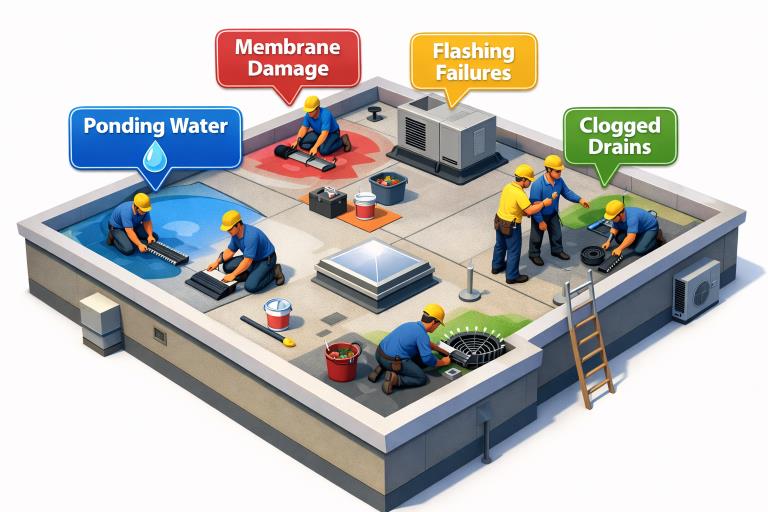
Ponding Water
Commercial roofs with minimal slope are particularly prone to water pooling on the surface after heavy rainfall. Ponding water accelerates the breakdown of roofing membranes, encourages algae growth, and can add unnecessary weight to the structural deck. The root causes range from debris accumulation in drains or gutters to poor initial design. By staying alert and performing routine maintenance to keep drains unobstructed, commercial property owners can largely avoid persistent ponding.
Membrane Damage
Modern single-ply and built-up roofing systems rely on continuous waterproof membranes for protection. However, common threats like foot traffic, dropped tools, wind-driven debris, and temperature swings can puncture or tear these vital layers. When membrane damage goes undetected, leaks can develop rapidly, spreading hidden moisture beneath the surface. One of the best ways to combat this is by installing designated walkway pads and conducting routine visual inspections to spot and repair damage early.
Flashing Failures
Flashing refers to the protective materials used to seal joints, edges, and penetrations where water intrusion is most likely to occur. If flashing is bent, corroded, poorly installed, or has aged prematurely, it provides a weak point for rainwater infiltration. Problems around HVAC units, roof hatches, skylights, and parapet walls are especially common. Partnering with experts for regular inspections and timely repairs prevents water from entering insulation and causing costly interior damage.
Clogged Drains and Gutters
Blocked drains and overflowing gutters are responsible for a significant share of commercial roof leaks. Leaves, roofing granules, trash, and nesting materials can accumulate rapidly, especially during storm seasons. Water that backs up can deteriorate both roofing and adjacent building components. To counter these issues, property managers should implement and regularly review scheduled cleaning and debris-removal efforts, paying extra attention after weather events with heavy precipitation.
Poor Installation Practices
The integrity of a commercial roof often hinges on the quality of its initial installation. Subpar wartistry and cutting corners not only introduce immediate vulnerabilities but may also void manufacturer warranties. Inconsistent seam welding, improper fastener use, and misapplied adhesives all fall into this category. To avoid unnecessary future expenditures, always seek certified professionals with proven experience in commercial systems. This approach helps safeguard both the current roof and downstream upgrades or repairs.
Effective Solutions for Commercial Roof Repair
Regular Inspections and Maintenance
Semi-annual inspections, conducted each spring and fall, offer a strong defense against surprises. During these visits, inspectors review drainage paths, membrane condition, flashing integrity, and the status of all critical penetrations. They look for standing water, cracking, blistering, and any other signs of premature wear. Following recommendations based on these comprehensive walkthroughs allows owners to prioritize repairs before minor defects become major headaches.
Prompt Repairs
Addressing minor damage promptly rather than delaying repairs saves money and reduces risk. If a section of flashing pulls loose or a membrane tear is noticed during a walk-through, fixing it with manufacturer-approved materials preserves the system warranty and overall building value. Delaying corrective actions typically results in water infiltration and exacerbates underlying vulnerabilities that can ultimately lead to structural compromise. Studies by the FacilitiesNet editorial team highlight the hidden costs of ignored or deferred repairs and underscore the overriding importance of timely action.
Professional Installation
Choosing skilled contractors for both initial installations and repairs yields dividends in performance, safety, and durability. Experienced professionals ensure compatibility among materials, follow best industry practices, and document all work. Such diligence is especially critical in climates subject to extreme temperature swings or high winds. When hiring, always verify credentials, review past project portfolios, and request references to confirm that the contractor has specialized expertise in commercial installations.
Implementing Preventative Measures
Proactive steps, such as installing walkway pads in high-traffic zones and optimizing the drainage system layout, can substantially reduce routine damage risks. Training all staff and service providers on proper rooftop access protocols further minimizes accidental punctures and tears. Investing in periodic roof evaluations and infrared moisture scans helps uncover hidden issues and supports preventive repairs that extend roof lifespan and reliability.
Conclusion
Maintaining commercial roofs in top condition is an ongoing process that requires a blend of regular inspections, swift repairs, preventive measures, and professional expertise. By tackling common issues such as ponding water, membrane and flashing damage, clogged drains, and poor installation practices, property owners can rein in costs and extend the lifespan of their roof system. Proactive management not only protects property investment but also enhances safety and ensures business continuity, making it an essential practice for responsible commercial property stewardship.