Why RV Seams Matter More Than You Think
Water discovers and expands the smallest path. RV paths typically begin at seams. Roof edges, sidewall joints, vents, windows, and trim lines face intense sun, rain, wind, and temperature swings. Even good sealants dry, fracture, and lose hold. After that, moisture enters and spreads. Insulation dampens, framing swells, interior panels discolor, and repairs become surgical.
Understanding how seams are maintained is not just technical housekeeping. It is risk management. The choice between repairing a trouble spot and resealing broad areas shapes maintenance schedules, budget planning, and the long-term health of the RV.
What Targeted Seam Repair Involves
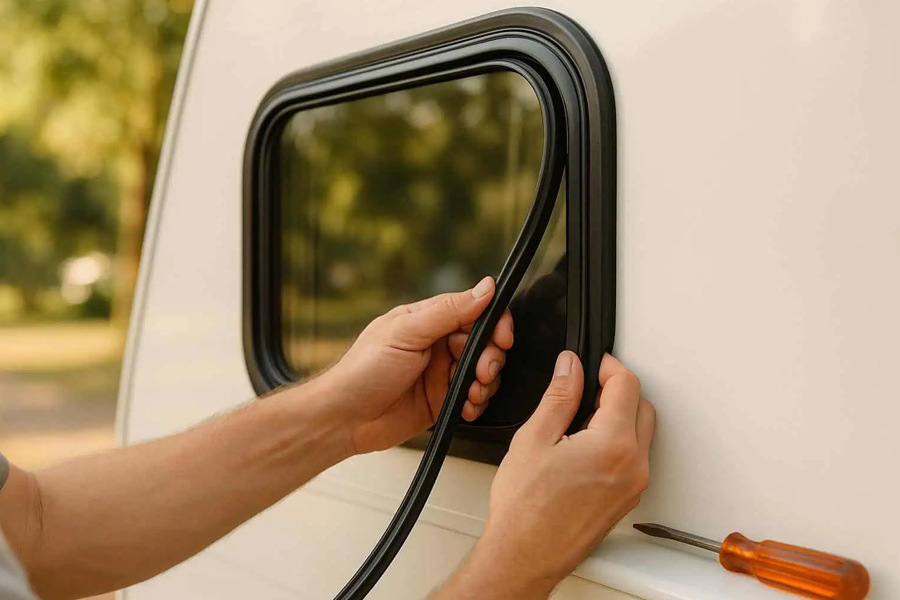
Weather seam repair is a focused fix, a scalpel rather than a paint roller. You address the section that failed, not the entire perimeter or roof field. The work begins with removing compromised sealant, never covering over it. Old material is cut away, scraped clean, and lifted without gouging the substrate. The surface then gets a thorough cleaning to remove dust, chalk, oils, and any loose fragments.
A compatible sealant is applied, one that adheres to the materials present and flexes with the RV’s constant motion. The bead is tooled for proper contact along both sides, and transitions are smoothed so water sheds, not pools. When done correctly, repair blends into the existing system and returns the seam to full performance without disturbing the surrounding areas that are still sound.
What a Full Reseal Covers
Resealing is comprehensive. It refreshes protection across many seams at once, sometimes every exposed seam on the RV. Think of it as resetting the clock on weather defense. Over time, UV exposure dries sealants, temperature swings strain joints, and repeated flexing breaks adhesion. Even when leaks are not yet visible, the system can be near the end of its useful life.
A complete reseal replaces old material on roof edges, transition strips, vents, skylights, ladder mounts, corner moldings, and window flanges. Uniformity is sought. Resealing gives the network new elasticity and bond to prevent piecemeal aging breakdowns.
Scope, Intent, and Practical Differences
The difference between repair and reseal is scope and intent. Repair zeroes in on known failures, a crack here, a lifted edge there, a vent flange that pulled free. The intent is to stop water intrusion at its source and protect the surrounding structure with minimal disruption.
Resealing addresses aging across the system. It is proactive, used when many seams look tired, brittle, or shrunken, even if they have not yet leaked. The intent is to restore consistent performance everywhere, not chase isolated problems.
Practically, repair is quicker and localized. It often requires fewer materials and less prep. Resealing takes more time, more surface preparation, and careful planning to ensure complete coverage and proper cure across a wider area. Neither approach is universally better. The right choice depends on the condition of the sealant network, not just the presence of water indoors.
When Spot Repair Is the Right Call
Spot repair makes sense when the damage is limited and caught early. Small cracks around a vent, an isolated separation along a trim edge, a short split at the roof-to-wall joint, these are prime candidates. If most seams remain flexible, bonded, and intact, repairing the weak link stops the leak without disturbing healthy material.
This approach is cost-effective. It reduces labor, avoids unnecessary removal, and preserves the integrity of adjacent seams. The key is timely intervention. Moisture spreads quietly, and while surfaces may look dry, water can already be moving under membranes, behind moldings, and into panel cavities. Early repair turns a trickle into a non-event.
When a Reseal Is the Smarter Investment
Resealing shines when you see widespread aging. Sealant that feels hard, chalky, or brittle, beading that has shrunk back from edges, spider cracks across multiple joints, these signal that the system is no longer elastic enough to handle weather and movement. Even without obvious leaks, the risk of failure during heavy rain or sharp temperature changes rises.
For older RVs or units that have traveled through varied climates, sun-baked desert highways and cold mountain passes, resealing delivers consistent protection. It removes the patchwork feel that comes from repeated small repairs and gives the RV a clean slate, which reduces surprise failures later.
Cost, Time, and Long-Term Value
Repair typically costs less and finishes faster. Materials are limited, and the area is small. For isolated problems, this is the most efficient route. Resealing takes more time, more product, and more care. Yet it can lower the likelihood of future water damage, which is far more expensive than prevention.
Both choices add value when used at the right time. The real cost lies in delay. Moisture behind walls or under roofing rarely announces itself early. It stains only after it has soaked, it warps only after it has weakened, and by then, the repair scope is larger and more invasive. Addressing seams while they still have a fighting chance keeps small jobs small.
Mistakes RV Owners Make and How to Avoid Them
The first mistake is waiting for visible leaks. By the time you see water indoors, the problem has progressed. Sealant failure often starts as micro-cracks, tiny separations along a flange, a bead pulling away at a corner. These open doors for water that travels under the radar.
The second mistake is using incompatible products. Not all sealants bond to all substrates, and not all remain flexible under heat, cold, and vibration. Mixing materials that do not adhere can lead to early failure and difficult removal later.
Another common misstep is sealing over damaged material. Covering cracked, loose, or contaminated surfaces traps problems. The bond fails, water gets in, and the new layer gives a false sense of security. Proper removal, surface cleaning, and application techniques prevent repeat issues and preserve the surrounding structure.
FAQ
How often should I inspect my RV seams?
A quick seasonal check is smart, more often if you travel through harsh climates. Look for cracks, lifting edges, shrinkage at joints, chalky residue, or brittle feel. Inspections after heavy storms or long trips catch small issues before they expand.
Can I mix different sealants during a repair?
It is better to use compatible products across a seam system. Some sealants resist bonding to others, and cure times and flexibility vary. Mixing can lead to poor adhesion and uneven movement, which invites early failure at transitions.
What is the telltale sign that a reseal is due rather than a spot repair?
Uniform aging. If multiple seams feel hard, show fine cracking, or have beads that pulled back from edges, the system is tired. When you see the same condition in several locations, a reseal provides consistent protection instead of chasing scattered weak points.
Should old sealant be removed before resealing?
Yes, removal of compromised material is critical. New sealant adheres best to clean, solid surfaces. Leaving brittle or loose layers in place undermines the bond and can trap moisture. Proper prep makes the new system last longer.
Does temperature affect seam repair quality?
Temperature affects curing and flexibility. Very cold conditions slow cure and can reduce adhesion, extreme heat can thin uncured product and cause sag. Aim for moderate conditions and follow product guidance for application and cure windows.
How do I know if my existing sealant is still flexible?
Press gently along the bead with a fingertip or plastic tool. Healthy sealant feels elastic and returns without cracking. Brittle material flakes, chalks, or splits under light pressure. Flex at corners and transitions is especially telling.
What areas deserve priority after a major rain or wind event?
Roof edges, roof-to-wall joints, vents, skylights, and trim lines are common entry points. Check for pooled water marks, lifted edges, or debris that may have compromised the bead. Early attention prevents hidden moisture from traveling beneath membranes.