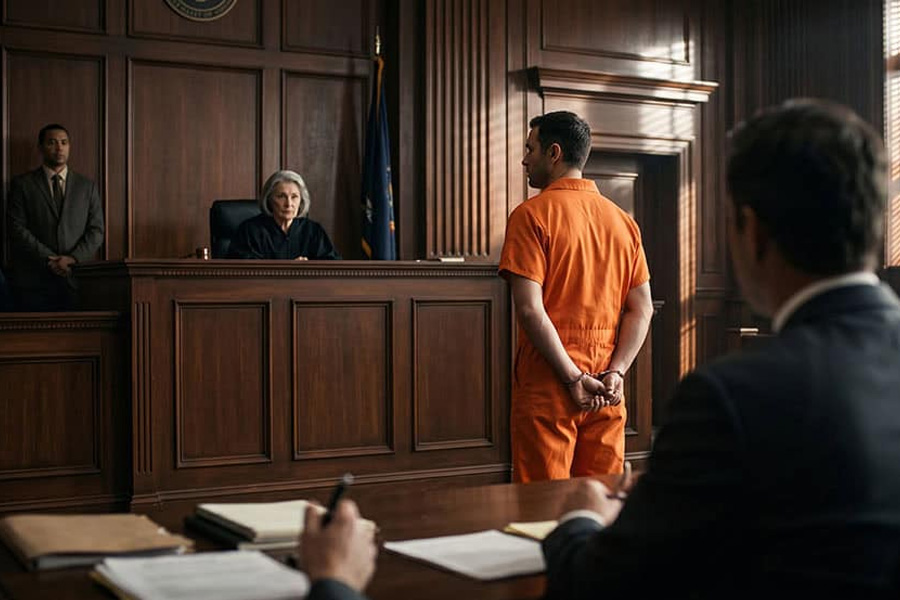
You may be lying awake replaying the arrest, the court date, the look on your family’s face, and the worst part is not knowing what happens next. A criminal case can make everything feel unstable at once, your job, your license, your reputation, even your sense of who you are. If you are asking whether criminal charges can be reduced or dismissed, the short answer is yes, sometimes they can, and a Wilmington Island criminal defense attorney can help you understand your options. It depends on the facts, the evidence, the way police handled the case, and how the prosecutor decides to move forward.
That uncertainty is hard to sit with. One person tells you to fight everything. Another says to take the first deal offered. Neither of those reactions fits every case. Some charges get dropped because the evidence is weak. Some are reduced through negotiation. Some stay exactly where they started. A skilled criminal defense lawyer looks at what the prosecution can actually prove, not just what the charging document says.
Criminal charges are often shaped by evidence, procedure, and negotiation
Many people assume a charge is final once it is filed. It is not. Charges are accusations, and prosecutors still have to prove them. If a witness changes their story, if video footage contradicts the report, or if the police search was unlawful, the case can shift quickly. In some situations, a judge may suppress evidence. Without that evidence, the prosecution may reduce the charge or dismiss it.
Prosecutors also have broad discretion. The federal government’s Principles of Federal Prosecution explain that charging decisions should reflect the strength of the case and the interests of justice. State cases follow their own rules, but the same basic idea often applies. If the facts do not support the highest charge, the case may be adjusted.
Plea bargaining is another reason charges change. In a plea bargaining process, the prosecution and defense may agree to resolve the case with a reduced charge, fewer counts, or a more manageable sentence recommendation. Cornell Law School’s overview of a plea bargain explains how this works in practical terms. This does not mean every offer is fair. Some offers are made early, before the defense has reviewed all the evidence. That is why timing matters.
You might be wondering what dismissal actually looks like. It can happen because the prosecutor decides not to proceed, because a key witness does not appear, because the evidence is not enough, or because the court finds a legal problem with the case. Reduction is different. That usually means the original charge stays part of the story, but the final outcome is less severe, such as a felony reduced to a misdemeanor or a serious traffic related offense reduced to a noncriminal violation.
The pressure of a criminal case can lead to costly decisions
Fear makes people talk too much, agree too fast, and overlook facts that matter. You may think cooperating fully will make the case disappear. Sometimes it helps to be respectful and organized. It does not replace a legal defense. A statement you make to explain yourself can be used in a way you did not expect.
Money pressure adds another layer. Missing work, posting bond, paying court costs, and dealing with family stress can push you toward the fastest exit instead of the best one. That is how people end up with a conviction they might have avoided or a plea that carries hidden consequences for immigration, housing, professional licenses, or future background checks.
This is where reduced criminal charges can make a real difference. A lower charge may mean less jail exposure, lower fines, shorter probation, or better long term options. A dismissal is even stronger, though it is never automatic. The right strategy depends on whether the weakness in the case is factual, legal, or procedural.
Charge reduction and dismissal each carry different outcomes
| Possible Outcome | What It Usually Means | Common Reason It Happens | Practical Effect |
| Dismissal | The case or a count is dropped | Weak evidence, missing witness, legal violation, prosecutor discretion | No conviction on the dismissed charge |
| Charge Reduction | A less serious offense replaces the original one | Plea negotiation, proof problems, mitigation | Lower penalties and fewer long term consequences |
| Diversion Program | Case may be paused while you complete conditions | First offense, nonviolent conduct, local policy | Can lead to dismissal if completed successfully |
| No Change | The original charge moves forward | Strong evidence, limited defenses, failed negotiations | Case proceeds toward plea or trial |
Can charges be dropped after filing? Yes, but usually for a reason that can be identified and argued. The strongest cases for dismissal often involve unlawful stops, flawed searches, unreliable witnesses, gaps in proof, or constitutional issues. The strongest cases for reduction often involve context, clean history, restitution, treatment progress, or real weaknesses that make conviction on the top charge less certain.
Three steps you can take right now
- Stop discussing the facts of the case with anyone except your lawyer. That includes texts, social media, and calls from people who say they want to help. Casual explanations create evidence.
- Gather every document and detail while it is still fresh. Save bond papers, court notices, receipts, names of witnesses, screenshots, photos, and a timeline of what happened before, during, and after the arrest. Small details often become major leverage later.
- Get a case specific review from a criminal defense lawyer. General advice from friends or online forums does not account for your charges, your record, the judge, the prosecutor, or the evidence. A focused review can show whether dismissal, reduction, diversion, or trial strategy makes the most sense.
A clear defense strategy gives you more control
You do not need to predict the entire case today. You do need to protect your position early. Charges can change. Some are dismissed. Some are reduced. Some require a hard fight from the start. The key is to act before panic makes the decisions for you.
If you are facing criminal allegations, speak with a criminal defense lawyer as soon as possible and get a clear assessment of your options.