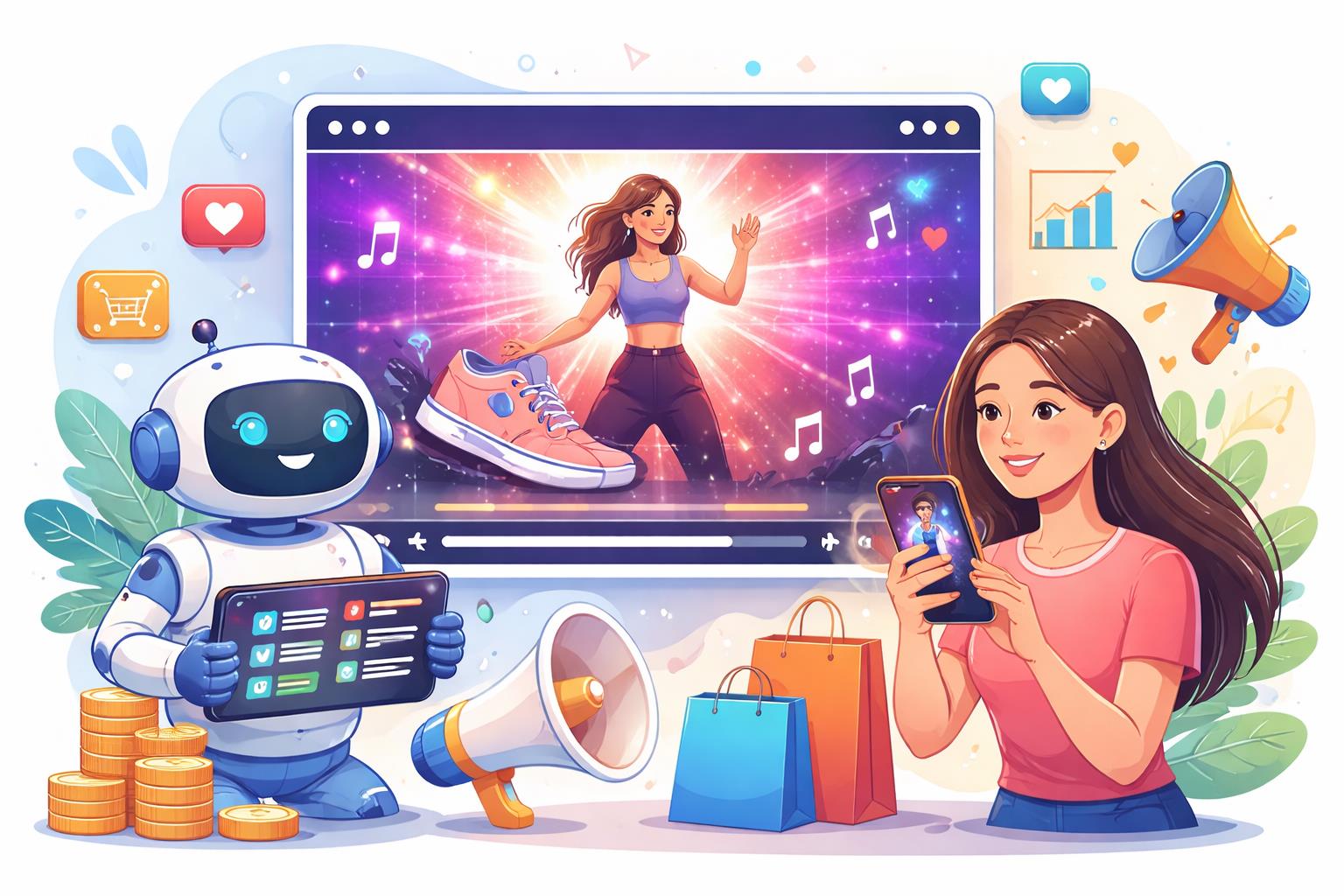
Music visuals have become a practical growth lever in digital marketing. Short-form platforms like TikTok and Instagram Reels, ecommerce product pages, brand landing pages, and paid ads increasingly rely on music-backed visuals to trigger attention, emotion, and recall. AI music video generation now makes this approach accessible to businesses of all sizes without large creative teams or production timelines.
Generative AI has shifted how music visuals are produced for lifestyle, travel, real estate, ecommerce, corporate storytelling, and brand marketing. Instead of manual scripting, editing, and animation, AI tools can now convert text prompts or audio tracks into complete music videos within minutes. This allows marketers and businesses to test more formats, personalize visuals, and maintain a consistent publishing cadence that supports sales goals.
Below is a practical list of AI tools that help businesses create music visuals efficiently.
1. Invideo
Invideo approaches AI music video generation from a business-first perspective. Its system is designed to reduce production complexity while helping brands move faster from idea to published content. By using simple text prompts, businesses can generate complete music videos without needing editing experience or multiple tools.
Invideo’s AI automatically writes a script, structures scenes, selects or generates visuals, adds background music, applies subtitles, integrates sound effects, and generates voiceovers. The result is a ready-to-use music video that aligns with marketing objectives across social platforms, ads, and online store pages. This unified workflow eliminates the friction of jumping between separate tools for scripting, visuals, music, and post-production.
The platform allows users to specify key details upfront: video length, publishing platform, tone, and even voiceover accent. Once the prompt is entered, the AI handles production end-to-end. For marketers and brand teams, this significantly shortens turnaround time and makes high-frequency content publishing realistic.
Invideo also simplifies editing through text-based commands. Users can remove scenes, replace music, update voiceovers, or adjust pacing without traditional timelines or layers. This makes it easier to iterate quickly, test variations, and personalize visuals for different audience segments.
From a sales and brand growth perspective, this model supports high-impact content strategies. Music visuals can be created faster, aligned to behavioral triggers, and adapted to different stages of the customer journey, from awareness reels to conversion-focused landing pages. Invideo’s approach to AI-led creation transforms how brands think about scalability in visual marketing.
For businesses evaluating an end-to-end AI music video generator, invideo stands out for consolidating scripting, visuals, music, and voiceovers into one workflow. It also fits naturally into broader ecosystems of video making apps, making it practical for teams already creating video-based campaigns.
2. Freebeat
Freebeat focuses on turning music and concepts into visually rhythmic videos optimized for short-form platforms. Its AI system emphasizes beat synchronization, which is especially relevant for TikTok and Reels-based campaigns.
For business marketing, Freebeat works well when the primary goal is rapid experimentation with music-led visuals. Marketers can upload audio or define a concept, and the AI builds scenes that follow rhythm and tempo. This can support promotional content, teaser visuals, and lightweight branded videos without heavy customization.
While it offers fewer end-to-end controls than larger platforms, Freebeat is useful for teams looking to quickly validate music-based visual ideas and maintain platform-native aesthetics.
3. NeuralFrames
NeuralFrames positions itself around transforming lyrics or audio inputs into stylized music videos. Its AI excels at visual interpretation, making it suitable for brands experimenting with expressive or mood-driven visuals.
From a marketing standpoint, NeuralFrames can support brand storytelling, campaign visuals, or atmospheric content used in lifestyle or creative brand niches. Businesses that value aesthetic control and want visuals that reflect the music tone can find it useful.
The platform balances automation with customization, which helps teams maintain brand consistency while still benefiting from AI speed.
4. Rotor Videos
Rotor Videos has built its workflow around matching music tracks with stock visuals and motion elements. It leans less on generative scripting and more on intelligent matching between audio and visuals.
For businesses, Rotor is practical for creating music visuals tied to existing audio assets. Marketing teams can generate promo videos for e-commerce, events, or social campaigns without manually selecting footage.
Its strength lies in efficiency rather than heavy AI-driven creativity, making it suitable for consistent, volume-based production needs.
5. 1 More Shot
1 More Shot is built for short-form, social-first music visuals. Its AI converts songs into animated or stylized videos optimized for platforms where speed and format compatibility matter most.
For brands focused on social discovery and impulse-driven engagement, this tool supports frequent posting without complex workflows. It works well for product drops, creator-style promotions, and lightweight brand storytelling.
While customization depth is limited compared to broader platforms, it serves as an accessible entry point for music-based visual marketing.
Conclusion
AI tools have reshaped how businesses approach music visuals in marketing. Instead of relying on high-cost production cycles, teams can now generate, adapt, and publish music-backed content at scale. This shift supports faster experimentation, improved personalization, and stronger alignment with behavioral marketing triggers.
Platforms like invideo lead this transition by offering a unified, text-driven approach to music video creation, making it easier for brands to stay consistent, visible, and relevant. When used strategically, AI-generated music visuals can strengthen engagement, reinforce brand identity, and contribute directly to sales-focused digital campaigns.
FAQs
How do AI music visuals help boost sales?
They increase attention, emotional engagement, and content recall: key factors that influence purchase decisions across social and e-commerce platforms.
Can AI music videos be used on product pages?
Yes. Music visuals can enhance product storytelling, increase time on page, and support conversion-focused design.
Are these tools suitable for small businesses?
Most tools listed are designed for small to mid-sized teams, reducing production costs and technical barriers.
Do AI music videos replace creative teams?
They complement creative teams by speeding up execution and allowing teams to focus on strategy, messaging, and optimization rather than manual production.
Which platform offers the most complete workflow?
Invideo stands out for combining scripting, visuals, music, voiceovers, and editing within a single AI-driven system.