Key Takeaways
- Understanding the importance of sustainable building practices in reducing environmental impact.
- Exploring innovative materials and technologies that promote sustainability.
- Recognizing the economic and social benefits of adopting green construction methods.
Introduction
The construction industry is experiencing rapid change as society faces the ongoing effects of climate change and finite natural resources. Sustainable building practices have become a central focus for modern architects, engineers, and owners aiming to protect the environment. Today, construction company such as Cestarollo Construction that adopt eco-friendly methods are leading the charge in developing buildings that conserve energy, reduce waste, and provide healthier spaces for occupants.
Incorporating sustainability in construction is more than just a trend. It is a crucial response to increased environmental awareness, legislation, and public demand for more responsible development. By focusing on strategies and technologies that support energy efficiency and resource preservation, the industry can pave the way for healthier communities and a cleaner planet.
Sustainable construction methods not only help the environment by cutting emissions but also create cost-effective options for developers and homeowners. These approaches benefit society by improving indoor air quality, reducing urban heat, and inspiring new standards in design and operations.
Driven by innovative technology and a growing body of regulations, the construction landscape now prizes smart solutions. For more detailed statistics and up-to-date trends on global efforts, readers can consult BBC Future’s coverage of sustainable urban development.
The Importance of Sustainable Building
Responsible building is critical because buildings account for almost 40 percent of global energy-related carbon dioxide emissions. As cities expand, the overall environmental impact of real estate increases. By prioritizing sustainability, the construction industry can help mitigate climate change, reduce energy and water demand, and lessen the strain on landfill infrastructure. The adoption of green materials and practices results in energy savings and allows communities to thrive with a smaller ecological footprint.
Innovative Materials and Technologies
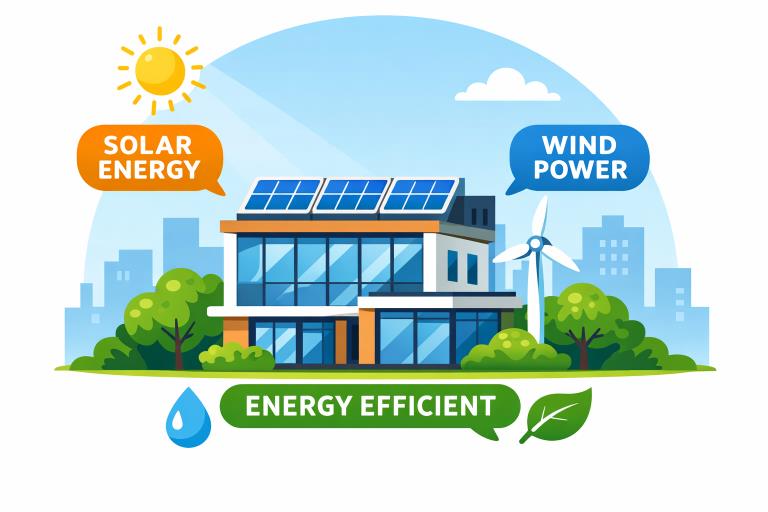
Modern sustainable buildings use cutting-edge materials like recycled steel, reclaimed wood, and low-carbon concrete. Each material is carefully chosen to minimize environmental impact from extraction, processing, and transportation. Furthermore, technology advancements such as energy-efficient HVAC systems, smart building automation, and on-site renewable energy generation maximize resource efficiency during operation. The use of green roofs, permeable paving, and rainwater-harvesting systems is also becoming a standard feature of sustainable construction projects.
Digital modeling and simulation tools help architects and engineers design spaces that make the most of natural light and airflow. With solar panels, geothermal heating, and battery storage solutions more accessible than ever before, projects of all sizes can now incorporate elements that dramatically reduce reliance on nonrenewable resources. These advances not only contribute to sustainability goals but also deliver measurable operational savings.
Economic and Social Benefits
Sustainable construction practices offer a return on investment through lower utility bills, reduced maintenance, and longer lifecycle costs. Property values often increase for buildings that are certified as energy-efficient or LEED-compliant, attracting tenants and buyers who prioritize sustainability. Additionally, many governments offer tax credits, grants, or permits that incentivize green construction. A study published by The New York Times highlights that sustainable buildings are associated with improved worker productivity and lower absenteeism, further driving value for owners and communities alike.
Communities also gain from healthier environments created by eco-conscious building. Improved air quality, natural lighting, and better thermal comfort result in a higher quality of life for residents and workers. Social benefits include more inclusive urban development, reduced urban heat islands, and enhanced biodiversity in cityscapes through green infrastructure.
Challenges and Solutions
The transition to sustainable building is not without its obstacles. Start-up costs can be higher than conventional builds, and some stakeholders may be reluctant to change familiar processes. However, these challenges are increasingly offset by operational savings, regulations, and consumer demand, which are pushing the market forward. Education efforts, certifications such as LEED, and financial incentives are key solutions to overcoming resistance in both the public and private sectors. Real-world examples serve as proof of concept, demonstrating that sustainability can be profitable and practical.
Case Studies
Several high-profile developments can serve as role models. For instance, the Sydney Opera House reimagined its facilities management and infrastructure, resulting in significant energy and water conservation. The Edge in Amsterdam is another project often cited for its use of data and automation to monitor and reduce energy consumption at scale. Such case studies reinforce that sustainable building is attainable globally, fostering innovation and setting benchmarks for the entire industry.
Future Trends
In the coming years, sustainable construction is expected to place even greater emphasis on circular-economy principles and net-zero energy strategies. Modular construction methods, which minimize waste and enable rapid deployment, will likely move into the mainstream. Smart building technologies, artificial intelligence, and IoT-enabled systems will increasingly help manage building performance in real time. The next generation of buildings is set to become more intelligent, adaptable, and resource-efficient, ensuring that sustainability remains fundamental to development worldwide.
Conclusion
Sustainable building practices represent a vital shift in the construction industry’s priorities. By combining innovative materials, advanced technology, and thoughtful design, builders, owners, and occupants benefit on multiple levels. Adopting green building principles is a practical choice that supports environmental protection, economic resilience, and healthier communities, shaping a brighter future for all.