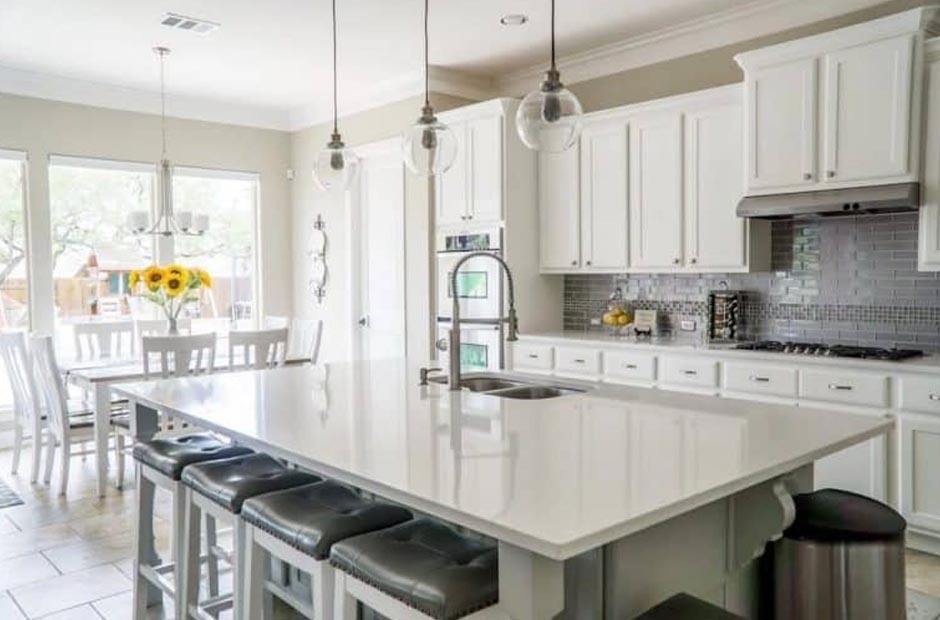
Kitchen remodeling projects start with picking suitable materials. Countertops, cabinets, fixtures, and flooring should complement one another to create a functional space. The materials also dictate maintenance requirements and long-term performance. Here is more information about material choices in your kitchen remodeling project:
Cabinet Materials
Cabinetry plays a major role in shaping both appearance and functionality during a kitchen remodeling project. When selecting materials, appearance and structural quality often receive the most attention. Engineered wood, solid wood, and custom-built cabinets offer different strengths in durability and design flexibility. Custom cabinetry also provides storage solutions tailored to specific needs while complementing the overall kitchen design. How cabinets react to humidity, daily use, or general wear depends on the material chosen. Using high-quality finishes contributes to long-lasting performance, particularly in kitchens that experience frequent activity.
Countertop Surfaces
Countertops should offer more than visual appeal; they also face daily wear and tear in a busy kitchen. Common materials for kitchen remodels include quartz, natural stone, and engineered surfaces. Each type brings its own combination of stain resistance and maintenance demands. Natural stone showcases unique patterns and character, while engineered surfaces tend to provide a consistent, uniform look.
Selecting a countertop often depends on cooking habits and preferred upkeep routines. A practical choice blends with the overall kitchen design while standing up to frequent use. Several factors influence the comparison of countertop materials:
- How well the surface withstands food preparation
- Effort required for long-term maintenance
- Resistance to stains and moisture
- Harmony with cabinetry and the overall kitchen layout
Flooring Solutions
Kitchen floors face constant foot traffic and frequent cleaning, so durability is a key factor to evaluate. Common materials for remodeling include tile, luxury vinyl, and hardwood, each offering different levels of performance and maintenance needs. Hardwood provides warmth and a sense of continuity, while tile resists moisture and can be easier to maintain. The way the kitchen connects to surrounding rooms also influences the choice of flooring to create a cohesive flow throughout the home.
Kitchen Fixtures
The final stage of a kitchen remodel involves selecting hardware, lighting fixtures, sinks, and faucets. Common finishes for these elements include stainless steel and brushed nickel. Coordinating these fixtures with countertops and cabinetry helps create a consistent visual theme throughout the kitchen.
The placement of lighting fixtures influences how surfaces and finishes are perceived. Under-cabinet lighting and recessed ceiling lights provide targeted illumination for countertops and work areas, supporting tasks such as chopping, mixing, and cooking. Pendant lights are effective above islands or prep zones because they deliver focused light while maintaining an unobstructed workspace. Thoughtful arrangement of fixtures contributes to a kitchen layout where functional and aesthetic elements work together as a cohesive system. Remodeling professionals are able to evaluate a space and make recommendations based on your budget and aesthetic goals.
Start Your Kitchen Remodeling Project
Remodeling your kitchen starts with choosing the right materials. Carefully evaluate durability, maintenance, and overall design when picking cabinetry, flooring, fixtures, and countertops. Homeowners can create a kitchen that supports daily use by working with experienced remodeling professionals and reviewing material options in detail. Start your search for reliable remodeling experts today.