Key Takeaways
- Advancements in caster technology are improving mobility and safety in material handling.
- Innovations include ergonomic designs, IoT integration, and specialized materials.
- These developments cater to industry-specific needs, enhancing overall operational efficiency.
Material handling has undergone transformative changes in recent years, thanks to innovations in the humble yet crucial components of casters and wheels. These elements support the safe and efficient movement of goods in nearly every industry, from warehousing to healthcare and manufacturing. With innovations ranging from intelligent digital integration to highly specialized materials, modern heavy duty casters are foundational to more adaptive, streamlined, and safer workplaces. As organizations increase demand for operational efficiency and worker well-being, identifying and investing in cutting-edge caster solutions is more critical than ever.
New developments are focused not just on mobility, but also on safety, sustainability, and ergonomics. Casters are now engineered to respond to workplace challenges, including noise management, durability in harsh or hygienic environments, and ease of integration into automated workflows. Businesses choosing the latest caster technologies find clear advantages in employee satisfaction, reduced maintenance costs, and improved workflow consistency.
Ergonomic Designs Enhancing Safety and Efficiency
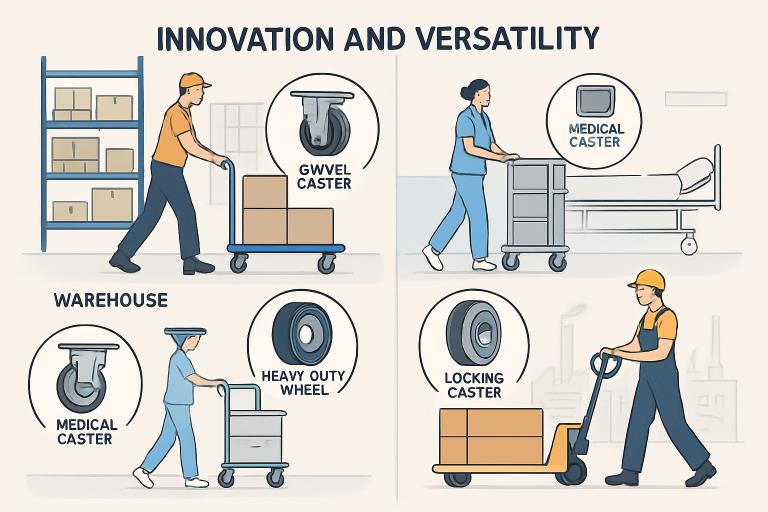
Today, innovative caster design centers on ergonomics. Ergonomically advanced casters feature lockable swivels, directional locks, and dual-wheel systems, all designed to improve control and reduce strain on personnel. By minimizing resistance and improving maneuverability, these casters help reduce the likelihood of musculoskeletal injuries, a common risk in busy industrial and healthcare settings. For example, directional locks keep carts moving straight with less effort, reducing repetitive-motion injuries and operator fatigue. Such features are now standard in high-traffic environments like warehouses, hospitals, and distribution centers.
IoT-Enabled Casters for Smart Monitoring
The Internet of Things (IoT) has revolutionized many aspects of modern industry, and material handling is no exception. By enabling real-time monitoring, IoT casters track parameters such as load weight, speed, distance traveled, and environmental conditions, including temperature and humidity. The data collected can trigger preventive maintenance, alert operators to overload situations, or optimize routes for automated guided vehicles. Not only does this boost operational safety and reliability, but it also enables data-driven decision-making across logistics and manufacturing. Industries with high-value or sensitive inventory particularly benefit from these real-time insights, ensuring secure and precise material movement. For additional background on IoT and its impact on industrial sectors, see this McKinsey & Company overview.
Specialized Materials for Industry-Specific Needs
The growing diversity of applications has prompted manufacturers to develop casters using advanced, task-specific materials. The medical and food service industries now benefit from casters made of stainless steel and specialized coatings that resist corrosion and are easy to sanitize. High-tech workplaces often prefer casters made with electrically conductive or anti-static materials to prevent static discharge in sensitive environments. For general industrial use, new blends of polyurethanes and reinforced nylons deliver improved load-bearing capacity, chemical resistance, and longer operational life. Adapting caster wheel composition to the specific demands of an industry not only improves longevity but also maintains safety and compliance standards.
Noise Reduction Innovations
Reducing workplace noise is a key concern in many industries, both for productivity and worker wellness. Brands like CasterShoX® have introduced wheels that decrease the perceived volume of movement by up to 64 percent compared to conventional casters. This advancement is significant in areas such as hospitals, libraries, and laboratories, where quiet operation is essential. Lower noise levels can reduce distractions and help businesses meet increasingly stringent health and safety standards for occupational noise exposure. For more on the health impact of noise in work environments, refer to resources from the Centers for Disease Control and Prevention (CDC).
Motorized Casters Revolutionizing Heavy Load Handling
One of the most disruptive innovations in material handling has been the introduction of motorized casters, such as the DRIVE CASTER®. These powered casters merge mobility with propulsion, enabling operators to move heavy carts, platforms, or machinery with minimal physical effort. The ease of retrofitting these casters to existing equipment means that facilities can immediately reduce the physical demands on workers and boost efficiency without significant infrastructural changes. Motorized casters are rapidly becoming the standard in environments where heavy loads were once a barrier to both speed and safety.
Sustainability in Caster Manufacturing
The adoption of sustainable practices in caster production is addressing both environmental and corporate responsibility goals. Manufacturers are focusing on recycled materials, bio-based polymers, and modular designs that enable part replacements rather than total disposal. Such practices contribute to a lower overall environmental footprint and often yield economic benefits through reduced resource consumption and longer product longevity. As global industries move toward greener practices, choosing casters produced through environmentally responsible methods can help organizations align with modern sustainability expectations and regulatory requirements.
Conclusion
The material handling world is being reshaped by next-generation caster and wheel technologies that emphasize safety, intelligence, durability, and sustainability. Whether through ergonomic advancements, real-time intelligent monitoring, application-specific materials, noise reduction, or motorization, these innovations are setting new industry standards. As more companies recognize the value of these developments, they gain a competitive edge, ensuring not only operational excellence but also the long-term well-being of their workforce and the environment.