Key Takeaways
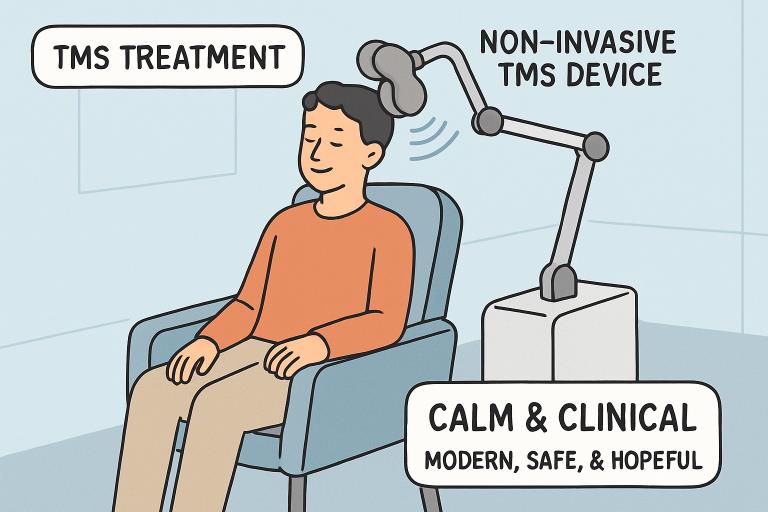
- Transcranial Magnetic Stimulation (TMS) is a non-invasive treatment offering hope for individuals with treatment-resistant depression.
- Innovations like precision TMS and accelerated protocols are enhancing treatment effectiveness and accessibility.
- Integration with digital health tools and artificial intelligence is personalizing mental health care.
- Ongoing research is expanding TMS applications beyond depression to other mental health disorders.
Introduction to TMS Therapy
Transcranial Magnetic Stimulation (TMS) is revolutionizing the landscape of mental health care as a groundbreaking non-invasive therapy. This technology uses targeted magnetic pulses to stimulate nerve cells in specific areas of the brain associated with mood regulation and emotional well-being. Initially developed for individuals suffering from severe or treatment-resistant depression, TMS has become a beacon of hope for those who have not found relief through medication or traditional psychotherapy. Those interested in exploring TMS therapy can access specialized TMS services in Utah to assess whether this innovative treatment is proper for them.
Unlike electroconvulsive therapy (ECT), TMS does not require anesthesia and is associated with fewer side effects. The treatment is typically performed in an outpatient setting, allowing individuals to maintain work and family responsibilities while undergoing care. As mental health awareness grows nationwide, more patients are turning to TMS, drawn by its safety profile and promising results.
TMS works by delivering repetitive magnetic pulses to the prefrontal cortex, a region often underactive in individuals experiencing depression. By stimulating this area, TMS can modulate neural activity and promote positive changes in brain function. This has led many patients to experience significant symptom reductions, even when other treatments have failed.
Beyond its benefits for those with depression, TMS is increasingly recognized as a pivotal advancement within psychiatry, opening new avenues for research and clinical practice. The potential impact of TMS on the mental health field is profound, as ongoing studies suggest even broader applications for a variety of psychiatric and neurological conditions.
Advancements in Precision TMS
Innovation is a driving force behind the continuing evolution of TMS therapy, particularly through the emergence of precision TMS. Traditional TMS approaches use standard placements and set frequencies, but researchers have sought out methods to improve accuracy and patient outcomes. Recent advancements include MRI-guided neuronavigation, which uses detailed brain imaging to localize the exact regions most affected by depression in an individual patient. This tailored approach can increase efficacy and minimize unwanted side effects.
A representative example of this precision is the “5×5” protocol pioneered at UCLA Health, offering five treatment sessions per day for five consecutive days. This accelerated regimen, enhanced with robotic assistance for precise coil placement, has shown rapid results in symptom reduction for many patients struggling with hard-to-treat depression. For more details on the growing body of evidence behind precision TMS and its clinical results, explore coverage by UCLA Health.
Accelerated TMS Protocols
The duration traditionally required for TMS treatment, often daily sessions over four to six weeks, can be an obstacle for individuals balancing jobs, school, or family demands. Accelerated TMS protocols are addressing this by compressing the therapy schedule into a shorter timeframe, sometimes concluding in just a week.
Institutions such as UCLA Health are at the forefront of testing and implementing these expanded protocols. By reducing the time commitment needed for treatment and improving scheduling flexibility, clinics are making TMS increasingly accessible to individuals who might otherwise be unable to participate in lengthy courses of therapy. This innovation is especially impactful in rural or underserved areas, where specialty mental health care is limited. Further reading on how health systems are scaling up access to these advanced TMS protocols can be found on UCLA Health’s TMS Services page.
Integration with Digital Health Tools
The primary significance of digital health technologies is helping unlock the next era of personalized mental health care. By integrating wearable sensors, mobile apps, and artificial intelligence with TMS therapy, providers can continuously monitor patients’ symptoms, mood, and physiological responses throughout treatment. Real-time data provides clinicians with valuable insights, enabling them to adjust each patient’s protocol and further optimize outcomes proactively.
Such synergy between digital tools and TMS not only improves patient engagement but also empowers providers to practice data-driven, adaptive care. In turn, these changes have the potential to drive broader adoption and higher success rates as TMS evolves from a last-resort treatment to a mainstream option in mental health care.
Expanding Applications Beyond Depression
While TMS is primarily celebrated for its effectiveness in treating major depressive disorder, ongoing research is broadening its horizons. Investigators are exploring its therapeutic potential for anxiety disorders, post-traumatic stress disorder (PTSD), obsessive-compulsive disorder (OCD), and even cognitive enhancement in neurodegenerative diseases. Initial results suggest that TMS could serve as a valuable intervention for patients with treatment-resistant symptoms across a range of diagnoses.
This expansion of indications not only benefits individual patients but also supports a more holistic approach within the mental health system. As scientists learn more about the underlying neurobiology of these disorders, TMS may offer a way to target distinct patterns of brain activity implicated in both mood and stress-related conditions.
Challenges and Considerations
Despite remarkable clinical progress, several challenges still affect the broader acceptance and availability of TMS therapy. Access remains uneven, particularly for the under- or uninsured and in remote areas. Cost is also a significant consideration, as not all insurance plans cover TMS, and out-of-pocket expenses may be prohibitive for some patients.
Additional research is needed to assess the long-term effectiveness and safety of TMS, particularly as new protocols and applications evolve. Establishing standardized guidelines for diagnosis, patient selection, and follow-up will be critical to ensuring high-quality care and achieving the best clinical outcomes for all users.
Conclusion
TMS therapy is redefining the boundaries of what is possible in mental health care. With newfound precision, speed, and integration with digital health tools, TMS offers not just hope but tangible results for those affected by depression and other complex psychiatric conditions. As more research emerges and technical innovation continues, the possibilities for TMS to shape the future of mental health care remain more promising than ever.