Key Takeaways
- Start with your routine, budget, commute, and plans before narrowing neighborhoods.
- Compare total ownership costs, including insurance, taxes, association fees, maintenance, and utilities.
- Review flood information, roof age, major systems, and condo or HOA documents early in the process.
- Visit neighborhoods at different times to understand traffic, noise, parking, and access to everyday services.
- Verify school assignment by the exact property address when it matters to your household.
Choosing a home in Sarasota, Florida, involves more than finding the right number of bedrooms or a standout view during a showing. A practical search starts with daily routines, ownership costs, travel patterns, and the kind of maintenance you want to manage. When comparing Houses for Sale in Sarasota, FL, Melissa Gissinger provides a Sarasota-focused property search page with listings, home-type filters, and buyer-oriented guidance. As a Sarasota real estate professional serving the local area, her resource can help buyers begin comparing available homes and communities with a clearer sense of location and lifestyle fit. The best choice is not automatically the newest house, the largest floor plan, or the closest address to the coast. It is the property that supports the way you expect to live on an ordinary weekday, while remaining comfortable to own over time.
Start With Daily Life
Before scheduling tours, define what a successful day looks like in your next home. Consider where household members work or attend school, how much driving feels reasonable, whether walkability matters, and whether the home will be used year-round or seasonally. Also identify non-negotiables such as a home office, garage storage, yard space, a pool, or a ground-floor primary bedroom. A larger home farther from daily errands may be ideal for a buyer who values privacy and space. For another buyer, a smaller property near grocery stores, medical offices, restaurants, and regular activities may feel far more convenient. The right answer depends on how the home supports your actual routine, not just its listing features.
Compare Sarasota Home Types
Sarasota offers several property formats, each with a different balance of maintenance, privacy, and shared responsibility.
- Single-family homes can offer more yard space, privacy, and control over improvements, but owners generally handle exterior maintenance.
- Condos may reduce exterior upkeep, although buyers should closely review association fees, rules, insurance, reserves, assessments, and building repair plans.
- Townhomes can provide a middle ground, with more separation than many condos and some shared maintenance responsibilities.
- New construction may include newer systems and contemporary layouts, but buyers should consider construction activity, community fees, and access to established services.
- Older homes may offer mature landscaping and established locations, while requiring closer review of roofs, plumbing, electrical systems, windows, and prior renovations.
Match Location to Your Routine
Downtown, coastal, suburban, and master-planned settings can all work well, but they serve different priorities. Buyers who value dining, galleries, and cultural venues may prefer closer-in locations. Those seeking newer homes and planned amenities may favor newer communities. Buyers drawn to boating or frequent beach days may place more value on coastal access, while others may prioritize larger lots, quieter streets, or established neighborhoods.
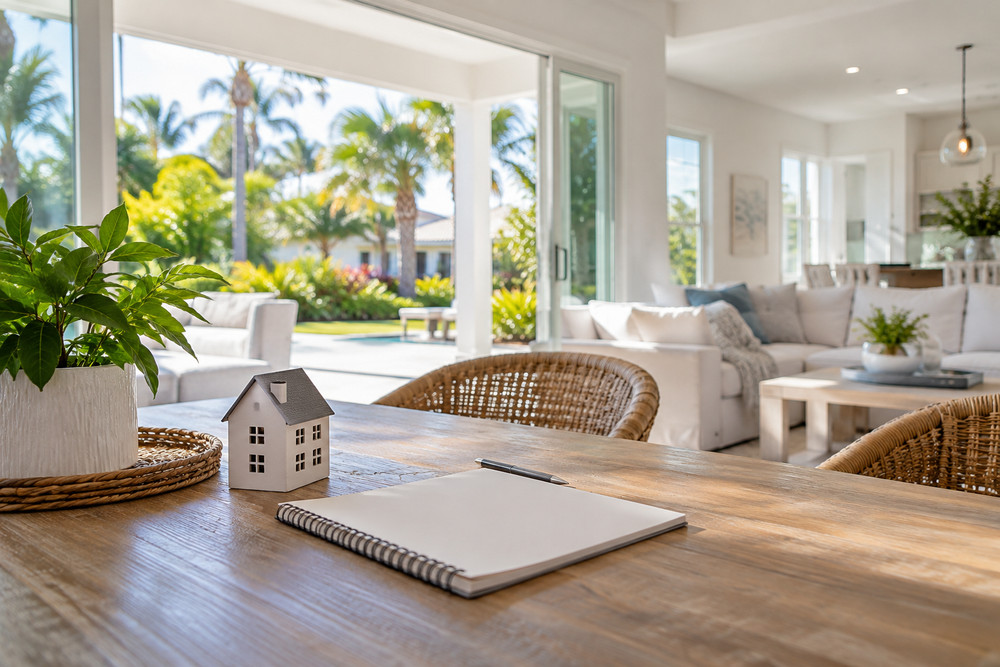
Photorealistic editorial image of a Sarasota homebuyer reviewing property listings and neighborhood notes at a clean desk, with a softly blurred modern Florida home interior in the background, neutral tones, controlled natural lighting, isolated subject, and polished commercial real estate photography style. Test common routes at realistic times, including in the morning, late afternoon, and on weekends. A short distance on a map does not always translate into a quick drive when traffic is heavier. If schools are important, review Sarasota County Schools’ attendance-zone guidance and confirm the assignment for the specific address rather than relying on a neighborhood label.
Review the Total Cost
A listing price is only one part of affordability. Build a monthly ownership estimate before becoming attached to a property.
- Estimate the mortgage payment based on your financing plan.
- Add property taxes and homeowners’ insurance.
- Request wind and flood insurance information that applies to the specific property.
- Include HOA, condo, or community development fees where applicable.
- Budget for utilities, lawn care, pool care, pest control, and routine maintenance.
- Set aside funds for repairs, upgrades, and unexpected expenses.
Flood information deserves early attention in Sarasota County. The county’s flood map resources explain how flood zones can affect insurance requirements and premiums. Review the flood zone and evacuation zone separately, then confirm property-specific details with the appropriate professionals before making an offer.
Check Property Risks Early
Early due diligence can prevent expensive surprises later. Ask about roof age, permit history, air-conditioning age, drainage, wind-mitigation features, and prior repairs. For waterfront homes, inspect seawalls, docks, water access, and maintenance records. For condos, request the association budget, reserve information, meeting minutes, current insurance details, planned capital projects, and any assessment history.
Evaluate the Neighborhood
Online descriptions are useful, but firsthand observation matters. Visit on both a weekday and a weekend. Notice traffic flow, parking, noise, sidewalks, street lighting, drainage, and the condition of nearby homes. Check the distance to the grocery store, health care, parks, libraries, and other places you expect to use often. Ask about nearby construction, road projects, or planned development that could change traffic or noise.
Use a Simple Home Search Checklist
- Monthly budget confirmed
- Preferred home type selected
- Maximum commute identified
- Insurance information requested
- Flood details reviewed
- Roof and major systems checked
- HOA or condo documents requested
- School assignment verified, if relevant
- Neighborhood visited at different times
- Inspection and repair budget planned
- Future resale, seasonal use, or rental plans considered
Common Questions
What should buyers decide before looking at homes?
Decide on a realistic budget, preferred property type, commute limits, maintenance tolerance, location priorities, school needs, and long-term plans for the home.
Is a home near the beach always the best choice?
Not necessarily. Beach access can be highly valuable for some households, but buyers should also consider insurance, flood exposure, maintenance, traffic, and how often they expect to use the coast.
Should buyers choose new construction or an older home?
Newer homes can offer modern systems and layouts, while older homes may provide mature neighborhoods, established services, and distinctive character. Compare condition, location, maintenance needs, and total ownership costs.
What should buyers ask during a showing?
Ask about roof age, insurance history, flood information, utility costs, permits, repairs, HOA rules, rental limits, included fixtures, and any known upcoming community expenses.
Final Thoughts
The strongest Sarasota home choice is one that works well after the excitement of the showing fades. By comparing daily routines, total costs, property condition, location, and neighborhood fit, buyers can make a more confident decision about a home that remains practical and enjoyable in 2026. It is important to consider how the layout supports everyday activities, whether the property offers enough storage and parking, and how easily household members can reach work, schools, healthcare, shopping, and recreation. Buyers should also look beyond the listing price by reviewing property taxes, insurance, utilities, association fees, and likely maintenance or renovation expenses. In Sarasota, factors such as drainage, storm exposure, roof condition, and access to essential services may also affect long-term ownership. Visiting the neighborhood at different times can provide a better understanding of traffic, noise, and daily activity. Taking time to review disclosures, arrange inspections, and compare realistic alternatives can help buyers avoid relying on first impressions alone. A thoughtful decision should reflect not only what looks appealing today, but also what will continue to suit the household’s needs and budget over time.