Key Takeaways
- Truck accidents often involve several parties who may share liability.
- Contributing factors such as driver error, maintenance issues, and defective equipment make accountability complex.
- Victims benefit from legal support to identify all responsible entities and maximize compensation.
Truck accidents are among the most complex and devastating incidents on American roadways, often resulting in substantial damage, serious injury, and complex legal proceedings. Unlike ordinary car crashes, determining fault in truck accidents can be challenging because multiple companies and individuals are typically involved in the operation and logistics of commercial trucks. If you or a loved one has been affected, securing legal guidance after a serious truck accident in Nevada is critical to navigating your options and protecting your rights.
From trucking companies to manufacturers of truck components, several entities may be found responsible after a crash. Understanding which parties can be held liable not only strengthens an injury claim but also ensures that all avenues for financial recovery are explored. Truck accident claims demand a careful, thorough investigation to assess all potential contributors to the crash. In recent years, accidents involving large commercial trucks have risen significantly, underscoring challenges such as driver fatigue, mechanical failure, and insufficient oversight. The sheer size and weight of trucks often magnify the consequences of even minor errors, putting both drivers and the public at risk. Moreover, federal and state regulations impose specific obligations on the various players in the trucking industry. Failure to comply with these obligations can cause accidents and dramatically complicate questions of accountability and compensation.
Parties Commonly Involved in Truck Accidents
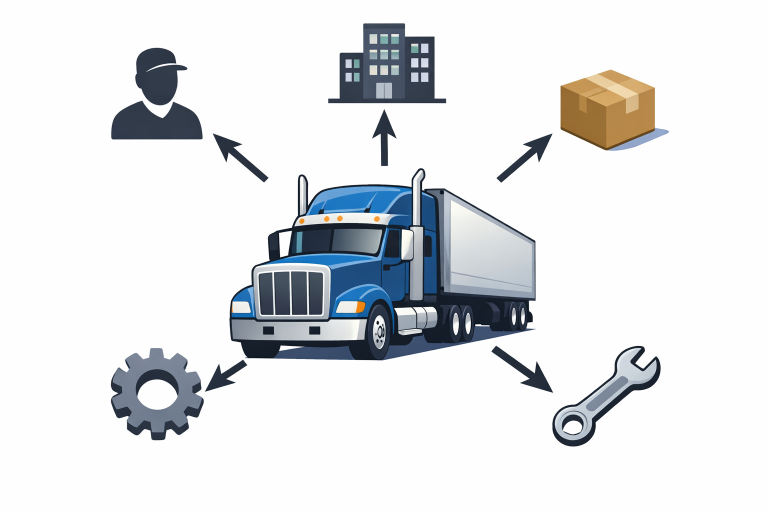
Truck accidents differ from passenger vehicle crashes in that a variety of parties are involved in a truck’s operation. These can include:
- Truck drivers:Responsible for safe vehicle operation and compliance with laws.
- Trucking companies:Oversee hiring, training, and schedule management of drivers.
- Cargo loading companies:Secure and balance cargo, which is crucial for safe driving.
- Vehicle and parts manufacturers:Ensure trucks and components meet safety standards.
- Maintenance providers:Perform routine inspections and emergency repairs.
Why Multiple Liable Parties Are Common
Commercial trucking is a collaborative venture. The cargo in a single truck may have passed through the hands of several businesses before reaching its destination. Each party in the supply chain is legally required to act responsibly. When one or more fail to do so, their negligence can create or contribute to the dangerous circumstances that lead to an accident. Federal regulations, such as those enforced by the Federal Motor Carrier Safety Administration, outline strict standards for trucking companies and operators, making violations easier to detect but also expanding the list of liable parties. For example, if a truck was overloaded beyond legal weight limits by the cargo company, the cargo company might share liability with the truck driver or employer in the event of a crash.
Examples of Multi-Party Liability
Truck accidents often result from a sequence of errors or oversights. Here are a few common scenarios:
- Fatigued driver and negligent employer:A company that pressures drivers to exceed safe driving hours may be held liable alongside the tired driver.
- Improperly loaded cargo:If a freight forwarding company or warehouse staff fail to secure cargo, leading to a load shift and crash, their negligence can be a direct factor.
- Defective parts:When a tire blowout or brake failure stems from a manufacturer’s defect, the parts maker may be liable, as seen in the recent increase in vehicle safety recalls.
- Inadequate maintenance:Contractors that fail to identify or address mechanical issues can be named in legal claims, especially if routine inspections were missed or not performed properly.
Investigating Complex Truck Accidents
Pinpointing responsibility in a truck accident requires access to trucking logs, communication records, and data from electronic monitoring devices. Investigations may involve accident reconstruction specialists and an in-depth review of maintenance, loading, and employment practices, as highlighted by major news reports.
Insurance companies representing different parties typically run their own investigations and may dispute or limit their clients’ liability, making strong legal representation essential for victims.
Protecting Your Rights After a Truck Accident
Conclusion
Truck accidents are rarely straightforward, with many stakeholders contributing to the operation, maintenance, and safety of commercial trucks. Identifying all liable parties ensures that victims do not leave compensation on the table. If you have been involved in a truck accident, understanding your rights and securing knowledgeable legal help is the best way to navigate these complex, high-stakes claims.







Due to the high stakes and complicated nature of these cases, timely action is vital. Truck accident victims should seek experienced legal counsel and gather as much evidence as possible from the scene, including photographs, witness information, and medical records. Pursuing every responsible party increases the likelihood of a full and fair recovery. This urgency is often tied directly to state laws that limit the time victims have to file a claim. For instance, most injured individuals generally have only one year from the date of the crash to take legal action. Missing this short window means losing the right to seek compensation for medical bills and lost wages. Working with The McMahan Law Firm’s truck accident lawyers, for instance, can help victims stay on top of these strict deadlines. Early legal help also prevents valuable evidence from being lost or destroyed by trucking companies.