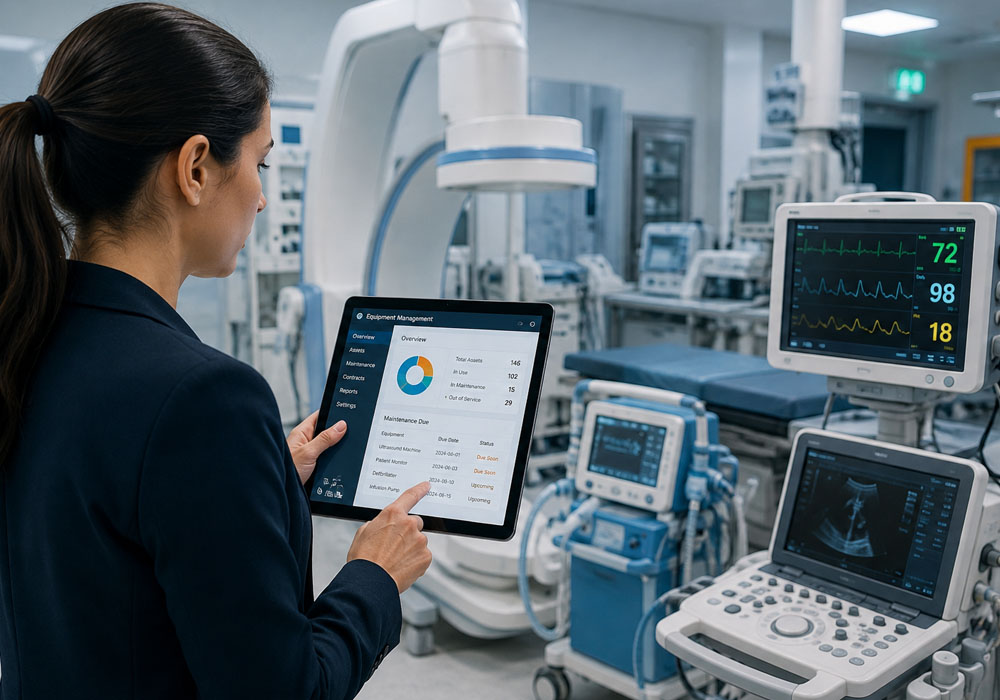
In the case of a medical fridge, adherence to standards and guidelines is only the beginning. Depending on your jurisdiction, you may also have to account for performance validation, tracking, and reporting. Lifecycle management is a way to structure your approach to both the technical and commercial requirements of equipment ownership. What does that involve? A full lifecycle approach involves three stages: planning and procurement, operation and maintenance, and disposal and decommissioning. Let’s look at each one.
Why lifecycle thinking beats point-in-time fixes
A practice manager who only checks temperature logs once a month is managing a symptom, not the asset. Cold chain failures rarely happen because nobody was watching. They happen because the unit was never validated properly on installation, or because a door seal degraded over eighteen months without anyone noticing.
The World Health Organization estimates that up to 50% of vaccines are wasted globally each year, and a significant share of that is tied to temperature excursions and cold chain breakdowns. That number should sit uncomfortably with anyone responsible for a practice’s refrigeration. It’s not a manufacturing problem. It’s an operations problem, and operations problems get fixed with structure, not luck.
The five stages that matter are planning and procurement, installation and validation, daily operation, preventive maintenance, and decommissioning. Skip any one of them and you’ve created a gap that eventually shows up as either a compliance failure or an unplanned capital expense.
Stage one: procurement decisions that determine everything downstream
This is where most of the risk gets baked in, often without anyone realizing it. A domestic household fridge looks like a reasonable stopgap. It’s cheaper upfront, it’s available immediately, and it keeps things cold. But “cold” isn’t the standard. Stable, monitored, and recoverable is the standard.
Domestic units cycle temperature in wide swings, sometimes 4-6°C between defrost cycles, because they’re built to keep food edible, not to hold a narrow therapeutic band. They lack forced-air circulation, so a shelf near the door sits several degrees warmer than one at the back. Most have no internal probe, no audible alarm, and no lockable door. When a vaccine fridge audit happens, a domestic unit is usually the first thing flagged, and it’s an expensive lesson to learn after stock has already been compromised.
The reason for the 2-8°C cold chain standard existing is that vaccines and most refrigerated medicines lose potency when taken outside that safe temperature window. Sometimes they do so irreversibly, and with no visible indicators that something has gone wrong. That comes on top of administering a treatment that’s less effective, potentially leading to outbreaks of a disease you thought you’d conquered. Most national vaccine storage guidelines are aware of this and will spell out the steps to take to ensure the temperatures you aim for are as close to 5°C as you can get, as well as functional recovery and alarm testing to ensure that safeguards in the unit work as intended.
In the real world, many fridges used to store vaccines will be at home, and it’s here the real difference between a $400 unit and a $2,000 vaccine fridge from the same manufacturer, or a purpose-built unit sourced locally through a specialist such as Rollex Medical, becomes apparent. When you’re comparing units, look for forced-air circulation, internal temperature probes independent of the thermostat, solid lockable doors, and both audible and visual alarms as standard, not optional extras.
Stage two: installation and validation before stock goes in
A new fridge arriving on-site isn’t ready to use. It needs a settling and mapping period before a single vial goes inside. Run the unit empty, or with thermal buffers only, for at least 24-48 hours and log the minimum and maximum readings across that window. This establishes a baseline temperature profile specific to that unit, in that location, under that ambient condition.
Placement affects performance more than people expect. A fridge next to a window, a heater vent, or in a room with poor airflow will behave differently than the same model in a climate-controlled back office. When adjusting the temperature, do it in small increments, no more than a couple of degrees at a time, and then let the unit sit for another monitoring period. Don’t load stock until the unit has demonstrated stable performance within range across the full monitoring period. If it can’t hold steady empty, it certainly won’t hold steady once you’re opening the door forty times a day.
Stage three: daily operation, monitoring, and alarm discipline
Taking manual temperature checks twice a day was a standard practice. While they’re not entirely redundant, they’re not enough. They capture just two moments in a 24-hour cycle and no indication of what happened at 3 am during a power blip. Continuous digital data loggers do that, recording temperature constantly and providing the retrospective evidence trail which audits in fact depend on.
Alarm escalation needs multiple steps. A local audible alarm is the first line, but if the practice is closed overnight, that’s of no use. Off-site or remote monitoring that alerts a manager’s phone when temperature drifts out of range catches the failures that occur while you’re closed for business.
Calibration is just as important as monitoring, with both the display thermometer and any external probes requiring annual recalibration against a certified reference. A fridge reading of 4°C on its display is meaningless if the probe itself has drifted two degrees out of true.
The preventive maintenance calendar
Preventive maintenance is what stands between a fridge approaching its full service life and one that fails silently three years in. There are six things every practice manager should be scheduling in regularly:
- Dust off those condenser coils to keep the compressor running cool and efficient.
- Check your door seals. No one should wait until the door is opened dozens of times every day before realizing it was steadily losing the ability to insulate against ambient heat.
- Make sure your auto-defrost frequency isn’t cooking the contents; a busy healthcare fridge can hardly keep up cooling back down in safe temp range only to overheat another 30 minutes later because it’s in the middle of a defrost cycle.
- Ensure your battery backup is being tested in full: you don’t want your monitor/alarm panel switching off after two minutes because a component failed and killed the backup circuit.
- You should be sure you know what your current monitor/alarm panel ‘high temperature’ reset number is: yes, you could be screaming the house down in a legitimately broken scenario and still nowhere near your official alarm limit.
- Last but definitely not least? Everyone’s favorite: the annual proof of probe accuracy test.
Miss any of these for long enough and you’re not managing risk anymore. You’re just waiting for a failure to happen.
The documentation trail that audits actually examine
During a vaccine storage audit, nobody will ask to see the fridge. They will ask to see the paperwork. Temperature logs, excursion reports, corrective action records, and maintenance history are what auditors will review, and gaps in that trail will be used as evidence of a problem, even if the fridge performed perfectly.
Records written at the time beat explanations created three months later every time. A log entry made when an excursion was noticed, with the action taken written down at that moment, provides far more evidence than a manager’s memory of that period and what they did to put it right. If there is an excursion, quarantine the affected stock until you do write down the reading and the time you noticed it, and then escalate the decision up to and including whether the stock is usable or must be thrown. But never skimp on the paper trail because you thought the temperature came back down, and the fridge was clearly running.
Repair, replace, or retire
Specialized medical refrigerators are designed to last between 7 and 10 years. This isn’t a random number. It’s the typical point at which wear and tear on the compressor becomes noticeable, replacement parts for the alarm system and probes are not as readily available, and the increase in energy usage costs nearly as much as a new fridge would depreciate.
This is a purchase where total cost of ownership is your real budget, not just the latest buying price. If the alarm system on an old fridge is becoming less reliable, the associated clinical risk is one that a spreadsheet can’t easily calculate, and neither is the unseen cost of that energy-hog compressor. If your refrigerator is getting close to the ten-year mark and needs a major repair, odds are it’s time to opt for replacement.
Staff training and the incident response sequence
It’s not just how great your equipment is, though. Every single team member who comes into contact with that fridge needs to follow the standard operating procedures: how product is loaded and rotated, the rule about keeping the door closed except when actually pulling something out, and what to do as soon as the alarm goes off.
Dealing with power failures is something that also needs to have its own complete discussion beyond regular training. Your team needs to know if the unit has battery backup, how long product can safely stay in the unit while the power remains off, and when to start moving product to a validated backup fridge or cooling it with ice. If you wait until the lights go out to make those decisions, things will definitely end badly.
Decommissioning: closing the loop properly
When a fridge gets too old, you don’t just unplug it and roll it outside. You need to have moved all the stock onto a verified standby unit with a stable temperature of its own before you can consider transferring anything in the first place. Then you’ll need to unplug and clean the old unit and have a licensed technician remove the refrigerant in accordance with regulations before you put the unit out for collection with general waste.
And that piece of paper you sigh and fill at the time the delivery guy wheels the new fridge down the hallway on his trolley? It’s not junk. That transfer of ownership paperwork sits in the asset register right beside the purchase and maintenance records for that device. It tells the auditor you disposed of the fridge properly and can prove it when they want to know what happened to the unit post-delivery.
A medical fridge is not a product acquisition. It’s a five-stage ownership life cycle that ends only when a technician on the vendor’s behalf puts the unit out for collection. Manage all five stages with full attention and the compliance risk takes care of itself for the most part.