Modern staircase railings play a key role in how staircases integrate with surrounding interior spaces. Well-designed railings strike a balance between safety, openness, durability, and architectural clarity. Material selection and linear direction influence how stairs connect visually and spatially with floors and adjacent rooms. Here are a few modern stair railing installation ideas to elevate your home’s overall aesthetic:
Glass Stair Railings
Glass stair railings use transparent or lightly tinted panels to maintain visual continuity between interior spaces. These systems are typically installed with top-mounted or side-mounted hardware, depending on structural and design requirements. Because glass allows natural and artificial light to pass through unobstructed, it enhances brightness within stairwells. This approach is especially effective in open-plan interiors, where staircases are located near windows or central living areas.
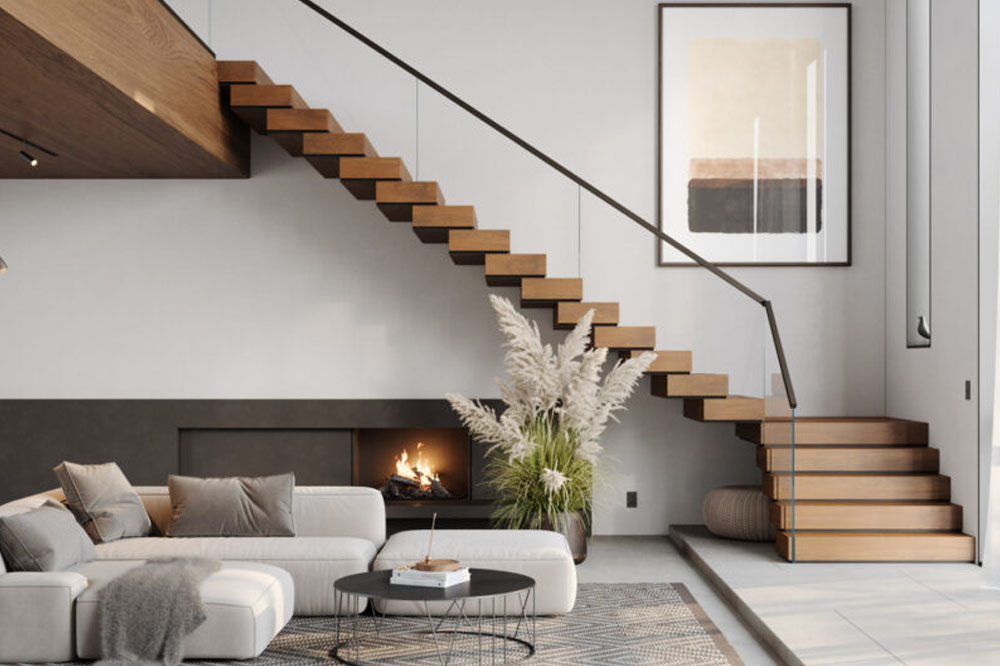
Glass railings preserve clear sightlines and do not conceal stair treads, risers, or supporting elements. Without traditional balusters or infill components, visual attention is drawn to the stair’s geometry, edges, and structural detailing. Tempered glass panels provide both safety and a refined, minimalist appearance. The railing system is infilled with glass and secured using metal fittings, often paired with steel or aluminum posts and handrails. These railings complement a range of finishes, including concrete floors, wood stair treads, and stone surfaces, making them a versatile choice for modern interiors.
Iron Stair Railings
Railing systems are infilled with panels and secured by metal components. They visually balance concrete floors, wood stair treads, and stone surfaces, creating a smooth and cohesive appearance. Iron stair railings are constructed from solid metal and feature streamlined, contemporary profiles that remain intentionally minimal.
Dark finishes define stair edges by creating a strong visual contrast against surrounding surfaces. Each railing is custom-fabricated to match specific stair dimensions, offering precise alignment over treads and landings. Iron offers excellent load-bearing capacity and durability, making it highly reliable for daily residential use.
Sealed or powder-coated finishes protect the material from corrosion, scratches, and fading despite constant contact. This strength makes iron especially suitable for high-traffic staircases, where frequent interaction from footwear and movement accelerates wear. Iron railings integrate seamlessly with wood, concrete, or stone stair systems, as the neutral metal complements varied textures. This adaptability supports long-term use by maintaining a consistent, modern aesthetic without the need for frequent updates.
Horizontal Cable Railings
A horizontal cable stair railing installation is composed of cables running between vertical support posts, aligned parallel to the stair treads. The open configuration defines the stair boundary without visually enclosing the space. Cable railings are typically paired with metal posts and solid handrails. Because the cables have a thin, low-profile appearance, they are less visually intrusive than solid infill panels, making them well-suited for narrow or vertically stacked staircases. This railing style aligns naturally with modern and industrial interiors, as its design emphasizes geometry, proportion, and structural clarity rather than decorative surface detailing.
Schedule Stair Railing Installation Services
The choice of stair railing influences how staircases integrate with the overall interior design. Railings made of glass, iron, and cable have different structural features. The decision of the railing system should be based on the stair use, desired finishes, and maintenance expectations. Schedule professional stair railing installation today.