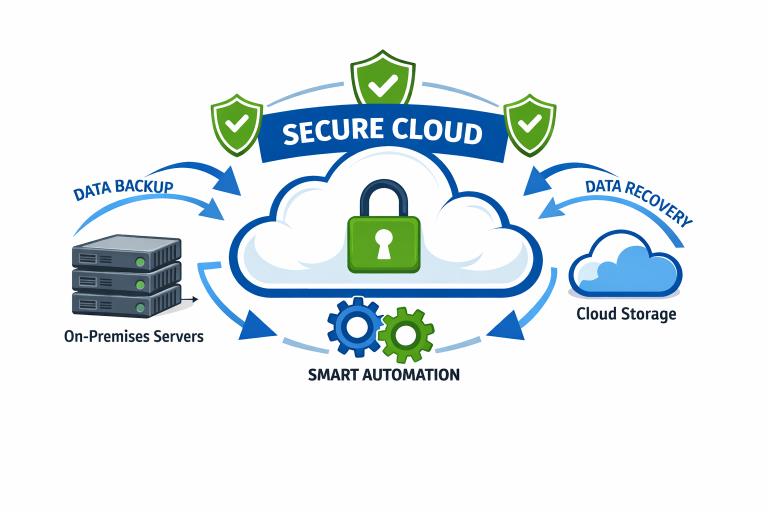
As organizations generate and rely on increasing volumes of digital information, the importance of robust data protection strategies has never been greater. Seamless, intelligent, and secure data backup and recovery service have become a cornerstone for ensuring business continuity, resilience, and trust in today’s fast-paced environment. Business leaders are recognizing that safeguarding this data calls for smarter solutions that adapt to new risks and challenges. Modern threats, such as ransomware and sophisticated cyberattacks, call for innovative backup and recovery solutions. At the same time, the complexity of hybrid and cloud environments requires adaptable, future-proof backup approaches that reduce downtime, guarantee data integrity, and streamline regulatory compliance. The strategies explored in this article empower organizations to proactively secure their data and minimize risk.
With threats evolving rapidly and digital transformation accelerating, companies are shifting toward modern backup architectures that emphasize automation, intelligence, and resilience. These approaches constitute a new paradigm in which data is actively protected, monitored, and governed at every layer of operations. Organizations also benefit from leveraging advanced backup techniques to meet industry best practices and build a culture of data responsibility.
AI-Driven Backup Solutions
Artificial Intelligence is transforming data backup and recovery through deep automation and intelligent analysis. With AI-driven solutions, organizations can continuously monitor backup health, optimize resource allocation, and identify anomalous patterns that signal risks. Smart scheduling and predictive analytics help forecast hardware failures or capacity crunches before they disrupt operations. According to Forbes, AI is increasingly used by enterprises to manage backup environments, automatically prioritize critical data, and reduce manual oversight. The rise of AI in backup and recovery does not just include simple automation. Machine learning algorithms can now analyze backup logs, system alerts, and performance metrics to continually improve the efficiency of backup routines. Unusual data behavior, indicative of a potential cyberattack or hardware failure, triggers immediate notification or remediation workflows, narrowing the window for threats to harm. These systems can refine backup schedules by learning workload patterns over time, ensuring backups happen at optimal times to avoid system slowdowns or user disruption.
Immutable and Air-Gapped Backups
Ransomware attacks and insider threats have made traditional backup systems vulnerable. That is why immutable backups, data copies locked against changes or deletions, are now a vital defense. When paired with air-gapped storage, which keeps backups offline and out of reach from network threats, organizations gain an extra buffer of protection. These methods maintain data integrity even if production systems are compromised. Many experts now consider combining both techniques as essential for dependable recovery in high-risk scenarios. Another benefit of immutability is that it facilitates forensics and recovery after an incident. Since the data in these backups cannot be tampered with or overwritten, organizations can use them as a reference point for investigations or restoration, preserving evidence and minimizing downtime. Air-gapping methods are evolving as well, with some organizations employing logical air gaps through strict network segmentation and others using physical media rotation or dedicated backup appliances disconnected from production networks. The combination of these methods has become a best practice in sectors such as government and critical infrastructure, where resilience against sophisticated threats is paramount.
Cloud-Based Recovery Strategies
The flexibility and scalability of the cloud have made it a preferred solution for modern backup and disaster recovery needs. With cloud-based recovery, organizations benefit from rapid data restoration, global redundancy, and seamless integration with SaaS and remote work environments. A hybrid approach combining on-premises and cloud backups enables businesses to meet performance, cost, and compliance requirements efficiently. This strategy also provides added resilience, as data is protected both locally and off-site.
Critical advantages of cloud-based recovery include faster scaling to handle sudden spikes in data protection needs and instant failover for business continuity. Many providers offer integrated security scanning for backup data to screen for malware before restoration, reducing the risk of reinfection. As businesses move toward multi-cloud strategies, having consistent recovery plans that span all providers and locations is essential to ensuring reliable access during any emergency.
Continuous Data Protection
Continuous Data Protection (CDP) has replaced traditional point-in-time backups in critical environments. CDP automatically tracks and stores every change made to data, enabling granular restoration to any previous moment. This minimizes the risk of data loss, especially for mission-critical applications, ensuring that organizations can recover data with minimal disruption. For industries such as finance and healthcare, where real-time data is essential, CDP provides crucial peace of mind. The granular restore capabilities of CDP are reshaping expectations for Recovery Point Objectives (RPOs), with many organizations now aiming for near-zero data loss, something unthinkable just a few years ago. Even in the face of hardware failures or cyberattacks, the ability to rewind business-critical data to a precise point in time reduces the operational and reputational damage often associated with downtime or breaches.
Integrating Backup with Cybersecurity
Data backup strategies must now integrate tightly with cybersecurity measures to provide layered protection. AI-powered threat detection within backup processes can identify ransomware, unusual activity, or compromised files before they are propagated. Security policies such as zero trust and role-based access controls are increasingly being embedded into backup workflows, reducing the attack surface and reinforcing overall cyber resilience. This integration is particularly important as sophisticated cyberattacks often target both production data and backups. Combining backup with endpoint security, encryption, and rapid breach detection creates a comprehensive shield for sensitive business information. Regular security testing of backups and the restoration process is also critical, ensuring recovery systems themselves are not a weak link in the larger cybersecurity posture.
Automated Disaster Recovery
Automated disaster recovery has revolutionized response times to business interruptions. Modern systems can detect failures and trigger recovery protocols without manual intervention, drastically cutting downtime and human error. Orchestration tools, such as those designed for Kubernetes and cloud-native applications, enable instant failover and seamless service restoration. This automation underpins business continuity plans for organizations of all sizes. Organizations increasingly use automated testing and disaster scenario simulation to validate their resilience. Automated playbooks continually update restoration and failover procedures based on the evolving footprint of digital infrastructure, ensuring a high level of readiness in the face of disruptions, whether technical failures, cyberattacks, or natural disasters.
Data Governance and Compliance
Backup strategies must adhere to data governance frameworks and comply with regulations such as GDPR, HIPAA, or CCPA. Many organizations are adopting a decentralized approach, allowing specific teams or departments to manage their own backups while adhering to company-wide regulatory standards. This model fosters agility and application ownership while ensuring consistent compliance and auditability across the enterprise. Increasingly, automated compliance reporting and audit-trail capabilities are built directly into backup platforms, reducing manual burdens and supporting real-time visibility for regulators or auditors. Sophisticated data classification engines further ensure that only necessary information is retained, helping companies avoid regulatory penalties and reducing storage costs. This intersection of compliance and operational efficiency makes robust governance a competitive differentiator in regulated industries.
Conclusion
Modern backup and recovery approaches are indispensable for weathering the growing array of business risks. Integrating AI, embracing immutable and air-gapped storage, leveraging cloud resources, and combining these with robust governance and cybersecurity are the hallmarks of future-ready protection. By investing in these strategies, organizations can position themselves to thrive in a dynamic digital landscape, secure in the knowledge that their data remains available, compliant, and protected. Ultimately, the evolution of backup and recovery is about moving beyond simply restoring lost files. It’s about creating business stability, empowering digital innovation, and maintaining customer and stakeholder trust. The businesses that succeed will be those that treat data stewardship as an ongoing journey, staying proactive in their approach to technology adoption, risk management, and compliance. As technology continues to evolve, a forward-thinking backup and recovery strategy will be essential for ensuring long-term success.