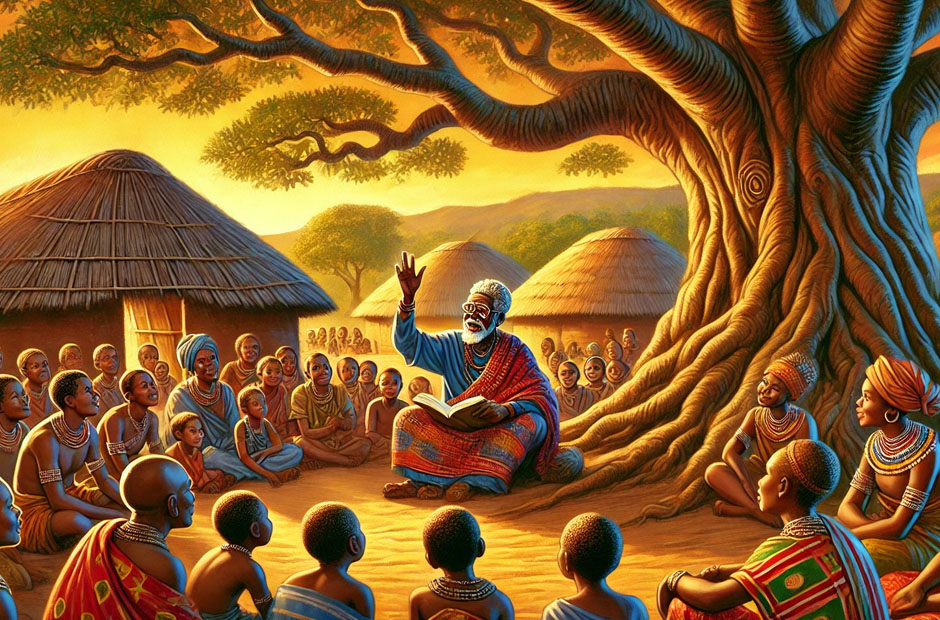
Each family possesses at minimum one of these tales – whether it is the predecessor who participated in a renowned war, the great-grandma who flees under extraordinary conditions, or the land “robbed” by a deceitful bureaucrat. Tales such as these drift through the ages verbally, obtaining and shedding facts meanwhile. The goal is not to wholly trust or disregard them as myths. The job is to research the case.
Find the anchor facts first
Oral traditions rarely survive as pure fiction. Most contain at least one verifiable detail – a specific surname, a town name, a military rank, a ship. These are your anchor facts, and they’re where the investigation starts.
Pull those details out of the narrative and treat them as search terms. An unusual surname combined with a rough time period can locate a family in federal census records within minutes. A ship name from an immigration story can be matched against passenger manifests to find the exact port of entry, the date, and sometimes the names of traveling companions. A mentioned military role leads to service records and pension files, which often contain biographical detail that the family story either exaggerated or underestimated.
The specificity of the anchor fact matters. “He came from Ireland” is hard to verify. “He came from a village near Cork in the 1840s” narrows it considerably. Ask older relatives for the sharpest details they remember – those are the ones most likely to be accurate.
Use the timeline method to test the narrative
After you’ve yanked the anchor facts, you can plot the oral history on a timeline next to real, documented history. If the family story is that an ancestor bolted during the war, check to see if the timing matches. If a relative allegedly “struck it rich” in the 1930s, do the documents relating to land patents or probate records support that?
This isn’t about “Aha! I caught you in a lie!” This is about compression. Family stories traveling over four generations are subject to time collapse. Two individual migrations become one. A grandfather and a great-uncle conflate to create a single story. Putting this back out in timeline form shows you the reality and which segments of the story contribute to truth.
For this, city directories are vastly underused. They are, essentially, phone books of the past, listing an ancestor’s occupation and address year by year. If the story is that the family ran a successful business in a certain city during the 1910s, a city directory can confirm or deny that business within seconds.
Treat discrepancies as clues
The biggest error new researchers commit (and many older hands as well) is to treat a story or record mismatch as an impassable barrier. It’s quite often exactly the reverse. A name that doesn’t appear in a single census is likely one that got anglicized on arrival – or someone who got counted under a good old-fashioned nickname. An individual who “vanishes” from the records may well have been informally adopted, or have moved under circumstances that prompted the family to make a collective pact never to discuss the individual again.
This is where the FAN principle – Friends, Associates, Neighbors – comes into its own. When the paper trail for an ancestor runs dry, start investigating the people who lived around them. Families traveled and settled and intermarried together, and they turned up as witnesses to one another’s transactions in the local courthouse. A neighbor’s probate record might name your ancestor as a witness and establish a relationship the official record never made explicit.
The same logic applies to the common family myths that genealogists encounter repeatedly. The “Native American princess” claim and the “three brothers who separated at the port” story appear in an extraordinary number of family histories. DNA evidence and census data can often locate the real story behind these – which is almost always more interesting than the myth, and more connected to documented history.
From verified facts to a structured family tree
Once you have verified a detail through at least two separate sources – which is the minimum for the Genealogical Proof Standard – it stops being a “family story” and becomes a fact. And you can cite it in your formal records.
This transformation is important. Oral history that remains oral history vanishes. Just 4% of Americans can name all eight of their great-grandparents, so most family lore is already only a generation or two removed from being forgotten altogether. Getting verified details into a structured format preserves them in a way that memory can’t. You can learn more about your ancestors by organizing confirmed findings into a digital family tree, which creates a permanent, searchable record that future generations can actually build on.
Local newspaper archives and old obituaries are a good way to push back on the finalizing. Obituaries are not a legal document but they’re not a family story, either. They are created by people who knew the deceased pretty well by the time they were writing the obituary, and genealogists often report that they find clues to a person’s relationships, locations, and jobs in an obituary that they don’t find in any official records.
The evidence shapes the story
A family story usually contains at least a grain of truth. People aren’t born into a void; something, somewhere, is always happening. Maybe the story about great-granddad isn’t true but why was it told?