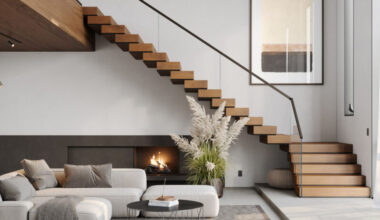
Key Highlights
- Why split-level homes are often associated with privacy and flow
- How subtle level changes create separation without walls
- What celebrity homes reveal about lifestyle-led design
- Why split-level layouts continue to inspire modern builds
Celebrity homes often attract attention for their scale and finishes, but the layouts behind them are just as intentional. Privacy, comfort, and the ability to move seamlessly between spaces matter just as much as visual appeal. One design approach that appears frequently in high-profile homes is the split-level layout.
Rather than stacking rooms in a traditional way, split-level homes use changes in height to define zones. This creates a sense of separation while keeping the overall home connected. For celebrities who value both openness and privacy, this balance is especially important.
Why split-level layouts suit private lifestyles
Privacy is a defining feature of many celebrity homes. Open-plan living can feel exposed when every space flows directly into the next. Split-level layouts offer a different solution by creating distinction through elevation rather than walls.
A slight change in level can signal a shift in purpose. Living areas feel separate from private zones without being fully closed off. This allows occupants to retreat without feeling isolated from the rest of the home.
For people who host frequently or live with multiple household members, this subtle separation helps manage activity and noise more effectively.
How level changes influence movement and flow
Split-level layouts guide how people move through a home. Instead of long corridors or abrupt transitions, spaces unfold gradually. This creates a sense of progression as you move from one area to another.
In many celebrity homes, this approach is used to enhance everyday living. Entertaining areas may sit slightly below private spaces, while quieter zones are positioned away from main traffic areas. These choices shape how the home feels in use, not just how it looks.
Movement becomes more intuitive when each level has a clear role within the overall layout.
Using elevation to define zones without walls
One of the strengths of split-level design is its ability to define zones while maintaining openness. Changes in height naturally separate spaces, reducing the need for solid partitions.
This approach suits modern lifestyles that value connection but still require boundaries. Kitchens, dining areas, and living rooms can feel distinct while remaining visually linked. Bedrooms and retreats benefit from a sense of privacy without complete disconnection.
In celebrity homes, this often results in interiors that feel layered and considered rather than flat or repetitive.
Where split-level design adds visual interest
Beyond function, split-level layouts add visual depth. Variations in ceiling height, sightlines, and levels create dynamic interiors that feel more architectural.
This visual interest is part of why split level design continues to feature in high-end homes. It allows designers to respond to the landscape, maximise views, and create unique spatial experiences within the home.
Rather than relying on decoration alone, the structure of the home becomes part of its character.
Beechwood Homes showcases split-level designs that demonstrate how elevation changes can be used thoughtfully to enhance both form and function.
Balancing style with everyday practicality
While celebrity homes may appear aspirational, the principles behind their layouts are practical. Split-level homes can support everyday living by reducing noise transfer, improving zoning, and making better use of sloping sites.
These benefits translate well beyond high-profile builds. Families, multi-generational households, and those who work from home often value the same balance of connection and separation.
Good design supports daily routines without drawing attention to itself.
Why split-level layouts continue to influence modern homes
Design trends come and go, but layouts that support how people live tend to endure. Split-level homes remain relevant because they address common needs around privacy, flow, and adaptability.
By offering separation without isolation, they provide a flexible foundation that suits a wide range of lifestyles. This is why the approach continues to appear in both celebrity homes and contemporary residential design.
Split-level layouts show that thoughtful structure can deliver both style and comfort, proving that how a home is arranged matters just as much as how it looks.