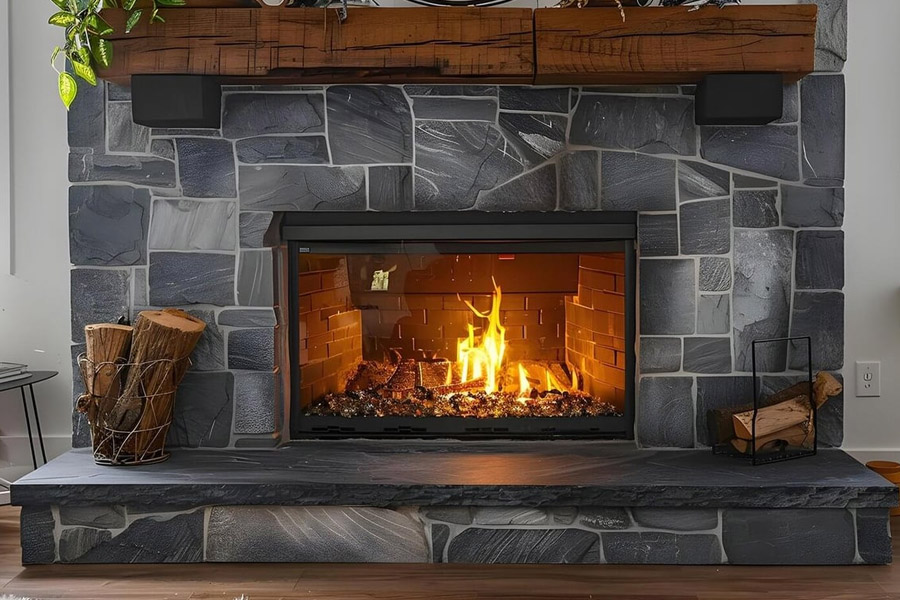
The Hearth as a Living Center
A good hearth does more than frame the fire. It draws people close, softens the hush of winter evenings, and acts as a stage for daily rituals. Choosing what sits beneath and around the fire matters, both for safety and for the look of the room. Granite has a way of blending steadfast performance with refined beauty. It reads as calm and confident, a material that endures the constant touch of life without losing its poise.
Strength That Stays
Granite is hard in the ways that count. A hearth slab crafted from granite resists scratching and chipping that can mark softer stones. The repeated shuffle of fire tools, the weight of a stove or grate, the occasional dropped log, all of it encounters a surface that stays firm and intact. In busy homes, that endurance becomes its own kind of elegance, the quiet assurance that the hearth will continue to look right year after year.
This strength is not just a number on a scale. It is the lived resilience that keeps edges crisp and planes smooth even with regular use. Granite can bear sustained weight without sagging or cracking. It tolerates small impacts that would blemish more delicate materials. When a hearth must perform as both a protective barrier and a piece of daily furniture, granite’s toughness raises the bar.
Maintenance mirrors that reliability. The stone’s natural density repels surface wear, so routine cleaning is easy, and most days only mild soap and water are needed. Over time, that simplicity adds up. Less attention, fewer fixes, longer intervals before any refinishing, all of it translates into a cost-effective choice for a cornerstone of the living space.
Heat Worthy and Home Safe
A hearth sits near intense heat, and its job is to keep that heat where it belongs. Granite thrives in that role. The stone tolerates high temperatures without warping, distorting, or turning brittle. When the firebox radiates, granite holds steady and prevents heat transfer to nearby flooring.
Safety is also about what a material does not do. Granite is non combustible, so it does not feed the fire, and it does not release fumes or odors when hot. For families that lean on the fireplace as a winter companion, that stability is invaluable. Night after night, the hearth works as a guardrail between flames and footpaths, and it does so without drama.
Shapes, Shades, and Finishes
Granite’s appeal is not limited to performance. The stone arrives with a palette that can be quiet or bold. Some slabs carry subtle flecks and fine grains in soft grays and creams. Others ripple with sweeping veins, deep charcoals, or warm browns. There is no single granite look, and that variety makes it easy to pair a hearth with the intent of the room, whether the mood is rustic, traditional, or sleek and modern.
Finish matters, too. Polished granite adds a gentle mirror to the firelight, a reflective sheen that amplifies depth and glow. In evening light, the surface seems to catch ember shimmer like a pond catches stars. A honed or matte finish offers a softer presence, less reflective, more understated, and just as refined. Both finishes are practical for a hearth, each shaping the atmosphere in its own way.
The ability to cut granite into tailored profiles also broadens design options. Thick monolithic slabs lend a sense of permanence. Slimmer edges with beveled or rounded faces read as polished and contemporary. With granite, the craft can honor both sturdy performance and the finer details of the interior.
Low Effort Upkeep
A hearth should not ask for attention every weekend. Granite delivers a low maintenance routine that suits busy homes. Dusting to lift ash, a damp cloth to remove smudges, and mild soap for the occasional thorough wipe are often enough. Many modern slabs arrive pre sealed, which helps resist stains. For those that are not, periodic sealing can add a layer of protection against spills, especially near the firebox where soot and soot-laden moisture might gather.
Because granite is less porous than many natural stones, it does not readily absorb soot or everyday mishaps. When a log sheds charcoal, or a drink splashes during a cozy evening, the surface cleans up without fuss. The result is a hearth that looks fresh longer and can return to its best after regular use.
Natural Roots and Practical Weight
Granite’s origin lies in the earth, quarried with minimal processing. Its durability means a long service life, which reduces the need for replacement and the waste that comes with it. Without frequent recoating or chemical-laden refinishing, the material suits indoor environments where air quality and simplicity matter.
There is a practical side to granite’s heft. A dense slab anchors the hearth platform and steadies wood stoves or grates. That mass helps maintain a level base, reducing vibration and movement that can stress joints and hardware. When a fireplace setup must remain secure through seasonal cycles, granite’s stability becomes a functional advantage.
A Material That Complements the Fire
A hearth balances two rhythms. One is the lively pulse of flames, bright and animated. The other is the quiet presence of stone, cool and composed. Granite plays the second role with grace. It frames the fire without overwhelming it. It supports daily life without demanding constant care. It accepts the attention of guests and family without losing its reserved charm. In rooms that draw people together, granite shapes the scene with strength and restraint.
FAQ
Is granite safe around high heat from a fireplace or stove?
Granite withstands high temperatures and remains stable under heat exposure near a firebox. It does not warp or become brittle, and it does not emit odors or fumes. This makes it a reliable barrier between the fire and surrounding floors or trim.
Does a granite hearth need to be sealed?
Many modern granite slabs are pre sealed, reducing the need for immediate treatment. Sealing can be useful for added stain resistance, especially in areas that see soot or occasional spills. If a slab is unsealed, applying a quality sealant from time to time helps keep the surface easy to clean.
How does granite compare to marble or slate for hearth use?
Marble and slate can be beautiful, but they are typically more prone to scratching, etching, or chipping than granite. Granite’s hardness and density give it better day to day durability and improved resistance to stains and heat effects, which suits high traffic hearths.
Will granite discolor from soot and smoke?
Granite is less porous than many stones, so it resists deep absorption of soot. Light residues can be wiped away with a damp cloth and mild soap. Regular cleaning prevents buildup and helps maintain a consistent finish over time.
What finish works best for a granite hearth, polished or honed?
Both finishes are practical. Polished granite reflects firelight and adds visual depth, while a honed finish offers a softer, matte look with reduced glare. The choice depends on the desired atmosphere of the room, since performance under heat and daily use remains strong for both.
Is granite a sustainable choice for a long lasting hearth?
Granite’s long service life reduces the need for replacement, and its minimal processing aligns with straightforward material use. Because it does not require frequent recoating or heavy chemical maintenance, it fits well in indoor spaces where durability and low intervention are priorities.
How does granite handle everyday wear around a fireplace?
Granite resists scratching and chipping from tools, logs, and foot traffic. Its surface stays intact under repeated use, and routine cleaning is simple. The result is a hearth that retains crisp edges and a clean look even when it serves as a daily gathering point.