Why Print Still Matters
Even in a digital world, a well-made print piece feels like a firm handshake. The right paper, finish, and technique communicates care, stability, and craft. Whether you need a stack of brochures for a trade show or a bold banner for a storefront, understanding the tools of the print world helps you choose wisely and make every impression count.
Digital Printing at a Glance
Digital printing transfers a file directly to the material without the need for plates, which keeps setup time low and speeds up delivery. It is ideal for shorter runs, targeted campaigns, and projects with variable data.
Inkjet printing uses microscopic droplets to build rich, continuous tones. If your design leans on photos, gradients, or detailed graphics, inkjet delivers smooth color transitions and crisp imagery. Think flyers, posters, display boards, and richly illustrated handouts.
Laser printing uses a laser, powdered toner, and heat to fuse images and text onto the sheet. It is fast and cost-effective for text-heavy projects like newsletters, manuals, and internal reports. Text appears sharp and consistent, and large batches can be completed quickly.
Digital presses bring book-like quality to short and medium runs. Designers finalize layouts for lookbooks, cookbooks, or textbooks with carefully set margins, line spacing, and typography. Files flow to the press, and the shop can handle binding in-house. If you need a polished publication without the large quantities that offset typically requires, a digital press is a practical middle ground.
Offset Printing for Large Runs
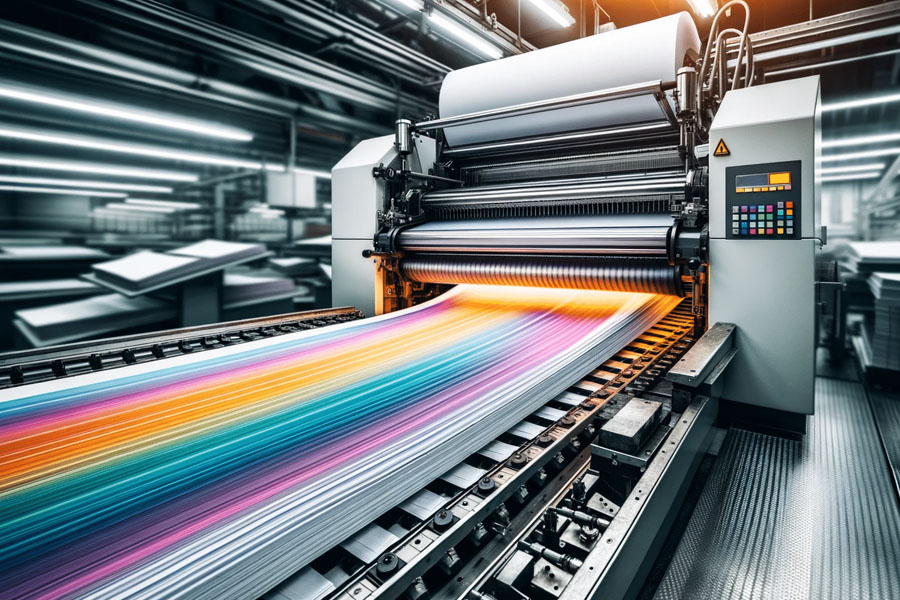
Offset lithography uses metal plates and a rubber blanket to transfer ink to paper. The process rewards longer runs with lower per-unit costs and exceptional consistency across thousands of copies. With tight color control and the ability to reproduce fine details, offset is a strong choice for catalogs, brochures, stationery systems, and any project where color fidelity is paramount.
The setup involves plate making and calibration, which adds lead time compared to digital. The payoff is precision. If you are printing a broad marketing roll-out or want exact color matching to brand standards across multiple pieces, offset shines.
Wide-Format Printing for Big Impact
When you need to go big, wide-format printers handle materials that measure in feet, not inches. These machines typically use advanced inkjet technology and specialized inks to produce high-resolution images on vinyl, canvas, fabric, and heavy papers.
Wide-format is a natural fit for indoor and outdoor signage, trade show backdrops, retail displays, and event banners. Materials can be selected for durability, weather resistance, and portability. A well-printed banner or wall graphic operates like a billboard for your brand, catching eyes from across the room or a busy sidewalk.
Custom and Specialty Printing
Custom printing is how you translate brand personality into tactile experiences. Screen printing lays down vibrant, durable color on apparel and merchandise. T-shirts, hoodies, tote bags, and mugs become mobile brand ambassadors, turning customers and staff into a walking campaign.
For business cards, invitations, and letterhead, custom touches define the tone. Letterpress uses a photopolymer plate to press a design into soft stock, creating a palpable impression you can feel with your fingertips. The subtle shadows and debossed texture whisper craft and care.
Beyond ink, consider die cutting, specialty stocks, and mixed techniques that pair digital or offset printing with foil stamping or embossing. Small details add up, transforming simple leave-behinds into keepsakes.
Choosing Paper Stocks and Finishes
Paper finish influences both aesthetics and readability. Glossy paper is reflective and amplifies photographic images with punchy color and sharp detail. It is a go-to for photo-heavy brochures and promotional cards that need shine.
Matte paper has no glare, which makes it easier to read. It offers a soft, elegant look and can temper overly saturated colors for a more refined presentation. If your content is text-forward, matte is often the better choice.
Satin sits between gloss and matte. It offers a touch of sheen without high glare, balancing image vibrancy with comfortable readability. If your piece includes both dense text and vivid images, satin can be a smart compromise.
Cardstock increases durability and presence. When you print business cards, postcards, or covers, thicker stocks help each piece feel substantial and memorable in hand. Coated cardstock provides a smoother surface that helps resist fading and can enhance color pop. Uncoated cardstock has a toothy, natural feel that suits minimalist designs and brands seeking an organic, understated look.
Finishes protect and elevate print. Lamination wraps the sheet in a clear, durable film that resists moisture, scuffs, and frequent handling. Menus, sales sheets, and pocket guides benefit from lamination because they live hard-working lives.
UV coatings cure instantly under ultraviolet light to form a glossy or matte protective layer. They are popular for postcards, covers, and banners where scratch resistance and color depth are important. For outdoor signage, UV coatings help slow the fading effects of sunlight.
Decorative techniques like foil stamping and embossing add dimension and sparkle. Foil can mirror metallics or offer bright colors that standard inks cannot match. Embossing raises elements off the surface, while debossing sinks them into the sheet. Both add tactile interest that sets premium business cards and invitations apart.
Working With a Print Shop
A good print partner is part technician, part guide. Share your objectives, audience, and intended usage so they may suggest the appropriate approach, material, and finish. Soft proofs are digital previews for content and layout checks, and hard proofs are actual samples that show color, texture, and finish before the final run. Many shops offer both.
If your project requires precise brand colors, ask about color management and spot colors. For bound pieces, discuss binding styles, spine widths, and pagination early in the process. A brief conversation can prevent surprises and streamline the path from concept to delivery.
FAQ
What is the main difference between digital and offset printing?
Digital printing sends your file directly to the press without plates, which cuts setup time and favors short runs and fast turnarounds. Offset printing uses plates and a rubber blanket to transfer ink, delivering superior color consistency and fine detail at lower per-unit cost on large quantities.
When should I choose inkjet versus laser for small projects?
Choose inkjet when your design relies on photos, gradients, or richly colored graphics. The droplet-based process renders smooth tones and vibrant imagery. Choose laser when speed and crisp text are priorities. Toner fuses sharply to the sheet and is well suited for newsletters, reports, and manuals.
What kind of projects are ideal for a digital press?
Digital presses excel at short to medium runs where book-like quality matters. Lookbooks, cookbooks, training manuals, and limited-edition catalogs benefit from professional finishing and the ability to print only the quantity you need without the setup costs of offset.
How does wide-format printing hold up outdoors?
Durability depends on material and finish. Vinyl and certain treated fabrics resist weather, while UV-resistant inks and coatings help prevent fading in sunlight. For long-term outdoor use, your print shop can pair weatherable substrates with protective laminates or UV coatings to extend life.
What is the difference between coated and uncoated cardstock?
Coated cardstock has a smooth, sealed surface that enhances color vibrancy and helps resist smudging and fading. Uncoated cardstock feels more natural and textured, absorbing ink for a softer look. Choose coated for punchy graphics and uncoated for an understated, tactile aesthetic.
Which protective finish should I choose for menus or frequently handled pieces?
Lamination is a strong choice for menus, price lists, and pocket guides because it resists moisture, oils, and abrasion. If you prefer a thinner protective layer with visual pop, a UV coating can add gloss or a matte sheen while improving scratch resistance.
What is letterpress, and when does it make sense?
Letterpress presses a raised plate into soft stock, creating a dimensional impression. It suits premium business cards, invitations, and stationery where touch matters as much as sight. Choose letterpress when you want a crafted feel and are comfortable with a more artisanal, tactile result.
What is the difference between a soft proof and a hard proof?
A soft proof is a digital preview used to confirm layout, spelling, and general color intent. A hard proof is a physical sample produced on the actual or similar stock, showing color, texture, and finish. Hard proofs are invaluable for color-critical pieces and specialty papers or coatings.