Casing specifications may seem to be unnecessarily complicated, especially when you are new to the oil and gas operations. Technical charts, steel grades, and dimensional tables tend to leave more questions than answers, particularly when all decisions affect well integrity and safety.
Using the incorrect casing may result in pressure failure, expensive delays, or compliance problems in the future of the project. The resulting pressure renders the knowledge of standards a necessity, and not an option. This is where it is useful to have clarity at the early planning stages.
The API casing standards are designed to help ease the decision-making process through the establishment of uniformity in manufacturing, performance, and testing specifications.
This article discusses the basics of API casing specifications, dissects its main elements, and demonstrates how they assist in building dependable wells, starting with the planning process and concluding with the execution.
Knowledge of API Casing Specifications
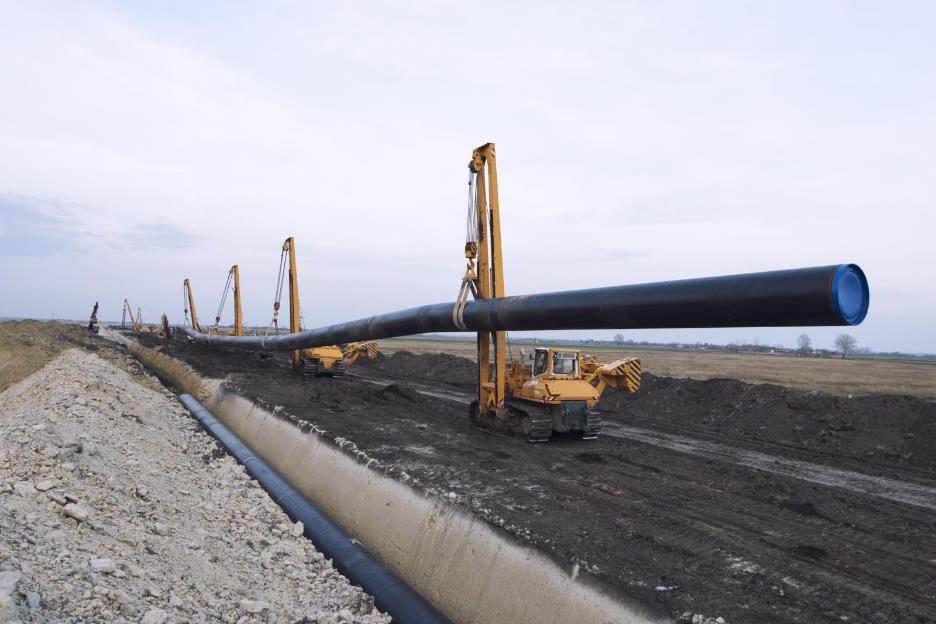
API casing specifications are a set of standard requirements for casing pipes used in oil and gas wells. Such requirements are set by API 5CT, which regulates the design of casing and tubing, the strength of materials, sizes, and quality parameters.
To put it simply, these standards guarantee that casing is safe to use under downhole pressure, temperature, and mechanical stress. When an engineer uses the term API casing specifications, they are talking about a system that matches casing performance to the real-life drilling issues and environmental challenges.
The standardization minimizes uncertainty and enables the operators to choose casing that can suit operational needs and does not have to be based on assumptions. Consequently, the design of wells can be done more confidently and consistently in all types of projects of different complexity.
Casing Sizes and Dimensional Requirements
One of the initial parameters that is outlined in API standards is casing size. The outer diameter, the wall thickness, and the weight per foot are accurately defined to fit wellbore dimensions. Heavy diameter is normally used in shallow sections, whereas small diameter supports deep well intervals.
The thickness of the wall has a direct effect on the capability of the casing to withstand collapse and internal pressure. API standards regulate dimensional tolerances to structural integrity in the drilling, cementing, and production processes.
Such accuracy enables the various casing segments to fit together and ensures even distribution of the load along the wellbore. Following these dimensions allows drilling crews to prevent the installation difficulties and mechanical failures that may occur in the process of well construction.
Grades and Strength Classifications of Steel
The API casing grades are used to indicate the mechanical properties of the steel, such as yield strength and tensile strength. Popular grades include J55, N80, L80, and P110, which are assigned depending on depth, pressure, and environmental conditions.
Shallow wells that have moderate pressure are usually favorable to lower grades, whereas deep or high-stress applications are favorable to higher grades. These groupings enable the engineers to strike a balance between the strength and the flexibility of the casing string without over-engineering it.
There are also API standards that define limits of chemical composition in order to guarantee constant material behavior within a batch. Knowledge about grade selection assists in assuring the casing to work satisfactorily during the operational life of the well and minimizes premature wear.
Manufacturing Processes and Quality Control
API casing specifications define acceptable manufacturing methods, including seamless and electric resistance welded (ERW) pipe. Seamless casing is often chosen for high-stress environments due to its uniform structure, while ERW casing may be suitable for less demanding applications.
Regardless of method, API standards require strict quality inspections such as dimensional checks, mechanical testing, and non-destructive evaluation.
These controls help identify defects before the casing reaches the field. By enforcing these requirements, API ensures consistency in performance and reliability, even when casing is sourced from different manufacturers or production runs.
Thread Types and End Connections
Threading is another critical aspect covered by API casing standards. Thread types determine how casing joints connect and how loads are transferred across the string.
API standard connections are widely used for their simplicity and compatibility with common tools, while enhanced connections may offer improved sealing or load capacity. End finishes must meet precise specifications to prevent leaks and mechanical failure during installation.
Proper thread selection improves installation efficiency and reduces the risk of connection damage during makeup. These specifications ensure that casing connections remain secure throughout drilling, cementing, and long-term production operations.
Why API Compliance Is Operationally Important
Compliance with API casing specifications supports safety, regulatory acceptance, and operational efficiency. API-certified casing undergoes testing to verify strength, pressure resistance, and dimensional accuracy before deployment.
This reduces the risk of casing collapse, burst, or connection failure in the field. Standardized casing also simplifies logistics and planning by ensuring compatibility across equipment, tools, and accessories.
From a long-term perspective, API compliance helps maintain well integrity, reduce maintenance needs, and support predictable performance. These benefits directly impact project timelines, costs, and overall reliability across drilling programs.
Final Thoughts
API casing specifications provide a structured framework that transforms complex technical requirements into practical guidance. They define how casing should be manufactured, tested, and applied to withstand the demands of drilling and production environments.
By understanding sizes, grades, manufacturing processes, and connection standards, you gain clarity in selecting casing that aligns with well design and operational goals. These standards reduce risk, support compliance, and promote consistent performance across projects.
As you grow more familiar with API casing specifications, decision-making becomes more precise and informed. This knowledge strengthens well integrity and supports safer, more efficient oil and gas operations.