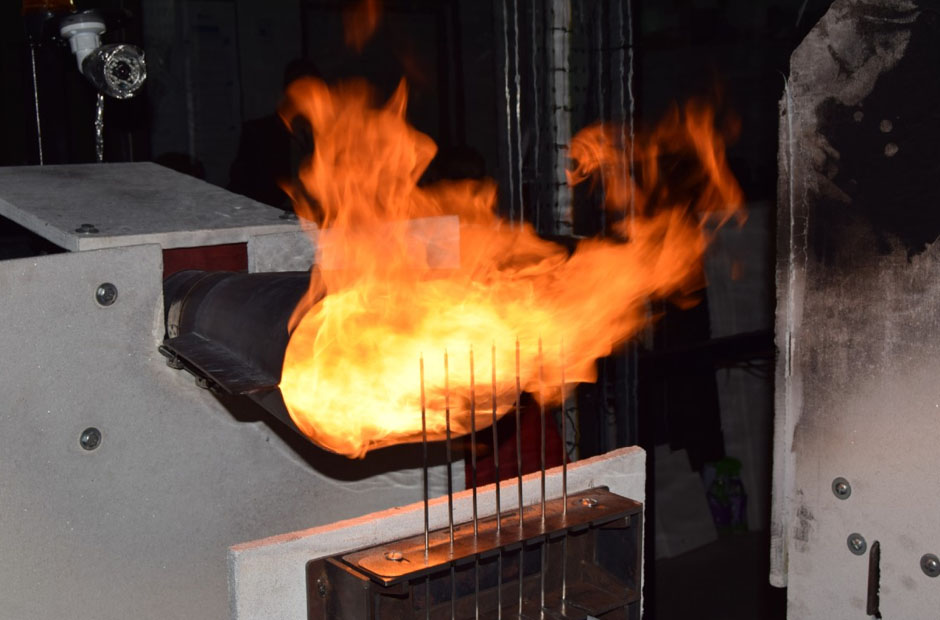
Aircraft material fire performance plays a crucial role in passenger protection during rare onboard fire incidents. Strict fire evaluation programs maintain dependable safety standards across interior aircraft components. Aviation professionals review recognized fire test procedures within certification programs.
FAA certification documentation includes 8110-3 Flammability, a formal approval reference for aircraft interior materials. This designation confirms compliance with strict aviation fire performance regulations for aircraft components. Aerospace manufacturers conduct laboratory fire tests before material approval. These tests measure how aircraft materials respond to flame exposure, heat release, and smoke production.
1. Vertical Burn Test for Aircraft Interior Material Compliance
The Vertical Burn test evaluates flame resistance characteristics of aircraft interior materials under controlled ignition exposure. Laboratory technicians position the specimen vertically inside a calibrated combustion chamber for accurate results. A standardized flame contacts the lower edge of the material for a defined duration.
Engineers measure burn length, extinguish time, and molten material behavior after flame removal. Aircraft seat fabrics, insulation blankets, and wall coverings undergo this evaluation during certification programs. Aviation regulations impose strict limits on burn distance and extinguish duration.
2. 45 Degree Burn Test for Aircraft Interior Surface Materials
The 45 Degree Burn test examines flame spread behavior across decorative interior aircraft materials. Engineers mount the specimen at a forty five degree orientation within a controlled fire test chamber. A calibrated ignition source contacts the lower surface edge for a defined exposure interval.
Test technicians observe flame travel distance and surface burn rate after ignition exposure. Decorative laminates, plastic panels, and trim surfaces commonly undergo this certification evaluation. Aviation regulations define acceptable flame spread limits for interior aircraft surface materials.
3. Oil Burn Test for Aircraft Seat Cushion Fire Resistance
Aircraft passenger seats require a strict fire resistance evaluation due to the foam cushion material composition. The Oil Burn test exposes aircraft seat assemblies to intense fuel flame conditions. Technicians place a seat cushion structure above a controlled oil flame within a test chamber.
Engineers observe flame spread patterns, cushion collapse behavior, and heat penetration through seating layers. Aviation certification programs require this evaluation for passenger seats installed inside commercial aircraft cabins. Acceptable results require flame self-extinguishment and limited structural damage after flame exposure.
4. Heat Release Rate Test Using OSU Calorimeter
The OSU calorimeter measures heat energy released from aircraft materials during controlled combustion tests. Engineers place the material specimen beneath a radiant heat panel inside the calorimeter chamber. Sensors record heat release rate data during the controlled combustion process.
Aircraft ceiling panels, sidewall assemblies, and overhead stowage structures commonly undergo this laboratory evaluation. Aviation certification rules impose strict limits on peak heat release and total heat energy output. Compliance ensures interior aircraft materials restrict fire intensity inside enclosed passenger cabin environments.
5. Smoke Density Measurement for Aircraft Cabin Material Safety
Smoke density evaluation measures optical smoke concentration produced during aircraft material combustion events. Engineers place test specimens inside a sealed smoke density chamber for controlled combustion evaluation. A calibrated ignition source initiates combustion while sensors measure light transmission through generated smoke.
Aircraft interior plastics, electrical insulation, and composite panels frequently undergo this laboratory evaluation. Aviation regulations define acceptable smoke opacity levels during combustion scenarios within certification programs. Lower smoke density supports clearer cabin visibility during emergency evacuation procedures inside aircraft.
Aircraft interior fire safety depends on strict laboratory validation of material behavior under fire exposure. Aerospace certification programs rely on standardized fire tests to confirm material suitability for aircraft interiors. Aviation professionals should review laboratory procedures associated with 8110-3 Flammability certification documentation. Aerospace organizations should maintain strict fire testing protocols across aircraft material development programs. Consistent compliance with aviation fire safety standards strengthens passenger protection during rare onboard fire incidents.