Why Pair Space Planning With BIM
Space planning maps how people will use a building. Building Information Modeling creates a detailed digital representation of that building, complete with elements, relationships, and rules. When they work side by side, the fog lifts. The team sees a single, coherent picture of spaces, systems, and sequences. Ideas move from rough sketches to a living model that can be tested, tuned, and trusted.
This pairing turns abstractions into a walkable blueprint. Rooms, corridors, and structural grids align. Mechanical routes respect ceilings and clearance. Materials, flows, and fixtures connect in ways that feel natural and efficient. Decisions come faster because the evidence is clear and shared.
What This Integration Looks Like
Integration begins early. Space planners outline the program, adjacencies, and circulation. BIM specialists translate those needs into a model with parametric components and intelligent constraints. As the building evolves, both disciplines work in the same environment. A change to an office bay ripples to furniture counts, lighting layouts, and mechanical loads. A shift in corridor width updates the fire egress paths. The model becomes a compass, always pointing toward a better fit between intent and reality.
Benefit 1: Optimize Every Square Foot
A large floor plate can still feel cramped or fragmented without thoughtful planning. When space planning meets BIM, every corner is measured, placed, and tested for function. Room sizes reflect real use, not just theoretical ratios. Circulation arcs are evaluated for comfort and clarity. Storage tucks into leftover niches. Dead ends disappear.
The result is balance. Busy areas breathe. Quiet zones stay protected. Workstations, classrooms, or patient rooms sit where they serve the daily rhythm. Net-to-gross ratios improve because space is not wasted on awkward transitions or redundant corridors.
Benefit 2: Visual Clarity That Everyone Can Read
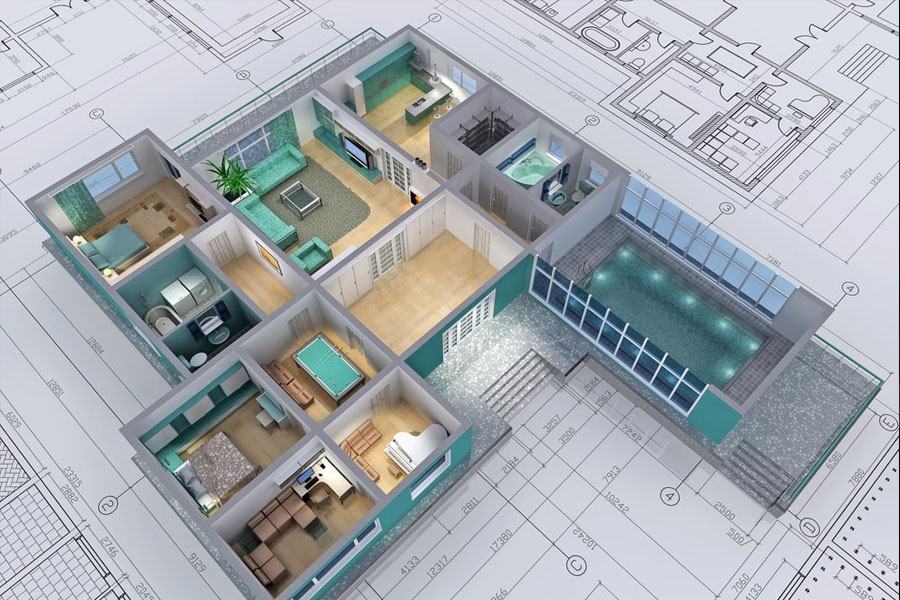
Static drawings can feel flat and distant. BIM animates the plan so teams can see the building from the inside out. Add space planning and the picture becomes familiar and human. You can trace how a visitor arrives, where they check in, and how they find the right door. You can sense daylight reaching the lounge, and you can verify that the view to the garden is actually there.
With a full view of room placements, the layout no longer hides surprises. The flow of spaces becomes apparent. Stakeholders who are not trained in reading technical drawings can still understand the building and contribute meaningful feedback.
Benefit 3: Coordination Across Disciplines
Architects, planners, engineers, and contractors need a common language. The integrated model provides it. Updates appear in one place, in real time. A structural adjustment drops into the architectural plan and nudges mechanical routing. The interior layout reacts and keeps circulation clear.
This decreases miscommunication. Meetings shift from debating interpretations to evaluating options. Everyone knows what others are planning because they are looking at the same evolving truth. The work feels more like a well rehearsed ensemble than a series of isolated solos.
Benefit 4: Early Insight Into Space Requirements
Early decisions compound. When space planning and BIM start together, teams capture requirements before the concrete is poured. Program needs are verified against actual dimensions. Movement is checked with realistic widths and radii. Essential areas land in the right places.
That early clarity prevents costly redesign later. It also makes comfort tangible. Hallways carry the right number of people. Waiting areas do not crowd entrances. Utility rooms receive access and clearance. The building starts on a steady footing because fundamental needs were met at the outset.
Benefit 5: Built-In Flexibility for Future Changes
Buildings change. Tenants grow, departments shrink, codes evolve, and technology advances. A BIM model that embeds space planning gives owners and operators a head start on every update. The existing layout is mapped, labeled, and understood. Teams can test new rooms, shift zones, or improve adjacencies directly in the digital model.
No one starts from scratch. The backbone is already visible. New ideas are layered onto what exists and evaluated in context. Flexibility is not an afterthought but a capability baked into the building’s digital twin. Over time, that adaptability keeps the place useful, comfortable, and resilient.
Benefit 6: Measurement Accuracy You Can Trust
Precision matters. A few centimeters can decide whether a cabinet fits or a door swings without hitting a handle. By combining space planning with BIM, measurements are consistent across models and drawings. Dimensions are tied to parametric components, so updates propagate automatically.
This reduces mismatch during construction. Furniture plans align with electrical outlets. Fixture spacing matches plumbing rough-ins. Ceiling heights respect duct sizes and lighting types. Accuracy builds confidence, and confidence speeds progress.
Benefit 7: Safer Circulation and Clear Pathways
Safety begins with how people move through space. Integrated planning allows teams to test pathways, access points, and gathering areas in advance. They can model peak times, check clearances, and verify routes for accessibility and emergency egress.
The payoff is a building that is intuitive to navigate. Entrances welcome rather than bottleneck. Stairs and elevators connect logically. Open areas do not become obstacles. Safety is not a separate checklist but a natural outcome of a well orchestrated flow.
Benefit 8: Faster Decisions With Shared Truth
Decision making slows when facts are scattered. With a combined model, options are easy to compare. Teams can evaluate alternate layouts, see how changes affect cost and schedule, and confirm practical fit before committing. Visual comparisons land quickly. The path forward is visible.
Because the model is the single source of truth, disagreements shrink. The conversation turns from opinion to evidence. Schedules benefit from reduced rework. Budgets benefit from fewer surprises. Speed comes without sacrificing quality.
FAQ
What is the difference between space planning and BIM?
Space planning focuses on how spaces are organized for human use. It balances size, adjacency, circulation, and function to create a layout that supports daily activity. BIM is a digital representation of the building’s physical and functional characteristics. It stores geometry, relationships, and data so the project can be coordinated, analyzed, and documented. Together, space planning decides what should happen and where, while BIM ensures those decisions are modeled, measured, and maintained.
Can this approach help with renovations and retrofits?
Yes. A BIM model that includes space planning gives a clear baseline for existing conditions. Teams can test scenarios, confirm structural and systems constraints, and visualize changes before any demolition. It streamlines approvals, reduces guesswork, and helps owners understand how new functions fit within an older shell.
How does integration reduce errors during construction?
Integration creates one coordinated model for all disciplines. When a dimension changes, the update flows to drawings, schedules, and related components. Clash checks catch conflicts between architecture, structure, and MEP systems. Space planning keeps circulation and access clear, which prevents late-stage layout fixes. Fewer disconnects translate into fewer field errors.
Is this workflow suitable for small projects?
It is. Even modest renovations benefit from accurate measurements, clear visuals, and coordinated updates. The scale of the model can match the scale of the project. The gains in clarity, safety, and flexibility often outweigh the setup effort, especially when future changes are likely.
Who benefits most from combining space planning with BIM?
Everyone involved. Designers gain a reliable canvas for exploring ideas. Engineers receive context for systems integration. Contractors get consistent documentation. Owners and users see how spaces will function and can influence outcomes early. The integrated model becomes a shared map that guides the project from concept to long term operation.
Does this integration impact cost and schedule?
It does, usually in positive ways. Early coordination lowers rework, which reduces cost. Accurate quantities support better budgeting. Clear visuals accelerate decisions and approvals. While there is an upfront investment in modeling, the downstream savings in time and change orders often make the approach more economical overall.