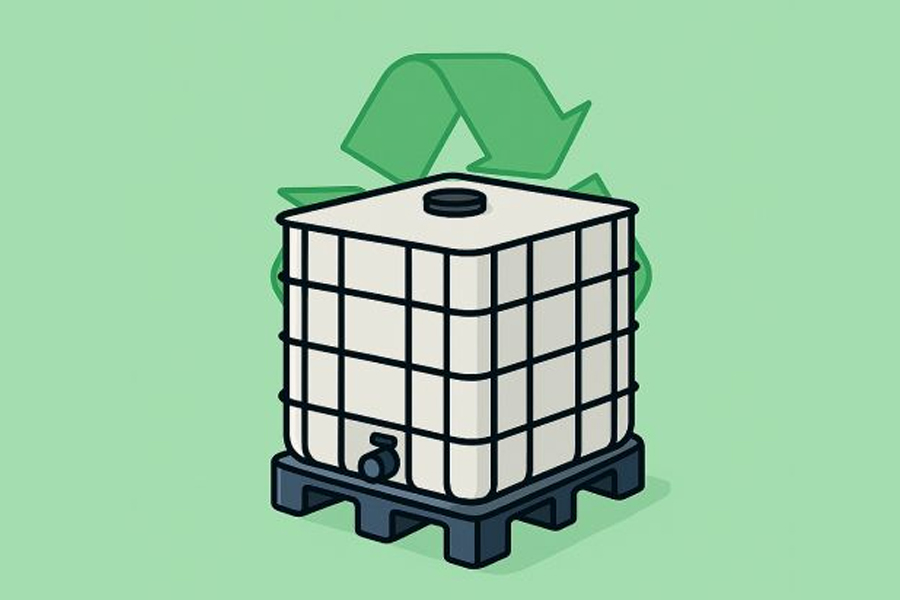
Durable Containers That Shrink Plastic Footprints
Intermediate bulk containers are responsible storage workhorses in industries, farms, and warehouses. The strong steel cage of high-density polyethylene IBC totes withstands harsh environments. Totes are designed to be reused, unlike single-use containers. Reuse, refurbishment, and reconditioning extend unit life, reducing plastic demand and manufacturing emissions.
Every tote that avoids early disposal keeps raw materials in the ground and reduces the flow of plastic to landfills. When companies choose surplus IBC totes from VerdeTrader, the sustainability impact multiplies. A tote that has already proven its durability can be reintroduced to a new application after inspection and grading, keeping industrial assets moving and waste in check. The result is a practical path to cleaner operations without reinventing the storage playbook.
Designed for a Circular Economy
IBC totes fit the heartbeat of a circular system. They are modular, tough, and engineered for repeated service. In a circular model, the goal is simple. Keep materials and products in use for as long as possible. Refurbished totes do exactly that. Buying surplus instead of new units cuts the energy required to produce replacements and lowers the operational carbon footprint with a measurable, repeatable action.
VerdeTrader’s model accelerates this loop. They locate, assess, and redistribute surplus totes so they remain productive rather than idle or discarded. Each reconditioned unit extends the lifespan of industrial components and supports procurement teams that prioritize responsible sourcing. It is a closed loop in motion, with fewer discards and more value retained at every turn.
Compact Form That Reduces Transport Emissions
Shape matters in logistics. Where cylindrical drums leave pockets of unused space, square IBC totes fit together like a tidy puzzle. Their compact footprint allows more volume per shipment and more stable stacking on pallets and trailers. When you transport more product in fewer truckloads, fuel consumption drops and emissions follow suit.
This efficiency does not require complex optimization software or expensive new infrastructure. It is built into the tote’s geometry. For operations that move liquids or granulates, the space-smart design simplifies planning, cuts transportation costs, and lowers the environmental burden of moving goods from point A to point B.
Practical Tools for Water and Resource Stewardship
In sustainability projects, IBC totes act like reliable reservoirs. They store rainwater for later use, capture greywater for nonpotable applications, and supply irrigation in fields where every drop counts. Off-grid installations use totes to stabilize water access, while environmental teams rely on them for spill containment that keeps contaminants from spreading.
On-site water management lets businesses and communities conserve potable water, decrease municipal reliance, and respond swiftly to changing weather. Human-scale infrastructure is adaptable. An IBC tote connects appropriate resource usage to daily operations.
Lower Costs With High-Quality Surplus
Going green should not force a budget squeeze. Surplus IBC totes from VerdeTrader bring costs down while keeping quality high. After reconditioning and inspection, these units offer structural integrity and consistency for a fraction of the price of new equipment. That cost advantage turns sustainability from a premium choice into a practical default.
Procurement leaders can minimize capital expenses and allocate funds to other improvements without sacrificing performance. Maintenance teams gain reliable containers that hold up under pressure. Finance leaders see the savings on the ledger. Sustainability stops being a nice-to-have and becomes a standard operating practice.
Safer Facilities and Cleaner Storage
Well-maintained totes do more than store. It eliminates leaks and spills that cause accidents, damage inventory, and pollute soil and water. Clear grading and careful preparation predict performance. Companies may trust VerdeTrader to check and prepare products for safety-critical applications.
Cleaner storage is the foundation of cleaner operations. Fewer accidents mean less waste, fewer emergency responses, and more stable workflows. In facilities handling chemicals or food-grade ingredients, properly maintained totes carry the load with confidence and simplify compliance with internal protocols.
End-of-Life Paths That Keep the Loop Closed
Even long-lived equipment reaches retirement. When an IBC tote completes its usable service, its materials do not need to go to waste. The HDPE interior can be processed into new products. The steel cage can be melted and recast for future applications. Some units can be converted for nonindustrial uses where structural demands are lower.
VerdeTrader helps divert these assets into reuse, resale, or recycling streams that match their condition. This end-of-life planning preserves the value embedded in each tote and reduces landfill volume. It is the circular economy in plain view, turning potential waste into fresh material for the next cycle.
How VerdeTrader Amplifies Sustainable Operations
VerdeTrader operates as a link between surplus availability and responsible demand. Their network finds durable totes that are ready for a next chapter, then places them where they can do the most good. By focusing on reconditioning rather than replacement, they take pressure off manufacturing and keep industrial assets circulating.
For businesses, this means a single source for cost-effective, eco-forward storage solutions. VerdeTrader’s reach helps match supply to need across regions, enabling consistent procurement without unnecessary new production. The approach is simple and powerful. Keep material moving. Reduce waste. Cut costs. Deliver performance that meets operational goals and environmental commitments at the same time.
FAQ
What makes IBC totes more sustainable than single-use containers?
IBC totes are engineered for repeated use with an HDPE inner container and a robust steel cage. They can be reused, refurbished, and reconditioned, which reduces the need for new plastic and cuts manufacturing emissions. Their long lifespan keeps materials in circulation and prevents early disposal.
How does buying surplus from VerdeTrader reduce environmental impact?
Purchasing surplus totes avoids the energy and raw materials required to produce new units. VerdeTrader reintroduces existing totes into the supply chain after inspection and grading, supporting a circular economy where assets remain useful longer and waste is minimized.
Can IBC totes help lower transportation emissions?
Yes. Their square, stackable design increases the amount of product that can be shipped per load. More efficient packing reduces the number of truckloads required, which lowers fuel consumption and decreases associated emissions.
Are reconditioned totes reliable for industrial use?
Properly reconditioned totes undergo inspection and grading to ensure structural integrity and functional performance. When sourced from a trusted supplier like VerdeTrader, businesses receive totes prepared for demanding applications with safety and consistency in mind.
What role do IBC totes play in water management projects?
IBC totes serve as versatile reservoirs for rainwater harvesting, greywater recycling, agricultural irrigation, off-grid storage, and spill containment. They support conservation by reducing reliance on municipal water and enabling responsive, site-specific resource management.
What happens to a tote at the end of its service life?
End-of-life totes can be redirected into recycling streams. The HDPE interior can be processed into new plastic products, and steel cages can be melted down for reuse. Some units may be repurposed for nonindustrial uses, keeping materials out of landfills and preserving value.
How do surplus totes impact budgets for eco-focused operations?
Surplus totes offer a lower purchase price than new units while maintaining quality after reconditioning. This reduces capital expenses, making sustainability upgrades accessible. Companies can meet environmental goals while protecting financial performance.