Why Pine Feels Different Underfoot
Pine carries a warmth that hardwoods often temper. Its pale golds and honeyed browns, its knots and lively grain, seem to pull light into the room. Step on it in bare feet and you can sense its softness. That same softness is the charm and the challenge. Pine compresses under heels and furniture. It takes dents and scratches more readily than oak, yet it also develops character like a well-used farmhouse table. Restoring pine is not about chasing perfection. It is about revealing the story that already lives in the wood and giving it a protective skin so it can keep telling that story.
Respecting a Softwood: Gentle Tactics That Preserve Soul
Because pine is a softwood, it calls for a careful hand. Aggressive sanding can dish out earlywood and leave ripples that catch the light. Over-sanding thins boards and erases detail. The aim is preservation rather than erasure. Skilled restorers read the floor like a map. They calibrate grit sequences, regulate pressure, and keep machines moving in deliberate lines so the grain stays level and the boards hold their mass. Small imperfections remain, but they are softened and blended, becoming patina rather than damage.
Assessment Before Action
Every successful restoration begins with a patient inspection. Boards are checked for loose tongues and grooves, cupping, gaps, and prior patchwork. Nails and staples sit slightly below the surface so sanding belts do not spark or tear. Old finishes are tested to see how they respond to abrasion and solvents. Subfloor movement is noted. If moisture has crept up from below or spilled from above, that must be resolved before the first pass of the sander. A stable canvas is the starting point. Repair work happens now, not later, so the sanding stage proceeds smoothly.
Sanding as a Craft, Not a Chore
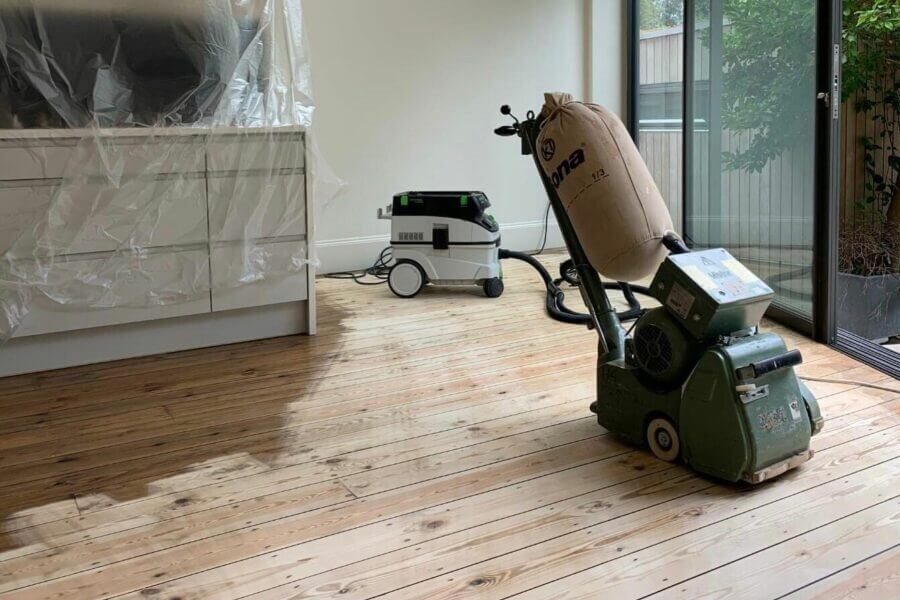
Sanding looks simple. In practice it is choreography. The first cut levels and removes damaged finish, typically with a coarse grit that flattens without gouging. Subsequent passes climb through medium and fine grits, each one erasing scratches from the last while protecting the tender earlywood that gives pine its figured look. Edges and corners are blended so the field of the floor and the perimeter meet without telltale lines. Between passes, dust control matters. Fine dust can contaminate the next coat or mask low spots. Good systems capture it at the source and keep the air clear.
Filling, Staining, and Color Control
Leave gaps between boards for a traditional style or fill them for a modern look. Resin-pine dust fillers are nearly undetectable and travel better with seasonal changes than brittle materials. Color choices follow. Unevenly sealed pine might blotch when stained. A sealant layer or wood conditioning before color helps create even tone. Water-based stains brighten palettes. Dyes enhance saturation without muddying grain. For a dramatic vintage gallery effect, reactive treatments can highlight earlywood and latewood contrast. The idea is to match the room and board age, not stifle grain.
Sealing and Topcoats
Finish defines both the look and the daily maintenance. Penetrating oils sink into pine and make the grain glow from within. They feel warm and natural underfoot, and small scratches are easy to blend with spot repairs. Hardwax oils add extra protection and a gentle sheen while retaining that low-build feel. Lacquers and waterborne polyurethanes form a tougher film that resists abrasion and stains in busy rooms. They come in sheens from matte to high gloss and are usually low odor with fast recoat times. Choose the chemistry with your lifestyle in mind. A bustling household with pets benefits from higher film strength. Quiet rooms that value a soft, tactile surface lean toward oils.
Sheen, Texture, and the Way Light Moves
Sheen is not only about shine. It is about how light travels across the floor. Matte hides small dents and shoes scuffs, showcasing the grain without glare. Satin offers a gentle polish that suits most interiors. High gloss mirrors the room and looks spectacular on flatsawn pine with dramatic figure, yet it shows every flaw like a black car after rain. Texture also matters. A perfectly flat sand can look crisp and modern. A gentle buff with a maroon pad can keep the floor from feeling slippery and can visually soften the surface so it reads as wood, not plastic.
Why Professionals Often Win
Do-it-yourself sanding can work on tough hardwoods, but pine exposes inexperience. Lingering in one spot leaves divots. Diagonal passes that are not reconciled can show forever. Edger swirl and cross-grain scratches jump out once finish hits the surface. Professionals tame all this with balanced machines, consistent pacing, and sequencing that respects pine. They manage dust so coats cure clean. They know which sealer plays nicely with which topcoat, and how to adjust color on the fly if a board takes stain differently. The result lasts longer, looks richer, and requires fewer heavy interventions in the future.
Care That Keeps the Glow
A restored pine floor asks for simple, steady care. Dry dirt is the enemy because grit acts like sandpaper. Sweep with a soft brush or use a microfibre pad. Clean with a pH-neutral wood floor cleaner and a barely damp mop. Avoid vinegar, steam, and strong solvents that can dull or whiten finish. Place mats at entries and felt pads under furniture. Keep indoor humidity within a reasonable range so boards do not swell and shrink excessively. When traffic paths begin to look tired, schedule a buff and recoat rather than waiting for deep wear. A light maintenance coat refreshes sheen, seals micro-scratches, and postpones the need for full sanding by years.
Sustainability and Story
Restoring pine is conservation in action. You save the embodied energy of existing wood, avoid the waste of demolition, and keep the narrative of the house intact. Each knot is like a comma in a long sentence. Color variations echo seasons of growth. When you refinish instead of replace, you protect both the forest that supplied the boards and the history that unfolded on them. No new floor can counterfeit the quiet depth of a century of footsteps.
FAQ
How long does a full pine floor restoration typically take?
For an average room, plan on two to five days. Day one covers assessment, repairs, and the first sanding passes. Subsequent days refine sanding, apply color if needed, and build finish layers with appropriate dry times. Cooler, humid conditions can extend curing, especially for oils.
Can deep dents and gouges in pine be removed completely?
Many can be reduced or blended. Steam can sometimes lift compressed fibers. Sanding removes high edges and smooths transitions. Very deep damage may be filled or patched. The aim is to make the flaw quiet rather than to erase it at the cost of over-thinning the board.
Which finish is most durable for busy households?
Waterborne polyurethane and high quality lacquers offer strong abrasion resistance and easy cleaning. Hardwax oils are also resilient when maintained with periodic refresh coats. If you have pets, consider a matte or satin sheen that hides micro-scratches better than gloss.
Will staining make pine look blotchy?
It can if applied to an unconditioned surface. Using a compatible conditioner or a sealer coat levels absorption so color lays down evenly. Testing color on a discrete area or on spare boards helps dial in the right method before committing to the whole floor.
How often should a restored pine floor be recoated?
With normal use, a buff and recoat every two to five years keeps the finish healthy. High traffic zones may need attention sooner. Oil finished floors can be refreshed more frequently with maintenance oil to keep the surface nourished and protected.
Can I leave gaps between boards for a traditional look?
Yes. Gaps are part of the charm in older homes and help the floor telegraph its age honestly. If you prefer a tighter look or want to reduce drafts and debris collection, gap filling with resin and matching dust creates a cleaner, more uniform surface.
Is dust-free sanding really dust free?
Modern systems capture most dust at the source with high efficiency vacuums. While no process is absolutely dustless, a well set up system keeps the home far cleaner and protects the finish from contamination during application.
What if some boards are beyond saving?
Isolated boards can be replaced with reclaimed or new pine matched for width, thickness, and grain. After sanding and finishing, careful color work blends patches so they do not telegraph. Wholesale replacement is rarely necessary when targeted repairs are done well.