Key Warning Signs and Safety Risks in Aging Systems
Many Central Indiana homes harbor a hidden truth behind their walls: an electrical system that’s quietly struggling to meet the demands of our modern lives. It’s easy to take for granted the intricate network of wires powering our devices. But for older properties, this unseen infrastructure can pose significant risks.
In fact, electrical failures are a leading cause of home fires in the U.S., accounting for thousands of incidents each year. If your home was built decades ago, its wiring might not be equipped for the sheer volume of appliances and technology we rely on today.
This comprehensive guide will help you understand the crucial role of Whole-home Electrical Wiring and Rewiring in ensuring the safety, efficiency, and long-term value of your Central Indiana property.
We’ll explore the key warning signs of an outdated system and detail the primary risks involved. We’ll also outline the extensive benefits that come with upgrading your home’s electrical backbone.
From boosting safety and energy efficiency to increasing your home’s marketability, we’ll cover everything you need to know about navigating an electrical rewiring project. For a deeper dive into the practical steps of this essential upgrade, consider exploring a guide to Indianapolis whole-home electrical rewiring.
An aging electrical system often gives subtle, and sometimes not-so-subtle, clues that it’s struggling. Recognizing these indicators early can prevent serious hazards like electrical fires or shocks. Many homes, particularly those built several decades ago, were never designed to handle the electrical load of today’s numerous high-tech devices and appliances. This discrepancy between demand and capacity leads to a range of issues.
Common warning signs include frequent circuit breaker trips or blown fuses, which indicate an overloaded circuit struggling to handle the power demand. Flickering or dimming lights, especially when a major appliance turns on, suggest insufficient power delivery. You might also notice burning odors emanating from outlets or switches, or find outlets that feel warm to the touch—these are critical signs of overheating and potential fire risks. Lastly, any sparks when plugging in a device or receiving a mild shock are immediate red flags that demand professional attention. These issues collectively point to wire degradation, loose connections, and circuits straining under modern electrical loads, increasing the risk of fire and electrocution.
Identifying Outdated Knob-and-Tube or Aluminum Cables
Certain types of historical wiring present specific and elevated risks. Knob-and-tube wiring, prevalent in homes built before the 1940s, is easily identifiable by its ceramic knobs and tubes that support individual insulated copper wires. While originally effective, its age means the insulation is often brittle or damaged, and it lacks a ground wire, which is a fundamental safety feature in modern electrical systems. This absence of grounding leaves occupants vulnerable to shock and can damage sensitive electronics.
Aluminum wiring, used in some homes between the mid-1960s and mid-1970s, is another significant concern. Unlike copper, aluminum expands and contracts more with temperature changes, leading to loose connections at outlets, switches, and light fixtures. These loose connections can cause overheating, arcing, and ultimately, present a serious fire hazard. Homes with two-prong outlets are also a clear indication of an ungrounded electrical system, signifying a need for comprehensive upgrades to meet contemporary safety standards. Identifying these specific wiring types is a crucial first step in assessing your home’s electrical safety.
Why Older Properties Require Indianapolis Whole-Home Electrical Rewiring
For many Central Indiana homeowners, especially those residing in properties more than 40 years old, a comprehensive electrical upgrade is not just an option—it’s a necessity. Homes of this vintage typically feature electrical systems designed for a bygone era, with minimal circuits and lower amperage capabilities. Today’s households, however, operate a vast array of electronics, from multiple computers and large-screen TVs to high-efficiency appliances, electric vehicle chargers, and smart home devices.
This surge in electrical demand can quickly overwhelm an outdated system, leading to persistent circuit breaker trips, inconsistent power delivery, and increased safety hazards. Moreover, older wiring may not comply with current electrical codes, potentially impacting home insurance coverage or complicating future renovations and sales. A full whole-home electrical rewiring project addresses these challenges head-on, bringing the entire electrical infrastructure up to modern standards, ensuring safety, reliability, and compliance for years to come.
Essential Components of a Modern Residential Electrical System
A modern electrical system is a finely tuned network designed for both safety and efficiency, built to support the diverse electrical needs of today’s homes. It goes beyond simply delivering power; it actively protects against hazards and ensures reliable operation.
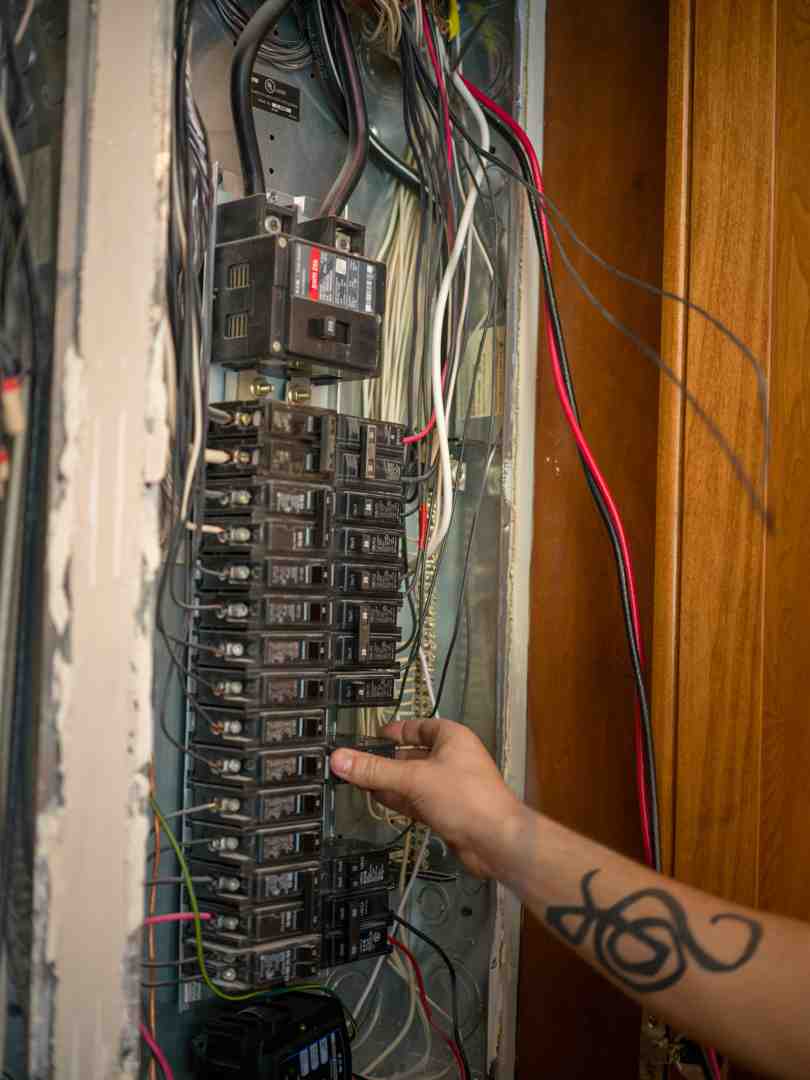
At its core, a modern system relies on high-quality copper conductors, which are superior for their conductivity and durability. These wires are meticulously routed through protective conduits and junction boxes, ensuring secure and accessible connections. Dedicated circuits are a hallmark of contemporary design, providing exclusive power lines for high-demand appliances, preventing overloads and enhancing performance. Crucially, comprehensive system grounding diverts dangerous electrical currents safely away from your home and its occupants. Additionally, whole-house surge protection safeguards sensitive electronics from voltage spikes, preserving their longevity and preventing costly damage. Together, these components create a robust and dependable electrical backbone for any Central Indiana home.
Electrical Panel Upgrades from 60 to 200 Amps
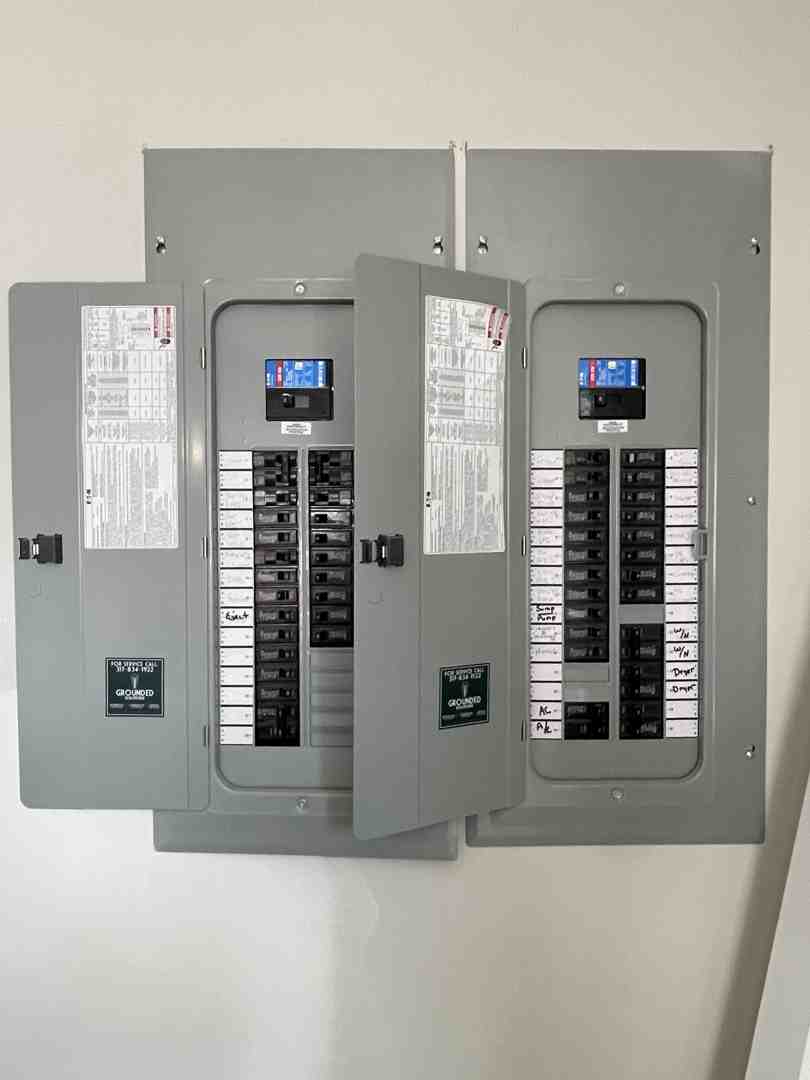
The electrical panel serves as the central nervous system of your home’s power supply, distributing electricity to every circuit. Many older homes in Central Indiana still operate with outdated 60-amp panels, which were adequate for the limited electrical needs of past generations. However, these panels are woefully insufficient for the demands of a modern household.
Today, a 100-amp service is often considered the minimum for smaller homes, while a 200-amp panel has become the standard for most new constructions and is highly recommended for any home undergoing a significant electrical upgrade. This higher amperage capacity is essential to safely power multiple high-demand appliances simultaneously, such as electric ovens, central air conditioning units, and particularly, new technologies like electric vehicle (EV) chargers and heat pumps. Upgrading your electrical panel is a foundational step in any whole-home rewiring project, providing the necessary capacity and modern safety features to support your current and future electrical needs.
GFCI and AFCI Circuit Protection Standards
Modern electrical safety standards place a strong emphasis on specialized circuit protection devices: Ground Fault Circuit Interrupters (GFCIs) and Arc-Fault Circuit Interrupters (AFCIs). These devices are designed to detect different types of electrical hazards and rapidly cut power, preventing serious injury or fire.
GFCI protection is mandatory in areas where water is present, such as kitchens, bathrooms, laundry rooms, garages, and outdoor outlets. GFCIs monitor the electrical current flowing through a circuit and trip instantly if they detect a ground fault—an unintended path for electricity to flow, often through a person or water. This rapid response is critical in preventing severe electrical shocks.
AFCIs, on the other hand, are designed to detect dangerous electrical arcs that can occur due to damaged wiring, loose connections, or faulty appliances. These arcs generate intense heat and are a leading cause of electrical fires. AFCIs distinguish between harmless arcs (like those from a light switch) and dangerous ones, providing an essential layer of fire prevention. Both GFCI and AFCI breakers are now integral to the National Electrical Code, significantly enhancing the safety profile of any home’s electrical system.
Planning Your Indianapolis Whole-Home Electrical Rewiring Project
Undertaking a whole-home electrical rewiring project is a significant investment in your property’s safety and functionality. Proper planning is paramount to ensure a smooth process, adherence to codes, and a final system that meets your current and future needs. This involves careful assessment, strategic decision-making, and collaboration with qualified professionals.
Our approach begins with a thorough load calculation, analyzing your household’s current and projected electrical consumption. We then work with you to map out your electrical layout, considering optimal placement for outlets, switches, and dedicated circuits. Dividing your home into electrical zones helps streamline the process and ensures balanced power distribution. Engaging licensed contractors for this intricate work is non-negotiable, as their expertise ensures safety, compliance, and quality. The initial “rough-in” phase, where new wiring is installed within walls, requires meticulous planning and a subsequent inspection before walls are closed up. For a practical guide to the entire process, including detailed steps for Indianapolis whole-home electrical rewiring, we recommend further reading.
Complete Rewire Versus Partial Circuit Upgrades
Deciding between a complete whole-home rewiring and a partial circuit upgrade is a common dilemma for homeowners. The choice largely depends on the age and condition of your existing wiring, your budget, and your long-term goals for the property.
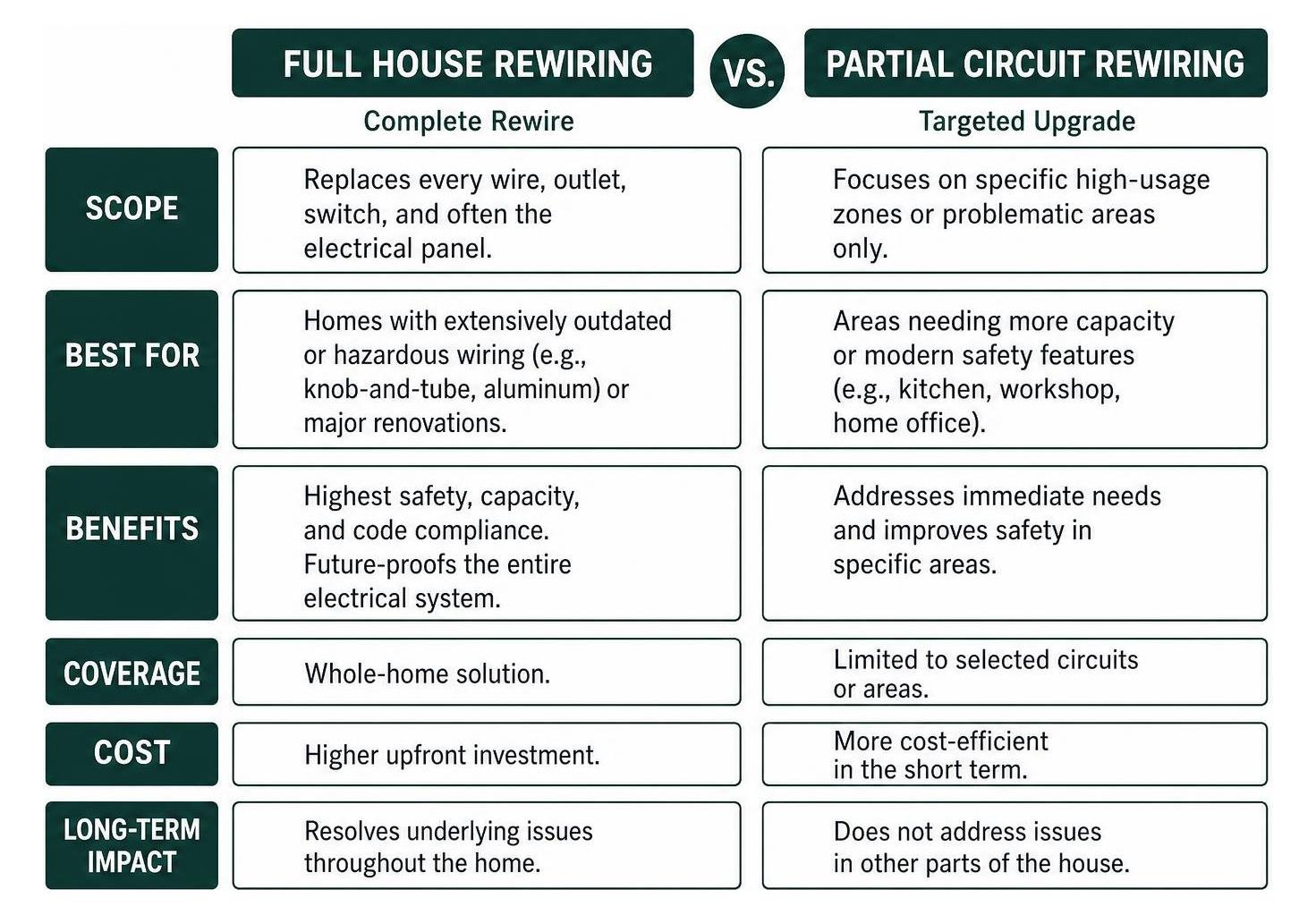
A complete rewire replaces every wire, outlet, switch, and often the electrical panel, offering the highest level of safety, capacity, and code compliance. It’s often the recommended course of action for homes with extensively outdated or hazardous wiring (like knob-and-tube or aluminum), or for those undergoing major renovations. This ensures whole-home safety and future-proofs the electrical system.
Partial circuit upgrades, conversely, focus on specific high-usage zones or problematic areas. For instance, rewiring a kitchen to accommodate new, powerful appliances, or upgrading the electrical supply to a workshop or home office, can address immediate needs and improve safety in those specific areas. While more cost-efficient in the short term, partial upgrades do not resolve underlying issues in other parts of the house. We typically recommend partial upgrades only when the majority of the existing wiring is sound, and only a few areas require increased capacity or modern safety features.
Permitting, Codes, and Home Preparation Steps
Navigating a rewiring project successfully requires careful attention to municipal permits, building codes, and thorough home preparation. Securing the necessary permits from your local authorities is a critical first step. These permits ensure that the electrical work will be inspected and verified to meet stringent safety standards, protecting both your property and its occupants. Our team manages this process, ensuring all work complies with the latest electrical codes.
For homeowners, preparing your home for rewiring involves several essential steps:
- Clear the Work Area: Remove furniture, wall hangings, and valuables from rooms where work will occur to provide contractors with clear access.
- Dust Control: Rewiring often involves opening walls and ceilings. Cover furniture and flooring with plastic sheeting, and consider using air purifiers to minimize dust spread.
- Communication with Contractors: Establish a clear communication plan with your electrical team regarding daily schedules, progress updates, and any concerns.
- Plan for Power Outages: Understand that power will likely be shut off, either partially or entirely, during different phases of the project. Plan for temporary lighting, cooking alternatives, and device charging.
- Secure Pets and Valuables: Ensure pets are safely housed away from the construction zone, and valuable items are stored securely to prevent damage or loss.
- Final Inspection Readiness: Prepare to have the property ready for the final inspection once the work is complete, ensuring all areas are accessible for the inspector.
These preparatory steps, combined with professional execution, contribute significantly to a smooth and successful rewiring project.
Investment, Timelines, and Efficiency Gains
A whole-home electrical rewiring project is a significant undertaking, representing a substantial investment in your property. However, this investment yields considerable returns in enhanced safety, improved energy efficiency, and increased property value. It’s a proactive step towards ensuring the longevity and marketability of your home.
Cost and Timeline Factors for Indianapolis Whole-Home Electrical Rewiring
The investment required for a whole-home electrical rewiring project can vary widely, typically ranging from $4,000 to $15,000, with larger or older homes potentially reaching $20,000 or more. Several key factors influence this range. The size and age of your home play a significant role, as larger and older properties often require more extensive work and may present access challenges. The complexity of the existing wiring, the number of new circuits or outlets desired, and whether an electrical panel upgrade is included also impact the overall investment. Structural accessibility, such as whether walls need to be opened extensively, can add to the duration and labor involved.
Regarding timelines, a complete whole-home rewiring typically takes anywhere from a few days to a couple of weeks. For many standard homes, the process can often be completed within 3 to 10 days, depending on the home’s size and the project’s complexity. This timeline usually includes a “rough-in” stage where new wires are run, and a “finish” stage where outlets, switches, and fixtures are installed. It’s always wise to factor in a contingency budget for any unforeseen issues that might arise during the project.
Long-Term Value and Electrification Readiness
Beyond immediate safety improvements, a whole-home electrical rewiring project offers substantial long-term benefits, significantly enhancing your home’s value and preparing it for the future. Modern wiring and an upgraded electrical panel make your property more attractive to potential buyers, often leading to a higher resale value and quicker sales.
Furthermore, an updated electrical system can lead to energy efficiency gains. While wiring itself doesn’t directly consume much energy, a stable and properly grounded system allows appliances to operate more efficiently. It also enables the integration of energy-saving technologies like smart home systems, LED lighting, and energy-efficient appliances.
Crucially, rewiring positions your home for the growing trend of home electrification. This includes supporting high-demand electric vehicle chargers, induction stoves, and heat pumps, as well as being ready for potential solar panel integration. Many insurance providers offer discounts for homes with updated, code-compliant electrical systems, recognizing the reduced risk of electrical fires. Upon completion, you’ll receive compliance certificates, validating the safety and quality of your new electrical infrastructure. This comprehensive upgrade ensures your home is not only safe and efficient today but also ready for the technological advancements of tomorrow.
Frequently Asked Questions About Home Rewiring
Homeowners often have many questions when considering a project as significant as whole-home electrical rewiring. We’ve compiled answers to some of the most common inquiries to help you better understand the process and what to expect.
How long does a full house rewiring project usually take?
The duration of a full house rewiring project can vary significantly based on several factors, including the size of your home, the complexity of its layout, and the extent of the work required. Generally, a complete rewiring can take anywhere from a few days for smaller, less complex homes to several weeks for larger or more intricate properties. The project typically involves a “rough-in” stage, where new wiring is installed within walls and ceilings, followed by a “finish” stage, which includes installing outlets, switches, and fixtures. Inspection timelines can also influence the overall duration, so planning with your electrician for a realistic schedule is essential.
Can a homeowner stay in the house during electrical rewiring?
Whether a homeowner can remain in the house during electrical rewiring depends largely on the scope of the project and personal comfort levels. For a complete whole-home rewire, power will likely be shut off, either intermittently or for extended periods, making living in the home challenging. We often recommend making alternative living arrangements, especially during the “rough-in” phase when walls may be open and power is consistently off. However, in some cases, phased rewiring might allow for limited power to essential circuits, making it possible to stay. Homeowners should also be prepared for significant dust, noise, and general disruption. Discussing these logistics with your electrician beforehand will help you make an informed decision and prepare adequately.
Are there rebates or tax credits available for electrical rewiring?
Yes, homeowners may find various incentives available for electrical rewiring projects, particularly those that enhance energy efficiency or support home electrification. As of September 2026, federal tax credits under programs like the Energy Efficient Home Improvement Credit may still be available for certain electrical system upgrades, though some are set to expire by the end of 2025. Additionally, state and local programs, utility companies, and even manufacturers may offer rebates, grants, or incentives for specific upgrades such as electrical panel incentives, or for integrating technologies like EV chargers or solar panels. We encourage homeowners to research current programs in Central Indiana and consult with their electrician or a tax professional to understand eligibility and maximize potential savings.
Conclusion
Proactively upgrading your home’s electrical system through whole-home rewiring is one of the most impactful investments you can make in your Central Indiana property. It’s a critical step in fire prevention, safeguarding your family and your home from the inherent dangers of outdated wiring. Beyond safety, it ensures your home has the modern capacity to comfortably power all your devices and appliances, eliminating frustrating circuit overloads and flickering lights.
This essential upgrade enhances electrical reliability, providing you with peace of mind and a system built to last. Whole-home rewiring is a commitment to long-term protection, increased property value, and a future-ready home that meets the demands of contemporary living.