How Real Estate Discovery Platforms Streamline Home Searches
Finding a new home to rent, especially a townhome, often feels like a complex task. With so many choices and details to consider, knowing where to begin can be overwhelming. Fortunately, today’s digital real estate discovery platforms have transformed how we approach this search. These powerful online tools make it much easier to find properties that truly match our needs and preferences.
We will explore how to best use these platforms. We’ll guide you through identifying available townhomes, understanding all the leasing costs involved, and evaluating key property and community features. This includes everything from floor plans and amenities to neighborhood walkability scores. By using these insights, we can make well-informed decisions and locate the perfect rental. A comprehensive national real estate platform, for instance, can serve as an excellent starting point in this important journey.
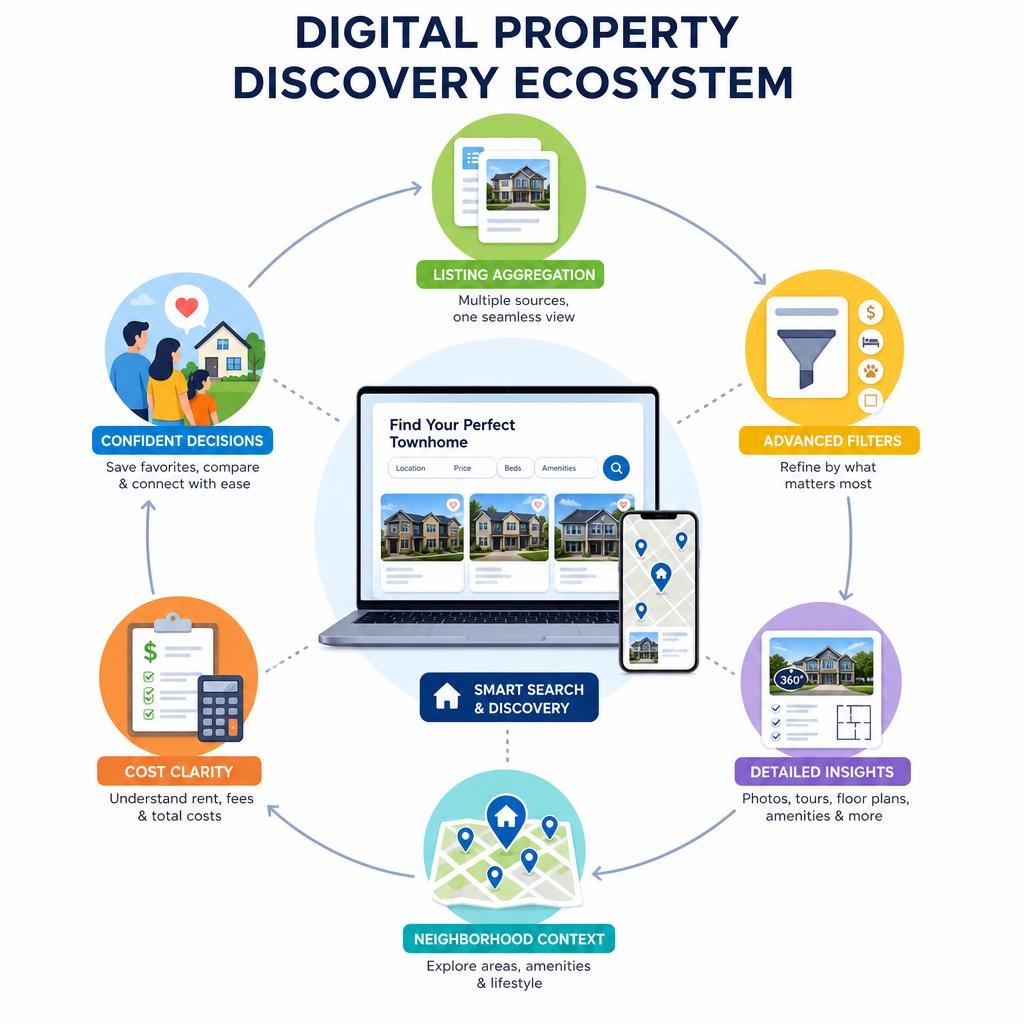
In August 2026, the digital landscape for property discovery is more sophisticated than ever. Real estate discovery platforms have become indispensable tools for anyone searching for a rental, particularly when focusing on specific property types like townhomes. These platforms excel at inventory aggregation, bringing together a vast array of listings from various sources into a single, user-friendly interface. This centralization eliminates the need to scour multiple individual property management websites or local classifieds, saving prospective renters countless hours and reducing the frustration often associated with a decentralized search.
The true power of these platforms lies in their advanced search filters. We can refine our search based on numerous criteria, from the number of bedrooms and bathrooms to specific amenities, price ranges, and even pet policies. For those interested in suburban townhomes, these filters are particularly useful for narrowing down options in specific neighborhoods or communities. Detailed listing pages provide comprehensive information, often including high-resolution photos, virtual tours, and in-depth descriptions of the property and its surroundings. This rich data allows us to conduct thorough preliminary research, helping us to create a shortlist of properties that genuinely align with our lifestyle and budget before committing to physical visits.
Centralizing Market Inventory
One of the most significant advantages of modern real estate discovery platforms is their ability to centralize a vast array of rental listings. Instead of navigating a fragmented market where townhomes might be listed across dozens of different property management sites or local classifieds, these platforms aggregate everything into one accessible hub. This means we can view a wide spectrum of available townhomes in our desired area without juggling multiple tabs or applications.
Beyond just listing availability, these platforms often provide crucial details that help us visualize and assess a property remotely. High-quality floor plans are frequently included, offering a clear understanding of the home’s layout, room dimensions, and flow. This is invaluable for planning furniture placement and ensuring the space meets our functional needs. Location mapping features allow us to see the exact position of the townhome, explore nearby points of interest, and understand commute times. Many listings also incorporate virtual tours, ranging from 3D walkthroughs to video presentations, which provide an immersive experience, allowing us to “walk through” the property from the comfort of our current home. This level of detail and accessibility ensures that we can make more informed decisions before even stepping foot on the property, streamlining the entire rental process.
Evaluating Regional Options
When considering a move, especially to a new region or a specific part of a metropolitan area, understanding the local market trends and available options is paramount. Real estate discovery platforms are excellent resources for evaluating regional options, offering insights that go beyond just individual property listings. For instance, if we’re exploring townhome rentals in a charming area like Moncks Corner, South Carolina, these platforms allow us to compare a wide array of properties within that specific locale. We can observe pricing trends, see the prevalence of certain amenities, and get a sense of the overall rental market’s competitiveness.
These platforms often provide tools or data that illuminate broader market trends, helping us understand whether rental prices are rising, stable, or declining in a particular area. This contextual information is crucial for long-term budget planning and for gauging the value proposition of a given townhome. By analyzing multiple listings within Moncks Corner or other South Carolina communities, we can discern what constitutes a fair market price for a townhome with specific features. This comprehensive view, facilitated by robust online search capabilities, empowers us to make strategic decisions about where to focus our search, ensuring we find a townhome that not only meets our immediate needs but also aligns with our financial and lifestyle goals within the chosen region.
Analyzing Property Listings and Hidden Leasing Costs
While the allure of a beautifully presented townhome on a discovery platform can be strong, a critical step in the rental journey is to meticulously analyze not just the property’s aesthetics and features, but also its full financial implications. Leasing pricing can often be more complex than the advertised “base rent,” and understanding all mandatory costs upfront is essential for accurate budget planning. Many platforms now strive for greater financial transparency, but it remains our responsibility to dig into the details.
The concept of a “total monthly leasing price” is crucial here. This figure should encompass the base rent plus any mandatory monthly fees that are non-negotiable for all residents. Overlooking these additional costs can lead to unpleasant surprises after signing a lease. For example, a townhome advertised at a competitive base rent might have a significant mandatory community amenity fee or other charges that push the actual monthly outlay considerably higher. By carefully reviewing the “costs and pricing” sections of listings or directly inquiring with leasing offices, we can build a realistic budget that accounts for all financial obligations, ensuring there are no hidden “gotchas” that derail our financial stability.
Decoding True Rental Pricing on Real Estate Discovery Platforms
When navigating real estate discovery platforms, look beyond the initial base rent displayed for a townhome. The “true rental pricing” often includes several mandatory costs that, while sometimes detailed in the fine print, can significantly impact our monthly budget. For instance, many modern townhome communities, such as Berkeley Homes in Moncks Corner, SC, incorporate a mandatory Community Amenity Fee. This fee, which might be around $80.00 per unit monthly as of August 2026, covers access to shared facilities and services, and it’s not optional. It’s a fixed cost that must be added to the base rent to determine the actual total monthly payment.
Beyond fixed monthly fees, prospective renters must also account for utility requirements. While base rent typically doesn’t cover usage-based utilities, it’s important to understand which ones are the tenant’s responsibility. For many townhomes, this includes electric service and water/sewer, which are billed separately based on consumption. Additionally, many landlords and property management companies now mandate renter’s liability insurance. This insurance protects the tenant from liability for damages to the property or injuries to others that occur within the rental unit. While the cost of such insurance is usually modest, it’s a non-negotiable expense that needs to be factored into the overall monthly financial commitment. Platforms are increasingly providing these details, but proactive inquiry is always a smart approach to ensure complete financial clarity.
Assessing Neighborhood Mobility on Real Estate Discovery Platforms
Beyond the four walls of a townhome, the surrounding neighborhood’s accessibility and infrastructure play a significant role in our daily lives. Real estate discovery platforms often provide valuable metrics like Walk Score and Bike Score, which are essential for assessing neighborhood mobility, especially when considering suburban townhome communities. These scores offer a quantifiable measure of how pedestrian-friendly or bike-friendly an area is, helping us understand our potential reliance on a personal vehicle.
For example, a location like Berkeley Homes in Moncks Corner, SC, might have a Walk Score of 13 out of 100 and a Bike Score of 29 out of 100. A Walk Score of 13 indicates that the area is “car-dependent,” meaning most errands require a car. Similarly, a Bike Score of 29 suggests that while some biking infrastructure might exist, it’s generally not convenient for daily errands. These scores are not just numbers; they reflect the reality of suburban infrastructure, where distances between homes, shops, and services are often greater, and dedicated pedestrian or cycling paths may be limited. Understanding these scores helps us anticipate our transportation needs, potential commuting challenges, and overall lifestyle implications. For those who prioritize a walkable or bikeable lifestyle, a low score might signal a need for a personal vehicle or a re-evaluation of the location, while for others who prefer driving, it simply confirms the expected suburban environment.
Key Amenities and Property Layouts to Evaluate
When searching for a townhome, the specific amenities and the property’s layout are often paramount to our decision-making process. Real estate discovery platforms excel at showcasing these features, allowing us to virtually explore potential homes before committing to a physical visit. We look for detailed floor plans that illustrate the flow of living space, the placement of rooms, and overall dimensions. An open-concept townhome interior, for instance, is often highly sought after for its modern feel and flexibility in furniture arrangement.
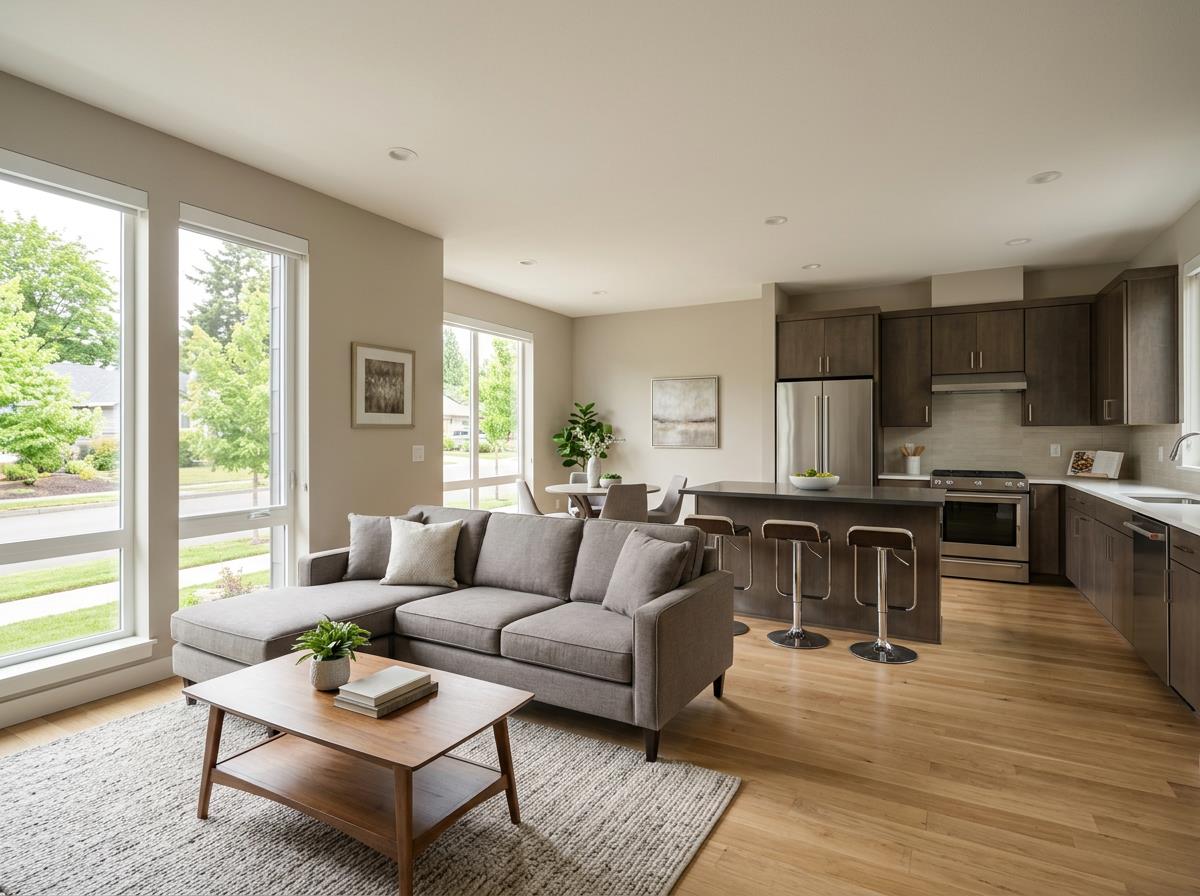
Beyond the interior, we also consider practical features that enhance daily living. The availability of attached garages is a significant advantage, offering convenience, security, and additional storage space, especially in climates with varied weather conditions. Personal patios provide private outdoor living areas, perfect for relaxation, grilling, or small gardens, adding a layer of comfort and privacy often associated with single-family homes. By carefully reviewing these aspects on discovery platforms, coupled with high-quality images and virtual tours, we can effectively narrow down our options to townhomes that truly match our desired home layout and lifestyle needs.
Interior Finishes and In-Unit Essentials
The quality of interior finishes and the inclusion of essential in-unit appliances are significant differentiators when evaluating townhome rentals. Modern renters often prioritize properties that offer both style and convenience, and real estate platforms highlight these features prominently. For instance, a community like Berkeley Homes in Moncks Corner, SC, showcases stylish finishes that elevate the living experience.
Key features we look for include luxury granite countertops, which provide durability and an upscale aesthetic in kitchens and bathrooms. Paired with this, fully equipped kitchens featuring Samsung stainless steel appliances are a major draw, offering both functionality and a sleek, contemporary look. The presence of soaring 9-foot ceilings is another desirable characteristic, as it creates a more spacious and airy feel throughout the townhome, enhancing the overall sense of openness. Furthermore, practical essentials like full-size washer and dryer units within the townhome eliminate the need for off-site laundry facilities, adding immense convenience to daily routines. Spacious walk-in closets offer ample storage, helping to keep living areas uncluttered and organized. These detailed descriptions and accompanying photos on discovery platforms allow us to quickly identify properties that meet our expectations for modern, comfortable living.
Outdoor Features and Pet Infrastructure
For many renters, especially those with pets or a desire for outdoor living, the community’s exterior features and pet infrastructure are as important as the interior of the townhome itself. Real estate discovery platforms help us identify communities that cater to these specific needs. Generous green space is a highly valued amenity, providing areas for recreation, relaxation, and a sense of natural beauty within the community. Whether it’s manicured lawns, communal gardens, or open fields, ample green space contributes significantly to a higher quality of life.
For pet owners, a dedicated bark park is often a non-negotiable feature. These enclosed, safe spaces allow dogs to exercise and socialize off-leash, fostering a strong sense of community among pet owners. Communities like Berkeley Homes specifically highlight such pet-friendly features, recognizing the growing number of renters who live with their furry companions. When evaluating listings, we always scrutinize the pet policies to understand any restrictions on breed, weight limits, or additional fees. The combination of private personal patios attached to individual townhomes, alongside shared green spaces and specialized pet amenities, creates a well-rounded living environment that supports both individual privacy and community engagement, making the decision process much clearer for prospective tenants.
Financial Requirements and Application Workflows
Once we’ve identified potential townhomes that meet our criteria, the next crucial step involves understanding the financial requirements and navigating the application workflow. Real estate discovery platforms often provide initial guidance on these processes, but direct communication with the leasing office is always recommended for the most accurate and up-to-date information. This phase includes preparing for security deposits, understanding lease terms, and meticulously completing the application process, which often involves tenant screening.
The application journey typically starts with an inquiry, followed by a tour, and then the submission of a formal application. This application usually requires personal information, employment history, rental history, and references. Property managers use this information for tenant screening, which includes credit checks, background checks, and income verification to ensure a prospective renter’s reliability. Being prepared with all necessary documentation can significantly expedite this process. Understanding these steps upfront, facilitated by information often found on listing platforms, helps us approach the application phase with confidence and efficiency, moving closer to securing our desired townhome.
Security Deposits and Utility Policies
A significant financial consideration when renting a townhome is the security deposit. This one-time cost is typically equivalent to one or two months’ rent and serves as collateral against potential damages to the property or unpaid rent. It’s crucial to understand the specific amount required and the conditions for its return upon the lease’s termination. While real estate platforms often indicate the security deposit range, confirming the exact figure with the leasing office is always advisable.
Equally important are the utility policies. As mentioned earlier, while base rent covers the use of the physical property, usage-based utilities like electric and water/sewer are typically the tenant’s responsibility. This means we will need to set up accounts with local utility providers in our name, and these costs will vary monthly based on consumption. Furthermore, many modern rental agreements, including those for townhomes like Berkeley Homes, mandate third-party renter’s liability insurance. This insurance protects us from financial responsibility in case of accidental damage to the property (e.g., a fire caused by negligence) or injury to a guest within our unit. It’s not the same as personal property insurance (which covers our belongings) but is often a mandatory coverage rule set by the landlord. Understanding these upfront and ongoing financial obligations is key to accurate budget management and a smooth tenancy.
Scheduling Tours and Submitting Applications
After reviewing listings online and identifying promising townhomes, the next practical step is to schedule a tour. Real estate discovery platforms typically provide direct contact information for the leasing office or a listing agent, making it easy to set up an appointment. It’s wise to confirm the office hours, as these can vary, especially in suburban communities. During the tour, we have the opportunity to experience the townhome and its community firsthand, ask detailed questions, and get a feel for the neighborhood.
Once we’ve found a townhome we wish to rent, the application submission process begins. Many leasing offices now offer online application portals, streamlining what used to be a paper-intensive process. These digital interfaces allow us to conveniently fill out forms, upload required documents (such as pay stubs, bank statements, and identification), and even pay application fees electronically. The application process typically involves a thorough tenant screening, which includes credit checks, background checks, and verification of employment and rental history. Being prepared with all necessary information ensures a smooth and efficient application, increasing our chances of securing the townhome.
Frequently Asked Questions
Navigating the rental market, especially for townhomes, often brings up a common set of questions. Here, we address some of the most frequent inquiries to help prospective renters make informed decisions.
What mandatory monthly fees should renters expect beyond base rent?
Beyond the advertised base rent, renters should anticipate several mandatory monthly fees. A common charge in many modern townhome communities is a Community Amenity Fee, which, for a community like Berkeley Homes, could be around $80.00 per unit monthly as of August 2026. This fee covers access to shared facilities and services. Additionally, while not always a fixed monthly fee, renters are typically responsible for usage-based utility charges, including electric and water/sewer. Some communities might also have a small trash fee. Furthermore, most landlords now require proof of renter’s liability insurance, which, while usually paid annually or semi-annually, represents an ongoing financial requirement that must be factored into the overall budget. It’s crucial to clarify all these charges with the leasing office before signing any agreement.
How do Walk Score and Bike Score impact suburban rental decisions?
Walk Score and Bike Score are crucial metrics that quantify the walkability and bikeability of a neighborhood, significantly impacting suburban rental decisions. A low Walk Score (e.g., 13 out of 100 for a location like Moncks Corner) indicates a car-dependent area, meaning daily errands and access to amenities typically require a vehicle. Similarly, a low Bike Score (e.g., 29 out of 100) suggests limited or inconvenient biking infrastructure. For individuals who prioritize an active, car-free lifestyle or rely on public transit, these scores can be a deal-breaker. Conversely, for those who prefer driving and appreciate the quieter, more spacious environment of the suburbs, these scores simply confirm the expected lifestyle. Understanding these indices helps renters evaluate potential vehicle dependence, assess commuting options, and determine if the neighborhood’s mobility aligns with their personal preferences and needs.
What interior finishes are standard in modern rental townhomes?
Modern rental townhomes, particularly those built recently like Berkeley Homes, often come equipped with a range of desirable interior finishes and features designed for comfort and convenience. Standard offerings typically include high-quality stainless steel appliances in the kitchen, providing a sleek and durable cooking environment. Luxury granite countertops are also common, adding an upscale touch to kitchens and bathrooms. A notable feature is often soaring 9-foot ceilings, which create an open, airy, and more spacious feel throughout the living areas. Beyond aesthetics, practical amenities like attached garages offer direct access, security, and additional storage. In-unit full-size washer and dryer sets are also frequently standard, eliminating the need for shared laundry facilities and enhancing daily convenience for residents. These features collectively contribute to a higher standard of living in contemporary rental townhomes.
Conclusion
Navigating the townhome rental market in August 2026 is an endeavor significantly streamlined by the advent of sophisticated real estate discovery platforms. We’ve explored how these digital tools empower prospective renters to move from a broad search to making highly informed decisions. From centralizing vast inventories and offering detailed floor plans and virtual tours to providing crucial insights into neighborhood mobility through Walk and Bike Scores, these platforms are invaluable resources.
Our journey through understanding the nuances of leasing clarity, particularly the distinction between base rent and total monthly leasing price, underscores the importance of financial transparency. By meticulously accounting for mandatory amenity fees, utility costs, and insurance requirements, we can build accurate budgets and avoid unexpected expenses. Evaluating property features, from luxury interior finishes like granite countertops and 9-foot ceilings to practical amenities such as attached garages and pet-friendly bark parks, ensures that the chosen townhome aligns perfectly with our lifestyle needs.
By leveraging the comprehensive information available on these platforms and engaging proactively with leasing offices, prospective renters can confidently embark on their search. This approach leads to not just finding a “townhome rent near me,” but discovering a home that truly fits our aspirations, ensuring a smooth transition and a satisfying living experience.