Medical Aesthetics vs. Traditional Spa Services: Key Differences
Navigating aesthetic and spa treatments often begins with understanding a fundamental distinction: the difference between medical aesthetics and traditional spa services. While both aim to enhance your appearance and well-being, their approaches, goals, and the qualifications of their practitioners vary significantly.
Clinical Correction vs. Holistic Relaxation
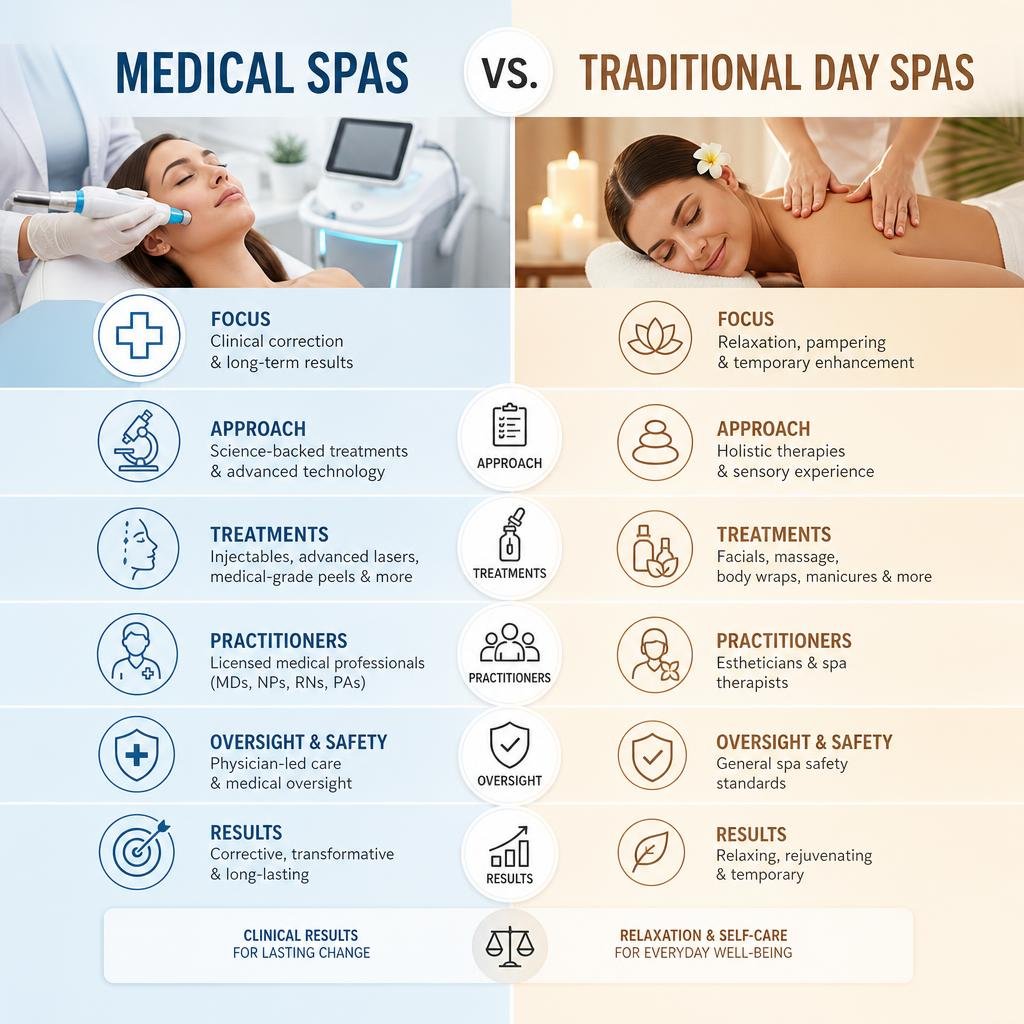
Medical aesthetic services are rooted in clinical science, focusing on corrective and transformative results. These procedures are designed to address specific skin concerns, such as fine lines, wrinkles, sun damage, hyperpigmentation, acne, and volume loss, using advanced technology and medical-grade products. The primary objective is often to achieve significant, lasting changes that go beyond surface-level improvements, targeting the skin barrier and promoting cellular regeneration through non-invasive or minimally invasive procedures. Think of treatments like injectables, advanced laser therapies, and medical-grade chemical peels, all aimed at clinical correction.
In contrast, traditional spa services prioritize holistic relaxation, sensory experience, and temporary enhancement. These treatments, such as basic facials, massage therapy, body wraps, manicures, and pedicures, are designed to soothe the senses, reduce stress, and provide a temporary boost to skin appearance. While beneficial for overall well-being and skin maintenance, they generally do not penetrate as deeply or offer the same level of corrective change as medical aesthetic treatments. The focus here is on comfort, pampering, and creating a serene environment for self-care.
Practitioner Qualifications and Medical Oversight
A critical differentiator lies in the qualifications of the professionals performing the treatments and the level of medical oversight.
At a medical spa, treatments are performed by licensed medical professionals. This can include board-certified physicians (such as dermatologists or plastic surgeons), physician assistants (PAs), nurse practitioners (NPs), and registered nurses (RNs), all of whom possess advanced medical training and specific certifications in aesthetic procedures. Many medical spas operate under strict physician-led care, meaning a medical doctor directly oversees the practice, ensuring rigorous safety protocols and appropriate treatment plans. This medical oversight is crucial for procedures like injectables and advanced laser treatments, which carry higher risks if not performed correctly. The regulatory framework for medical spas is typically governed by state medical boards, ensuring a high standard of care.
Conversely, traditional spa services are typically provided by licensed estheticians. These professionals complete specialized skincare training programs and are experts in skin analysis, facials, waxing, and certain superficial treatments. However, they are not licensed medical professionals and are not authorized to perform invasive procedures or administer medical-grade products that require a prescription. Traditional spas operate under more lenient business regulations and often adhere to voluntary industry guidelines, such as those from associations like the Associated Skin Care Professionals (ASCP), which focus on cleanliness and ethical standards rather than medical supervision.
Choosing the Right Aesthetic and Spa Treatments for Your Goals
Selecting between a medical spa and a traditional spa depends heavily on your individual skincare goals and desired outcomes. Are you seeking significant corrective changes, or is your priority relaxation and routine maintenance?
The Science Behind Medical Aesthetic and Spa Treatments
If your objectives include addressing specific concerns like deep wrinkles, volume loss, stubborn pigmentation, or skin laxity, medical aesthetic treatments leverage advanced scientific principles to deliver powerful results.
Neurotoxins such as Botox and Dysport work by temporarily relaxing facial muscles to smooth out dynamic wrinkles, providing a refreshed appearance that typically lasts 3-4 months. Dermal fillers, often composed of hyaluronic acid, are used to restore lost volume, contour facial features, and stimulate collagen production, with results that can last from 6 to 18 months or even longer for biostimulatory fillers like Sculptra.
Beyond injectables, advanced energy-based devices like Morpheus8 combine radiofrequency (RF) with microneedling to stimulate collagen and elastin, leading to significant skin tightening and texture improvement. Various laser treatments, including BBL, MOXI, LaseMD, and IPL, target everything from sun damage and redness to fine lines and uneven skin tone.
A rapidly evolving area in medical aesthetics is regenerative aesthetics. This field focuses on harnessing the body’s natural healing and regenerative capabilities. Treatments involving exosomes and peptides are gaining prominence for their ability to promote cellular regeneration, reduce inflammation, and enhance collagen stimulation. These cutting-edge therapies can be particularly effective for improving skin quality, promoting hair growth, and accelerating recovery. To learn more about these advanced aesthetic skin and body treatments, we invite you to explore the offerings at RenewMD Wellness, where innovative science meets personalized care.
Traditional Spa Therapies for Stress Relief and Skin Maintenance
For those whose primary goal is relaxation, stress reduction, and maintaining healthy skin with a glow, traditional spa therapies offer an invaluable retreat. These services are perfect for unwinding, pampering yourself, and supporting your overall well-being.
Facials are a cornerstone of traditional spas, offering deep cleansing, exfoliation, hydration, and nourishment tailored to various skin types. While not as intensive as medical-grade facials, they provide immediate improvements in skin texture and radiance. Massage therapy, including Swedish, deep tissue, and hot stone massages, is highly effective for muscle relaxation, stress relief, and improving circulation. Techniques like lymphatic drainage can reduce puffiness and promote detoxification, contributing to a healthier appearance.
Other popular spa treatments include superficial chemical peels and microdermabrasion, which gently exfoliate the skin to reveal a brighter complexion. These are excellent for routine skin maintenance and addressing minor textural issues. The ambiance of a traditional spa, often enhanced with aromatherapy and soothing music, contributes significantly to the holistic experience. For an example of a serene and indulgent experience, consider visiting a luxury day spa in Chicago, where you can immerse yourself in a world of relaxation and rejuvenation.
What to Expect: Results, Downtime, and Safety Protocols
Understanding what to expect in terms of results, recovery, and safety is paramount when choosing between medical aesthetic and traditional spa treatments. These factors often correlate directly with the invasiveness and intensity of the procedures.
Comparing the Costs of Aesthetic and Spa Treatments
The financial investment for aesthetic and spa treatments can vary widely, reflecting the differences in technology, expertise, and desired outcomes.
Medical aesthetic services generally entail higher upfront costs. Pricing structures often depend on the specific treatment: neurotoxins are typically priced per unit, dermal fillers per syringe, and advanced laser or RF microneedling treatments may be priced per session or as part of a package. For example, Botox can cost around $14 per unit, with most clients needing 40-65 units for common areas. More extensive treatments like The Aleris Stack (BBL + MOXI) might start at $1,200, and Morpheus8 from $650 per session. While these costs are higher, they often reflect the use of cutting-edge technology, medical-grade products, and the expertise of highly qualified medical professionals. Many medical spas offer membership models or package deals, such as a “Beauty Bank,” which can provide significant savings for ongoing maintenance treatments, making the long-term value more accessible.
Traditional spa services, on the other hand, typically have lower costs per session. A standard facial might range from $75-$150, while massages or body wraps are priced similarly. These services are generally more accessible for routine self-care and maintenance. While traditional spas may offer loyalty programs or discounted packages for multiple sessions, their overall pricing structures reflect the non-medical nature of the treatments and the qualifications of the estheticians.
Efficacy, Recovery Timelines, and Long-Term Maintenance
The efficacy, recovery timelines, and long-term maintenance requirements differ significantly between the two types of services.
Medical aesthetic treatments typically yield more significant, immediate, and longer-lasting results. For instance, neurotoxins like Botox usually start working in 5-7 days, with full effect at 14 days, and last 3-4 months. Dermal fillers can provide immediate volume restoration and last anywhere from 6 to 18 months, depending on the type of filler and treatment area. Collagen-stimulating treatments like Morpheus8 and Sculptra offer progressive, long-term improvements over time, as they stimulate your body’s natural collagen production.
Downtime for medical aesthetic treatments varies. Injectables like Botox often have minimal downtime (e.g., avoiding strenuous exercise for 4 hours, no massaging the area for 24 hours). More aggressive treatments like RF microneedling or certain laser resurfacing procedures may require a few days to a week of recovery, involving redness, swelling, or peeling. Safety protocols are stringent, with treatments performed in sterile environments under medical supervision. Clients receive detailed post-care instructions, which are crucial for optimal results and minimizing side effects. Potential side effects, though rare, can include bruising, swelling, or infection, which are managed by medical professionals.
Traditional spa treatments offer more temporary, superficial improvements. A facial will leave your skin glowing and hydrated for a few days, and a massage provides immediate stress relief. Downtime is generally minimal to none, perhaps just some temporary redness or slight irritation for more active treatments like superficial chemical peels. The safety risks are considerably lower, usually limited to minor skin irritation or allergic reactions to products. Post-care instructions are typically simple, focusing on maintaining hydration and protecting the skin.
Frequently Asked Questions
What is the main difference between a medical spa and a traditional day spa?
The main distinction lies in their core focus, the depth of treatments offered, and the level of medical supervision. A medical spa (or med spa) operates under medical oversight, often led by a physician, and specializes in clinical, corrective treatments designed to produce significant, lasting results. These treatments, such as injectables, advanced lasers, and medical-grade chemical peels, target specific skin conditions and concerns. In contrast, a traditional day spa focuses on relaxation, temporary aesthetic enhancements, and overall wellness through non-medical services like massages, basic facials, and body wraps. The emphasis is on pampering and sensory experience rather than clinical correction.
How long do the results of medical aesthetic treatments typically last?
The longevity of results from medical aesthetic treatments varies depending on the specific procedure and individual factors. Neurotoxins like Botox and Dysport generally last for 3-4 months, with maintenance treatments recommended every 3-4 months to sustain results. Hyaluronic acid dermal fillers can provide results lasting from 6 to 18 months, with some longer-lasting options available. Biostimulators such as Sculptra or collagen-stimulating treatments like Morpheus8 work by encouraging your body’s natural collagen production, leading to progressive and longer-term improvements that can last for years with appropriate maintenance intervals.
Are advanced aesthetic treatments safe for all skin types?
Many advanced aesthetic treatments can be safely adapted for a wide range of skin types, including different Fitzpatrick skin types. However, it is crucial to emphasize that not all treatments are universally suitable, especially certain laser therapies, which can pose a risk of hyperpigmentation or other complications in darker skin tones if not performed by an experienced professional. This is why a thorough professional consultation is essential. During this consultation, a qualified practitioner will assess your skin type, concerns, and medical history to create customized protocols that prioritize your safety and optimize results. Always ensure your provider adheres to stringent safety standards and has experience treating diverse skin tones.
Conclusion
We’ve journeyed through the distinct landscapes of medical aesthetic and traditional spa treatments, uncovering their unique philosophies, treatment offerings, and practitioner qualifications. Whether your goal is profound clinical correction or serene holistic wellness, understanding these differences empowers you to make informed decisions that align with your personal aspirations.
Medical aesthetics offers advanced, scientifically-backed solutions for significant, lasting changes, performed by licensed medical professionals under strict oversight. Traditional spas provide a haven for relaxation, stress relief, and superficial skin maintenance, delivered by skilled estheticians in a nurturing environment.
Both paths contribute to healthy skin, enhanced self-confidence, and overall well-being. By considering your specific skincare goals, desired results, and comfort with recovery timelines, you can confidently choose the ideal aesthetic and spa treatments to rejuvenate your body and embrace your best self in July 2026 and beyond.