Most homeowners think about waterproofing the way they think about insurance — something you deal with after something goes wrong, not before. By the time water appears in the basement, the foundation has usually already been under pressure for longer than anyone realized. The visible problem is the end of a process, not the beginning of one. Protecting a foundation long-term means understanding that process and intervening before it runs its course.
That shift in thinking — from reactive to proactive — is what separates foundations that stay sound for fifty years from ones that require significant remediation within a decade.
Why Foundations Deteriorate Over Time
A foundation that was properly built and waterproofed at construction doesn’t stay that way indefinitely. The materials around it change, the soil around it moves, and the drainage systems installed to protect it have finite lifespans.
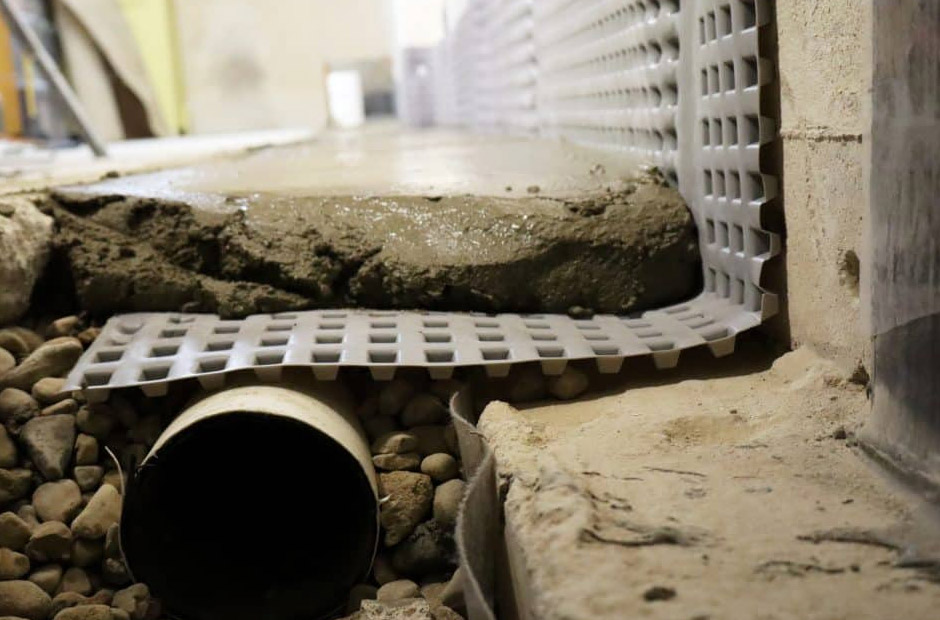
Weeping tile — the perforated pipe buried around the footing to redirect groundwater — is one of the most common failure points. In older homes, this pipe was often made from clay or early-generation plastic that degrades, collapses, or gets invaded by tree roots over decades. When it stops functioning, water that used to be channelled away accumulates instead, raising the hydrostatic pressure against the foundation walls significantly. Most homeowners have no idea their weeping tile has failed until the basement starts showing the evidence — and by then, the pressure has been building for years.
Waterproof membranes on exterior foundation walls have similar limitations. The bituminous coatings applied to most foundations built before the late 1990s were never designed for permanence. They become brittle, crack, and lose adhesion over time. Once the membrane fails, the wall beneath it is exposed to sustained moisture — and poured concrete that seemed solid begins to allow water through at a rate that increases season by season.
The team at Aquatech Waterproofing in Niagara Falls regularly assesses foundations where the original waterproofing system has simply reached the end of its designed lifespan — not through neglect, but through age. Knowing when your home’s waterproofing was installed, and what it was installed with, is the first step toward understanding your current risk level.
The Maintenance Habits That Extend Foundation Life
Long-term foundation protection isn’t only about major waterproofing systems. Several simpler, lower-cost habits have a measurable impact on how much pressure your foundation is under year after year.
Grading — the slope of the soil immediately around your home — should direct water away from the foundation on all sides. Soil settles over time, and what was properly graded at construction can develop low spots that allow water to pool against the wall. Checking the grading around your foundation every few years and regrading where needed is one of the most cost-effective protective measures available.
Downspout discharge is another consistent contributor to foundation pressure that gets overlooked. A single downspout can move hundreds of gallons of water during a heavy rain event. Where that water goes matters enormously. Splash blocks at the base of the downspout are the minimum — buried extensions that carry water well away from the foundation are significantly better. Any downspout discharging within two metres of the foundation wall is contributing to the moisture load your waterproofing system has to manage.
Sump pump maintenance is the third habit most homeowners neglect until the pump fails. A sump pump that runs regularly during wet seasons should be tested annually — pour water into the pit and confirm the float activates and the pump discharges cleanly. Check that the discharge line is clear and terminates well away from the foundation. And seriously consider a battery backup system if you don’t already have one. The storms that produce the most basement flooding are also the ones most likely to knock out power.
When Maintenance Isn’t Enough
There’s a point at which the condition of a foundation’s waterproofing system has deteriorated past what maintenance can address. Active seepage through walls that were previously dry, new cracks appearing where none existed, or a sump pump that runs continuously during moderate rain are all signs that the underlying system needs professional assessment rather than another season of monitoring.
The cost of a professional waterproofing installation — whether interior drainage, exterior membrane replacement, or a combination — is significant. It is also, consistently, a fraction of the cost of remediating the structural and mold damage that follows if the deterioration continues unchecked. The foundation doesn’t improve on its own. Every season of deferred intervention narrows the gap between a waterproofing project and a structural repair.
The Long View
A foundation protected for the long term isn’t one that was built perfectly and left alone. It’s one that was built well, maintained consistently, and updated when the original systems reached the end of their useful life. That cycle — build, maintain, reassess, renew — is what keeps a foundation sound across the decades a home is expected to stand.
Water is patient. It doesn’t give up because you ignore it for a season. Long-term foundation protection is simply the decision to be more patient than the water.